

Let's just get this out of the way. When most of the world says "pop up toys," they're talking about those plastic cause-and-effect boxes for toddlers. You press a button, a lion pops up. You turn a dial, a monkey appears. They're great for developing fine motor skills. They are not what we're talking about today.
Not even close.
In the universe of designer art toys, the world of MOLLY, Skullpanda, and Dimoo that I live and breathe every day running PopNya, the term "pop up" is code. It's a signal. It means exclusivity, hype, long lines, and sometimes, pure, unadulterated chaos. It refers to a very specific, and increasingly popular, part of the collecting culture.
So if you're here trying to figure out why your search for collectibles led you to a page full of baby products, welcome. You've found the right place. Let's break down what popup toys actually mean to a collector.
The Real Meaning: Pop-Up Events & Exclusives
In our corner of the internet, "pop-up" almost always refers to a Pop-Up Event. Think of it as a temporary, high-energy, miniature version of a flagship store that appears in a city for a limited time, maybe a weekend, maybe a few weeks. Pop Mart has become the master of this. They'll take over a space in a mall in Los Angeles, set up a booth at a convention in London, or drop a massive, themed installation in a busy square in Singapore.
Why? Because it's a marketing spectacle. It's a physical event that brings the digital hype of a new release into the real world. I remember the buzz around the first major US events. People who had only ever bought blind boxes online were suddenly face-to-face with giant statues of their favorite characters. I covered my own little adventure in my trip report from the Pop Mart NYC store, and the energy is the same: it's about creating a destination.
But collectors don't fly across the country just to take a selfie with a giant Labubu. They come for the real prize: the Pop-Up Exclusives.
These are the figures you can only get at that specific event. They are the ultimate FOMO (Fear Of Missing Out) weapon. Pop Mart will design a special edition figure, often a city-themed variant of a popular character, and announce that it's only available at, say, the Chicago pop-up. For that weekend only.
A perfect example is the MOLLY "My Instant Superpower" series. They released city-exclusive versions. The Statue of Liberty MOLLY was only available in New York. The Hollywood Star MOLLY was only in LA. You couldn't buy them online. You couldn't get them a month later. You had to be there.
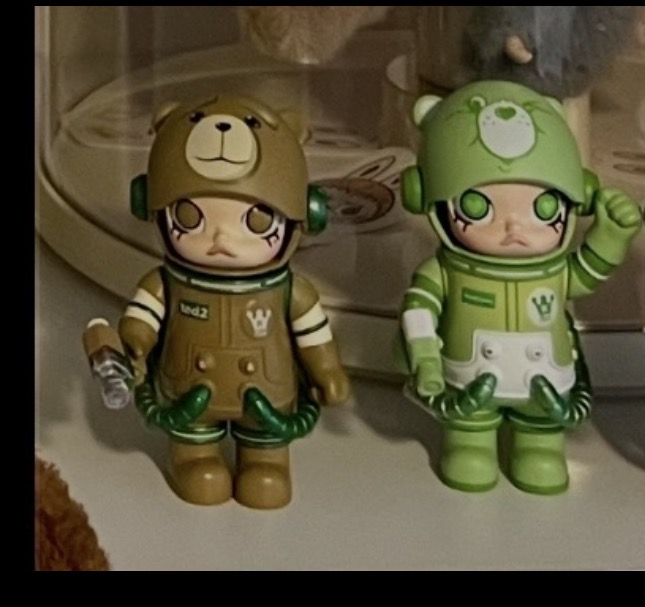
And that's where the market goes absolutely wild. I was watching the secondary market the weekend of the NYC pop-up. That Statue of Liberty MOLLY, which retailed for a standard blind box price of around $17, was appearing on eBay and collector forums for $120, $150, sometimes even $200. The day it was released. That's the power and the madness of the pop-up exclusive. It's a treasure hunt where the map is only valid for 48 hours.
The Collector's Playbook for Surviving a Pop-Up
If you decide to brave one of these events, you can't just wander in on a Saturday afternoon. It's an operation. You need a plan. Having navigated this world for years, both as a fan and a seller trying to source stock, I've learned a few things the hard way.
First, do your homework. This isn't a casual shopping trip. Follow Pop Mart's official Instagram and Twitter accounts for the specific region (e.g., @popmartus). They will post the exact dates, location, hours, and, most importantly, the rules. There are almost always purchase limits on exclusives. "One per person." "Must show ID." "No holding places in line." Knowing these rules is half the battle. This is the kind of strategic thinking I talk about in my guide to the Pop Mart Pop Now app; the same principles of preparation apply here.
Second, be prepared for the reality on the ground. This means lines. Long ones. I have friends who have shown up at 6 AM for a 10 AM opening and were still 50th in line. It also means you will be standing next to professional scalpers. These are people who have no love for the art; they are there with multiple friends or family members to max out purchase limits and flip the figures online before they even get back to their car. It's a frustrating part of the hobby, but it's the reality of this manufactured scarcity.
Third, go in with a clear goal. The energy inside a pop-up is overwhelming. There are bright lights, loud music, and shelves overflowing with toys. It's incredibly easy to get swept up and spend way more than you intended. Decide before you go in: are you there for the one-and-only exclusive? Are you trying to complete a regular series? Or are you just there to soak in the atmosphere and maybe grab a keychain? Know your grail and stick to your budget.
But it's not all doom and gloom. The best part of these pop-ups is the community. You're in a line for three hours, but you're surrounded by people who get it. People you can talk to about your favorite series, the artist you love, or the secret you're still hunting for. I've seen people make friends, trade figures right there in line, and share in the collective joy of finally getting their hands on a piece they've been dreaming of. It's a physical manifestation of the online communities we all belong to.
Real Talk: Are Pop-Up Exclusives Good for the Hobby?
This is where I have to be honest, as both a collector and a store owner. I have deeply mixed feelings about the pop-up exclusive model.
On one hand, it's brilliant marketing. It generates incredible hype and makes collecting feel like an adventure. It rewards the most dedicated fans, the ones willing to travel and wait in line, with something truly special. It creates memorable moments and stories that become part of a figure's lore. "Where did you get that one?" "Oh, this? I stood in the rain for four hours at the first-ever US pop-up for this." That's a powerful story.
On the other hand, it feels incredibly exclusionary. As the owner of PopNya, my goal is to make these amazing toys accessible to fans everywhere. But I can't stock a figure that was only sold for 72 hours in a city 2,000 miles away. It creates a system of haves and have-nots that is based purely on geography and the ability to drop everything for a weekend. It directly fuels the scalper market, making it the default source for anyone who couldn't attend, and prices many genuine fans out of the hobby.
My honest take? The model is a double-edged sword. I love the energy and excitement it brings. But I hate the artificial scarcity and the frustration it causes for the 99% of the fanbase that can't be there. I sincerely wish Pop Mart would consider offering a small, limited online allocation of the "pop-up exclusives" a week or two after the event ends. It would give global fans a fighting chance and undercut the most outrageous scalper prices, while still preserving the "I got it first" bragging rights for attendees.
*The Other* Kind of Pop Up Toy: The Gimmick BoxThe best example is the Sweet Bean "I am here!" series. Instead of a standard blind box, each figure came in a larger, elaborate package. When you opened it, a little spring-loaded platform would literally pop the Sweet Bean figure up toward you. It was a cute gimmick. A fun unboxing experience, for sure.
But as someone who handles and ships these toys daily, I can tell you the reality behind the gimmick. They are a pain. The boxes are oversized and oddly shaped, which increases shipping costs. And the pop-up mechanism itself is surprisingly fragile. I've had to double-box every single one I've ever shipped from my store, because a single dent on the side of the box can jam the cardboard-and-plastic spring mechanism. I've received more than a few messages from customers saying the pop-up feature arrived broken or got stuck after a few uses.
And here's the other thing nobody talks about: what do you do with the box? Most serious collectors, myself included, eventually take the figure out for display. We might keep the box, but it gets flattened and stored away. The whole point of the pop-up feature is the unboxing, which you only do once. After that, it's just a bulky piece of cardboard taking up space. Is a 10-second "wow" moment worth the extra cost, fragility, and storage headache? For me, the answer is usually no. I'd rather have a beautifully designed, standard-sized box and a lower price point.
So, when you see the term pop up toys**, you now know to ask the crucial question: "Which kind?" Are we talking about the toddler toy? The high-stakes, limited-edition event exclusive? Or the figure in the gimmicky spring-loaded box?
Understanding the difference is key to navigating the modern designer toy landscape. It's a world of hype, community, frustrating logistics, and incredible art. It's a lot more complicated than a monkey on a spring, but that's what makes it so much fun. If you prefer to skip the lines and the hassle of it all, you can always see what classic and new figures we have in our hand-picked MOLLY collection at PopNya. No sleeping bag required.
Disclosure: PopNya may earn a commission if you purchase through links on this page.


