

Okay, I have to talk about this. For the past few weeks, my DMs and comment sections have been a wild place. I'm getting flooded with the same question, over and over, usually accompanied by a link to a grainy TikTok video with spooky music.
"Are the boo boos bad?" "I saw a video saying Labubu is a demon, is that true?" "My friend says these are evil, but they're so cute!"
As the owner of PopNya and a long-time collector of designer toys, my first reaction was, honestly, a massive eye-roll. My second was a bit of sadness. Seeing an artist's beautiful, whimsical creation get twisted into some kind of viral creepypasta is a special kind of frustrating.
So let's clear the air. No, LABUBU dolls, which the internet has bizarrely nicknamed "the boo boos", are not evil, demonic, or cursed. Not even a little bit. The whole controversy is a textbook case of social media misinformation, where context is stripped for clicks, and a charming character is turned into a monster for shock value.
But the story doesn't end there. Because while the dolls aren't bad, the fallout from this viral trend has created a genuinely bad situation for new and old collectors alike.
The Myth: Pazuzu's Little Helper?
Let's quickly address the nonsense you're seeing online. The core claim is that LABUBU is based on Pazuzu, a demonic figure from ancient Mesopotamian mythology, most famously known as the demon from The Exorcist. The "proof" people offer is flimsy at best: they both have teeth and a vaguely humanoid shape. Some point to the ears, the wide eyes, and the mischievous grin as evidence of something sinister.
I've seen videos comparing a cute, fluffy LABUBU keychain to a terrifying ancient statue. It's absurd. It's like saying a teddy bear is evil because real bears can be dangerous. The connection is completely fabricated, likely by someone who wanted to create a viral horror story and picked a popular, trending toy to attach it to.
This is the internet at its worst. A piece of art is decontextualized, slapped with a scary label, and pushed into the algorithm. People who have never heard of designer toys, Pop Mart, or the artist Kasing Lung are seeing these videos and, understandably, getting creeped out.
*The Reality: Who LABUBU Actually* IsNow for the truth. And it's a much, much better story.
LABUBU is the main character in a universe called "The Monsters," created by a Hong Kong-based artist named Kasing Lung. I've been following his work for years, long before this recent explosion in popularity. Kasing is a brilliant artist and storyteller, and his characters are born from a place of childlike wonder, not ancient evil.
The Monsters live in a magical forest, and LABUBU is a small, curious monster elf. Here's the official character description, which you won't find in any of those viral TikToks:
LABUBU is mischievous, enthusiastic, and always curious. Despite being a bit of a troublemaker, she has a kind heart and is always ready to help others, even though she sometimes messes things up.**
That's it. That's the "demon." A clumsy but well-meaning little elf-monster.
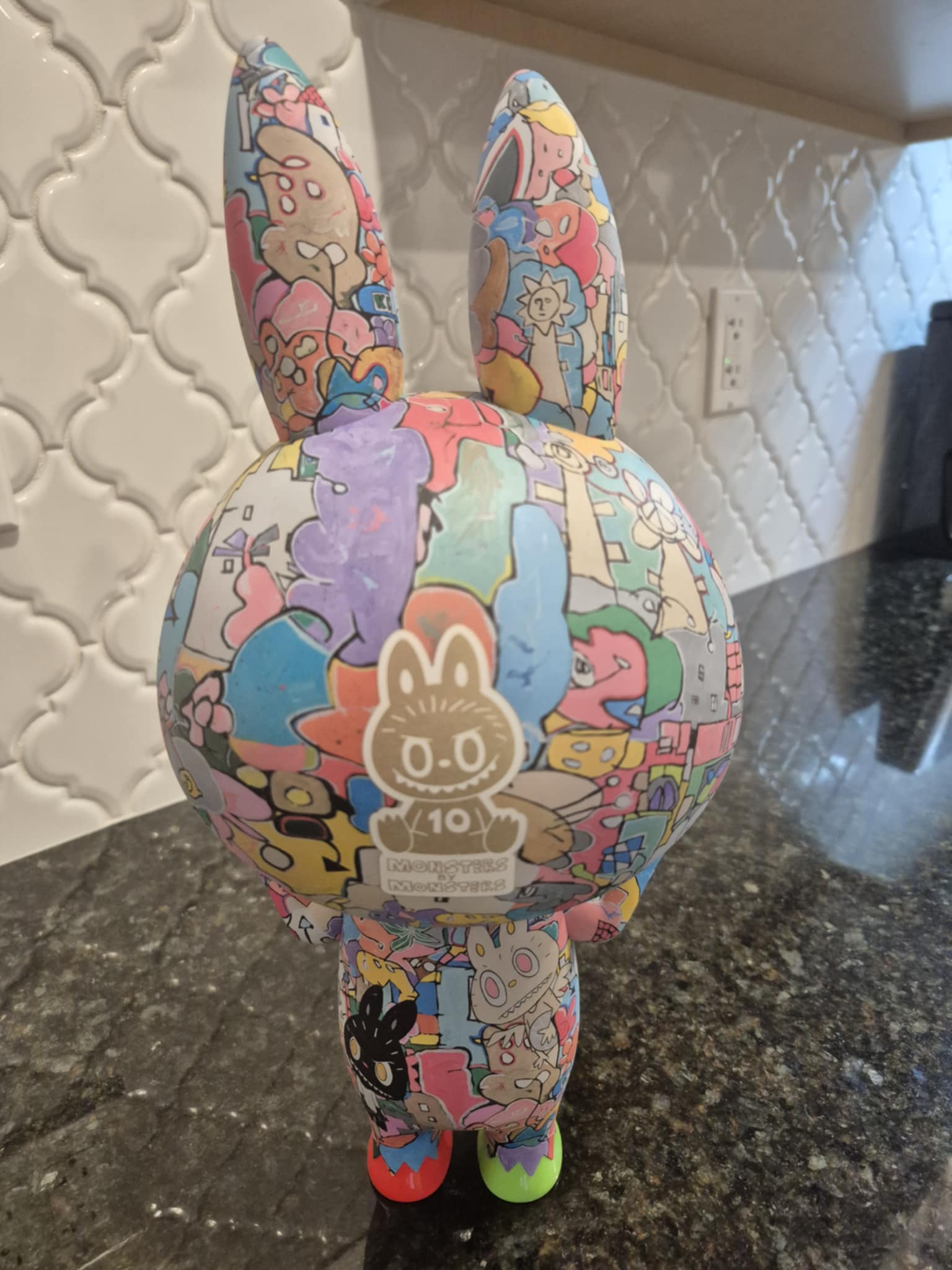
Her design elements that people are calling "demonic" are just part of Kasing Lung's signature art style. * The Ears: They aren't demon horns; they're long, rabbit-like ears that convey a ton of emotion. They droop when she's sad and perk up when she's excited. * The Teeth: It's a toothy grin! It's meant to be impish and playful, not menacing. Many of Kasing's characters share this trait, including ZIMOMO, the one with a zipper for a mouth who is often confused with LABUBU. * The Eyes: They are big and expressive, designed to capture a sense of wonder and curiosity. Some rare editions, like the coveted The Hunt for the Labubu Red Eyes: A Collector's Field Guide figure, have different colored eyes, but this is an artistic choice for a specific design, not a sign of demonic possession.
Kasing Lung even published children's storybooks about these characters. They go on adventures, learn lessons, and interact with a whole cast of whimsical friends like Tycoco, Spooky, and Pato. The entire lore is about friendship, exploration, and embracing your quirky, monstrous side. It's the polar opposite of the dark narrative being spun online. The person who owns LABUBU's creative vision, Kasing Lung, has built a world rooted in sweetness and adventure.
The Real "Bad" Thing About the Boo Boo Craze
So, if the dolls aren't bad, what's the problem? The problem is what this viral, misinformed hype does to the community and the market. This is the part that, as a seller, I see every single day.
1. The Scalper Explosion
Whenever a toy goes viral for any reason, the scalpers descend like vultures. A series that was once accessible to genuine fans suddenly becomes impossible to find at retail.
Here's a concrete example. The LABUBU Macaron series, also known as the "Fall in Love" series, has been out for a while. Before this viral trend, you could buy a blind box for around $15-$18. The aftermarket for specific, common characters was maybe $20-$25. Reasonable.
In the last month, I have seen the most common figures from that series, the ones people were practically giving away a few months ago, listed on eBay and Mercari for $50, $60, even $75. Why? Because a flood of new buyers, who only know them as the viral "boo boos," are desperately trying to get their hands on one. They don't know the retail price, they just know it's the hot new thing.
This prices out genuine collectors. It makes it harder for us at PopNya to keep things in stock at a fair price. And it turns a fun hobby into a frustrating and expensive rat race.
2. The Plague of Fakes
This is the biggest danger for newcomers. The viral hype creates a massive demand that the official supply from Pop Mart can't immediately meet. So, who fills the void? Counterfeiters.
Suddenly, sites like Temu, AliExpress, and shady Amazon storefronts are flooded with cheap, low-quality knockoffs. They often use stolen artwork and slightly altered names like "Lafufu" or just "Monster Doll." Unsuspecting buyers, excited by the trend, purchase these fakes thinking they're getting a deal.
What they actually get is a poorly made piece of plastic with sloppy paint, a weird chemical smell, and zero collector value. I've seen some truly awful ones. The vinyl feels greasy, the colors are wrong, the joints are loose. It's a complete waste of money. And it's heartbreaking to see someone post a picture of their "first LABUBU," only to have to tell them it's a fake. Learning to spot a fake Lafufu is now a necessary, and unfortunate, skill for anyone getting into the hobby because of this trend.
3. The Misrepresentation of Art
This one is more personal. It just stinks to see an artist's work get so thoroughly misunderstood. Kasing Lung poured his heart into creating a unique, charming world. He developed a story, personalities, and a distinct aesthetic. This viral trend completely ignores all of that.
It reduces a piece of art to a cheap horror trope. It's like people discovering Van Gogh's Sunflowers and starting a viral trend claiming the painting is cursed because the flowers are wilting. It completely misses the point. The people searching for a simple LABUBU outline to color are probably getting closer to the character's intended spirit than the people making these horror videos.
Real Talk: My Verdict as a Collector and Seller
So, let's circle back to the original question: are the boo boos bad?
No. Absolutely, unequivocally not. LABUBU dolls are beautifully designed, high-quality collectibles from a world-class artist. They are whimsical, charming, and fun to collect. The stories behind them are about friendship and adventure.
What is bad is the cloud of misinformation, price gouging, and counterfeit production that has formed around them because of a baseless viral trend. The real evil isn't in the vinyl toy; it's in the algorithm-fueled hype that preys on the uninformed, jacks up prices, and floods the market with trash.
My advice to anyone whose curiosity was piqued by this trend is this: ignore the spooky TikToks. Go look at Kasing Lung's actual art on his Instagram. Check out the incredible variety of designs in the official LABUBU collection. You'll find them dressed as astronauts, campers, bakers, and covered in flowers. You'll see the creativity and joy that is the true spirit of the character.
Don't let a ridiculous internet rumor scare you away from a genuinely wonderful corner of the art toy world. And please, for the love of all that is good in collecting, buy from reputable sellers. If a price on a brand new, sold-out figure seems too good to be true, it's almost certainly a fake. Knowing if Pop Mart Labubus are real is your first line of defense against getting ripped off.
The real story of LABUBU is infinitely more interesting and rewarding than the fake one. It's a story of art, creativity, and community, and there's nothing bad about that.
*Disclosure: PopNya may earn a commission if you purchase through links on this page.


