

The first time I held a genuine LABUBU plush figure, it wasn't what I expected. I was used to the vinyl blind box figures, hard, smooth, with that satisfying weight. The plush was part of The Monsters Exciting Macaron series, and I'd managed to snag a few blind boxes. I remember pulling out the "Soymilk" one. It wasn't squishy-soft like a teddy bear. The fabric had a distinct, almost felt-like texture. The stitching was tight, deliberate. It felt… substantial.
It wasn't a toy. Not in the way a teddy bear is a toy. It was a figure, just made of fabric.
And that's the first thing people get wrong. They see fabric and stuffing and their brain defaults to "stuffed animal." But in the world of designer toys, a plush figure is a completely different beast. It's the three-dimensional translation of an artist's character, carrying the same design intent and collectibility as its vinyl or resin counterparts. It's less about cuddliness and more about capturing the spirit of the character in a different medium.
The Feel: Why a LABUBU Isn't a Squishmallow
Let's get tactile. This is something you can't understand from a product photo on Amazon.
Pick up a Squishmallow or a Disney Store plush. They are engineered for maximum softness. The fabric is usually a super-fine, almost slick polyester, and they're stuffed with a light, airy poly-fill that makes them incredibly squishy. They're designed to be hugged and squeezed. Nothing wrong with that.
Now, let's talk about a designer plush figure, like a LABUBU. The materials are chosen for aesthetic and texture, not just softness. The standard LABUBU plush body has a unique, slightly napped fabric that gives it a matte appearance and a satisfying, almost grippy feel. It's not fuzzy. It's not slick. It's… specific. The ears are often a different, smoother material to create contrast. The embroidered details on the face are dense and precise.
Honestly, the quality control can be a bit hit-or-miss sometimes. I've opened boxes where a stitch on an ear is slightly off, or the fur trim on a Zimomo (LABUBU's fluffy companion) is a little uneven. It's part of the territory with mass-produced collectibles. But even with those minor flaws, the overall construction feels more like an art object than a pillow. It's stuffed firmly. It's meant to sit on a shelf and be admired, holding its shape perfectly. It has presence.
This difference in philosophy is everything. One is made for comfort. The other is made for character.
The Soul: Artist vs. Corporation
Why do we care so much about these little monsters? Because they come from somewhere. Kasing Lung, the Hong Kong-born, Netherlands-based artist behind The Monsters, created this world of elves and creatures inspired by Nordic folklore. Each character has a personality, a backstory. LABUBU is curious and mischievous. Tycoco is shy but stubborn. Pato is the loyal duck.
When you buy a LABUBU plush figure, you're buying a small piece of that world, a tangible connection to the artist's imagination. It's the same reason people buy prints from an artist they follow on Instagram.Now think about a Mickey Mouse plush. I love Mickey, but he's a corporate icon, a globally recognized brand symbol. He wasn't born from a single artist's sketchbook in the same way. He's the product of a century of corporate evolution, designed and redesigned by committees of talented artists, yes, but ultimately serving the brand. The emotional connection is different. It's a connection to nostalgia, to a media empire, not necessarily to an individual artist's vision.
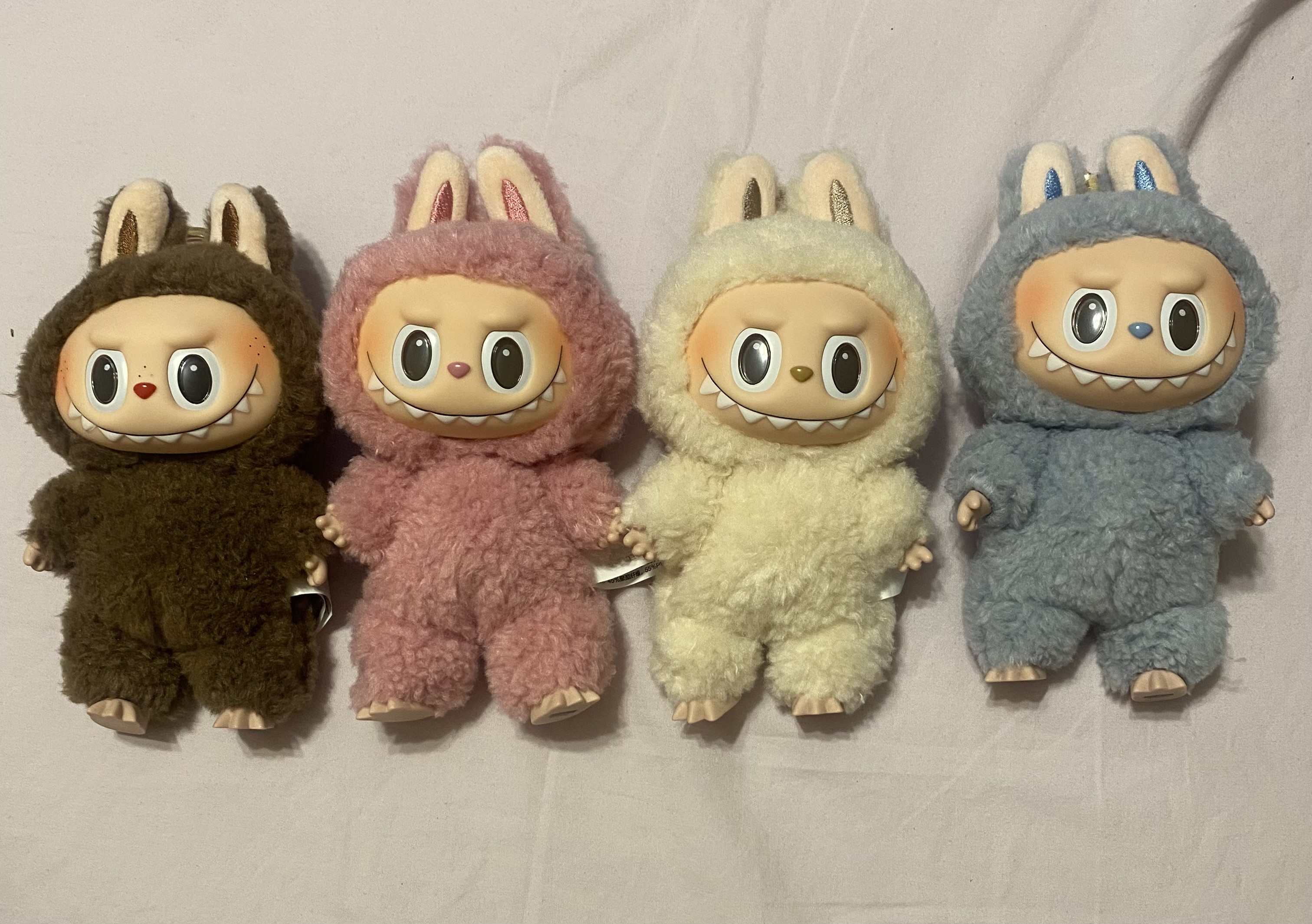
This artist-driven approach is what gives the designer toy scene its soul. We're not just collecting products; we're supporting artists and participating in their creative journey. It's a subculture. That's why you see fans creating incredibly detailed outfits and clothes for their Labubu plushes, building a whole secondary ecosystem around the main figure. It's a collaborative fandom.
The Market: Why Your Plush Figure Might Be an Investment (But Probably Shouldn't Be)
Here's the part that really separates a designer plush figure from a regular stuffed toy: the secondary market.
A standard plush from Target or Walmart depreciates the second you walk out of the store. It's a consumer good. You buy it, you love it, its monetary value is gone.
A designer plush figure, especially a popular one like LABUBU, operates under the laws of hype and scarcity. Let's use The Monsters Exciting Macaron plush keychain series as a perfect case study.
* Retail Price: You buy a blind box for around $15-$17. You don't know which one you'll get. * The Chase: There are regular designs, and then there are the "secret" or "chase" figures, which are much rarer. In the Macaron series, the main secret was a fluffy white LABUBU called "Cream." * The Aftermarket Explosion: People go nuts for the secrets. I personally sold a Cream Macaron plush for $120 about a month after the series dropped. That's a nearly 700% return on a $15 box. I've seen listings go even higher. Even the more common designs from that series, like Lychee or Pistachio, were reselling for $25-$35, well above retail.
This creates a frenzy. People buy entire cases (usually 6-9 boxes) hoping to pull the secret to sell, which funds their own collecting habit. It's a mini-economy. But it's also a bubble. The hype for the Macaron series was insane, partly thanks to its popularity on TikTok. The newer plush series haven't always reached those same dizzying aftermarket heights. The value is volatile and trend-driven.
This is why some people get confused by similar-looking products, like wondering if the Naruto Beast Party plush is a LABUBU. They see the blind box format and the plush style and assume it's all part of the same hype train. But brand, artist, and community matter.
---
**Real Talk: So, Should You Even Buy One?
Look, as someone who sells these, I could tell you to buy everything. But I won't. The truth is, a designer plush figure isn't for everyone, and you should know what you're getting into.
If you're buying it because you genuinely love Kasing Lung's art and want a cute, mischievous monster sitting on your desk, then yes. Absolutely. 100%. It will bring you joy every time you look at it. The price is for the art, the design, and the character.
If you're buying it purely as an investment, hoping to flip it for a profit? Be careful. It's gambling. You might pull the secret Cream Macaron and make a nice profit. Or, you could end up with three of the same common design that you can barely sell for retail price. The market is fickle. Hype dies.Don't go into debt chasing a fluffy keychain. My advice is always the same: buy what you love. If it appreciates in value, that's a happy bonus. If it doesn't, you still own a piece of art that makes you smile.
---
A Collector's Playbook: How to Buy, Spot, and Care for Your Plush
If you're ready to jump in, don't just rush to eBay. Here's what you actually need to know.
Where to Buy: Your safest bet is always official retailers. Pop Mart has its own stores and online presence. Here at PopNya, we specialize in curating these drops. Buying from authorized sellers ensures you're getting a legitimate product and not a ridiculously inflated price (at least, not at first). Be wary of third-party platforms right after a drop; prices can be absurd.
Spotting Fakes (The #1 Tip): Fakes are getting better, but they almost always fail the "face test." Counterfeit LABUBU plushes often have eyes that are too close together, too far apart, or improperly sized. The smile might be crooked or use a thinner, cheaper thread. The tags are another dead giveaway. Official Pop Mart tags have a specific font, a hologram sticker, and crisp printing. Fakes often have blurry text, flimsy paper, and a dull or missing hologram. If a deal on a "secret" seems too good to be true, it is. It's a fake. Trust your gut. A great way to avoid this is to follow our honest guide to buying a Labubu keychain, as many of the principles apply to the larger plushes too.
Care and Cleaning: Do NOT throw your plush figure in the washing machine. You'll destroy its shape and texture. For dust, use a can of compressed air (from a distance) or a soft-bristled brush (like a clean makeup brush). For a small spot or stain, use a damp cloth with a tiny bit of mild soap, dab gently, and then "rinse" with another clean, damp cloth. Let it air dry completely. Don't use a hairdryer, as the heat can melt the synthetic fibers.
Displaying Your Collection:** This is half the fun! Some people keep them pristine in their boxes. Others, like me, let them breathe. They look great on bookshelves, perched on top of a monitor, or grouped together. The keychain plushes have become a huge fashion statement, with people debating the merits of the Macaron vs. Other Labubu bag charms. For the larger or rarer plushes, some collectors use acrylic display boxes to keep them dust-free while still visible. It's all part of making the collection your own.
So, no, it's not "just a stuffed animal." A designer plush figure is a statement. It's a piece of art, a collectible, a character, and a connection to a vibrant global community. It's a totally different world from the toy aisle at Target. And if you're the kind of person who appreciates that difference, you'll find it's a world worth exploring. If you're curious to see what's currently available, you can always browse the LABUBU figures we have in stock. You might just find your first little monster.
Disclosure: PopNya may earn a commission if you purchase through links on this page.


