

I get this question in my DMs at least five times a week. "Hey, who owns LABUBU?" Sometimes it's phrased as "who owns LABUBU dolls?" or "what's the LABUBU parent company?"
And I get it. You see a toy rabbit-monster with goofy teeth and floppy ears absolutely everywhere. It's on your TikTok feed, your friend's desk, and suddenly there are pop-ups at the mall. You see the crazy secondary market prices and you start thinking, "Who is getting rich off this?"
The simple answer everyone gives is "Pop Mart." And they're not wrong, but they're not entirely right, either. It's like saying Disney owns Spider-Man. Kinda, but not really. The real story is so much more interesting, and it's a story I've watched unfold from the inside as both a collector and a seller at PopNya.
To really understand who "owns" LABUBU, you have to go back. Way before the blind box craze.
The Real Heartbeat: Kasing Lung
Before the billions and the stock market reports, there was just an artist. Kasing Lung. He's a Hong Kong-based artist who was born in China and grew up in the Netherlands. His art is deeply inspired by Nordic and European folklore, full of whimsical, slightly melancholic, and mischievous little monsters.
In 2011, he published a storybook called My Little Planet, and in 2015, he created a new series of characters called "The Monsters." This is where it all began. LABUBU, the one with the ears, was just one member of this monster family, alongside characters like Zimomo, Tycoco, and Spooky.
I remember seeing Kasing's original artwork and the first few vinyl figures years ago. They were different. They felt like true "art toys." They were often larger, produced in much smaller quantities, and had a certain raw, creative energy. They weren't just collectibles; they were pieces of Kasing's world brought to life.
So, the first and most important answer is: Kasing Lung created and artistically owns LABUBU. He is the father. It's his IP, his design, his universe. Without him, there is nothing.
The First Partner: How2work
For years, Kasing Lung collaborated with a Hong Kong-based toy company called How2work. They were the ones who first translated his 2D drawings into 3D vinyl art toys.
These early How2work pieces are now the holy grails for serious collectors. Think of figures like the original "King of the Forest" Zimomo or the early LABUBU figures that were often 6-8 inches tall. They were released in limited runs, sometimes only a few hundred pieces worldwide. You bought them from specialty toy stores or at toy conventions like Taipei Toy Festival.
The quality was, and still is, fantastic. The vinyl has a certain weight and texture to it, and the paint applications often had a hand-finished feel. You could tell they were made for a niche audience of dedicated art toy lovers. I have a couple of these older pieces in my personal collection, and holding one next to a modern blind box figure is a night-and-day experience. The old ones feel like sculptures; the new ones feel like high-quality products. Both are great, but they serve different purposes.
For a long time, this was the entire LABUBU world: Kasing Lung creating, and How2work producing for a small but passionate community. You could get a figure for maybe $80-$150, and it felt special.
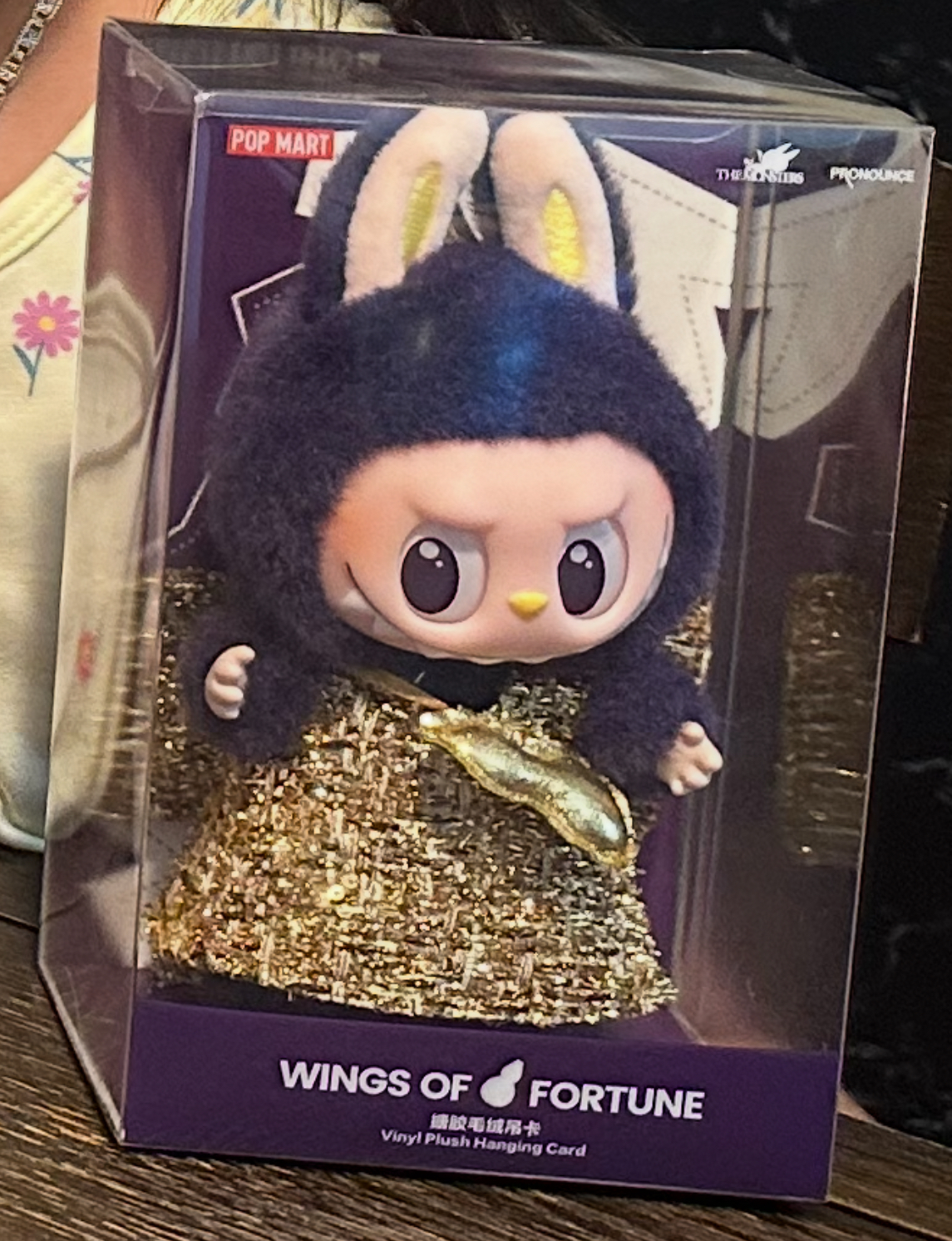
The Global Megaphone: Pop Mart
Then, everything changed. Pop Mart entered the picture.
Pop Mart is a Chinese pop culture and entertainment company that absolutely perfected the blind box model. Their strategy is genius: partner with popular artists and designers (like Kenny Wong with Molly, or Ayan Deng with Dimoo), license their characters, and then mass-produce them in adorable, affordable, and highly collectible blind box series.
Around 2019, Pop Mart signed a licensing agreement with Kasing Lung. This is the key point everyone misses. Pop Mart does not own the LABUBU IP. They license it. They have the rights to produce and distribute toys based on the character, primarily in the blind box format.
This is where the explosion happened.
Suddenly, Kasing's art wasn't just for the niche art toy scene anymore. It was accessible to everyone. For about $15, anyone could walk into a Pop Mart store or Roboshop and get a piece of The Monsters universe. The characters were re-imagined in cute themes like "The Monsters Patisserie," "Flower Elves," and the recent, insanely popular "Macaron" series.
The accessibility was a game-changer. It introduced LABUBU to millions of new fans who had never even heard of "art toys" before. It created a global phenomenon. And it made Pop Mart's founder, Wang Ning, a multi-billionaire. The question of "how much is Pop Mart worth" is directly tied to the success of characters like LABUBU. Their market capitalization has fluctuated wildly, but at its peak, it was in the tens of billions of dollars, largely fueled by this blind box frenzy.
Real Talk: My Take as a Collector and Seller
So, is the Pop Mart partnership a good thing or a bad thing? Honestly, it's both.
On one hand, I'm thrilled that Kasing Lung is getting the global recognition (and financial success) he deserves. He's a brilliant artist, and seeing his creations bring joy to so many people is amazing. It's also created a massive, vibrant community. The trading, the unboxings, the fan art, it's fun! It's why we even have a huge LABUBU collection at PopNya in the first place.
But on the other hand, something was lost.
The focus shifted from appreciating the art to the thrill of the chase. The conversation became less about Kasing's folklore inspirations and more about, "What's the secret? What's the ratio? What's the resale value?" I see it every day. Someone pulls "Soy," the secret from the Macaron series, and their first thought isn't "Wow, what a cute design." It's "I just made $200." I've personally seen that specific figure, which comes from a box that costs around $17, listed for over $250 on eBay the week of its release. The hype is real, and it can be toxic.
The mass-produced Pop Mart figures are incredibly well-made for the price point, don't get me wrong. The quality control is generally excellent. But they lack the "soul" of the original How2work pieces. The vinyl is lighter, the paint is flawless but uniform, and the packaging is designed for a retail shelf, not a gallery. It's the difference between a signed, limited-edition print and a high-quality poster.
This hype has also created some weird side effects. We've seen a surge in people looking for things like a LABUBU outline or a LABUBU vector file, not for fan art, but to create knock-off merchandise. It's a strange consequence of the character becoming a mainstream icon, almost like a brand logo. It's also why you see things like that viral LABUBU costume for kids popping up, the character has transcended the toy world and become a pop culture symbol.
The Market Right Now: A Seller's Field Report
From my position running PopNya, I have a front-row seat to the madness. When The Monsters Macarons series dropped, our site traffic went up 500%. We sold out of our entire inventory in under an hour. And the messages started pouring in: "When are you restocking?" "Do you sell by the case?" "Can I pre-order the next series?"
For example, as of writing this, you can still find some of the older LABUBU blind box series sitting on shelves in places like Singapore or Thailand. But in the US and Europe? They're long gone, and the secondary market prices are 2-3x retail. This regional imbalance creates huge opportunities for resellers, which further fuels the hype.
Another thing I've noticed is that the Pop Mart boom has had a strange effect on the original How2work pieces. You'd think the mass-market versions would devalue the originals. Nope. It's the opposite. All the new fans who got into LABUBU through Pop Mart are now discovering the older, rarer figures. They're learning the history. And now they want the "OG" pieces. A How2work figure I saw sell for $200 in 2018 is now easily fetching $800-$1,000 in collector groups. The Pop Mart machine has inadvertently turned the original art toys into blue-chip investments.
So, to finally answer the question...
Who owns LABUBU?
1. Kasing Lung (The Creator): He owns the soul, the IP, the very idea of LABUBU. He is the ultimate owner. 2. Pop Mart (The Amplifier): They are the primary LABUBU parent company in the public eye. They own the global distribution and the mass-market machine. They license the right to turn Kasing's art into the blind boxes you see everywhere. 3. You, The Collector (The Patron): In the end, once you buy a figure, you own that specific piece of art. You give it a home. Your choice to buy it, whether it's a $15 blind box or a $1,000 original, is a vote. It's your patronage that supports the artist and the entire ecosystem.
The relationship is a complex, modern triangle of art, manufacturing, and marketing. It's a fascinating case study in the world of designer toys.
My advice? Don't get lost in the hype. Don't worry so much about who owns what or what the future value might be. If you're looking to get into collecting, start by exploring the different series. See which designs speak to you. Do you love the foodie theme of the Patisserie series? Or the whimsical nature of the Flower Elves? Maybe you just want a single, classic LABUBU to sit on your desk and make you smile.
Buy what you love. The joy of holding that little monster in your hand is the real return on investment.You'll see just how big and wonderful Kasing's world has become.
Disclosure: PopNya may earn a commission if you purchase through links on this page.


