

"What's the rarest Labubu color?"
I get this email or DM at least five times a week at PopNya. It's the first question on everyone's lips, fueled by a million TikTok videos of people screaming after pulling a specific figure from a blind box. And I get it. You want the special one. The one that makes your collection stand out.
But my honest answer is always the same: it's a misleading question.
There isn't a universal Pantone chart of Labubu rarity where, say, "Forest Green" is always common and "Galaxy Purple" is always a chase. The truth is much more chaotic, interesting, and, frankly, series-dependent. Thinking about a single rare labubu color is like asking what the fastest car is, is it a drag racer, a Formula 1 car, or your mom's minivan on a steep downhill? Context is everything.
Rarity is Relative, Not a Color Wheel
Let's get this out of the way first. For anyone new here, Labubu figures, like most designer toys from Pop Mart, come in blind boxes. You don't know what you're getting. Each series has a set of "regular" designs and one or more "secret" (or "chase") figures.
The pull rate for a regular figure is usually around 1 in 12. The pull rate for a secret is often 1 in 144.
This is the baseline of rarity. But it's not the whole story. The idea of a single rarest labubu color falls apart when you look at different series side-by-side.
Take The Monsters Exciting Macaron series. It's a fan favorite, full of pastel-colored Labubus. The secret figure is "Soy Milk," a creamy, off-white color with brown-tipped ears. In this context, that specific beige-and-brown combination is the rare one. But in another series, a beige Labubu might be a common figure.
Now compare that to The Monsters Camping series. The secret here isn't a color at all; it's a completely different design, a Labubu in a sleeping bag. Or the Let's Christmas series, where the secret is a Gingerbread Man design.
See the problem? Rarity is defined by the specific figure within its specific series, not by its color alone. Sometimes the rare one is a unique colorway, sometimes it's a different mold, and sometimes it's a special finish like flocking or a translucent "jelly" material. This is the first thing to understand before you go down the rabbit hole of trying to figure out what "rare Labubu" actually means.
The "Market Rare" Phenomenon: When the Crowd Picks a Winner
This is a detail that most articles miss, but as a seller, I see it in my inventory every single day. There's production rarity (the 1/144 secret), and then there's market rarity.
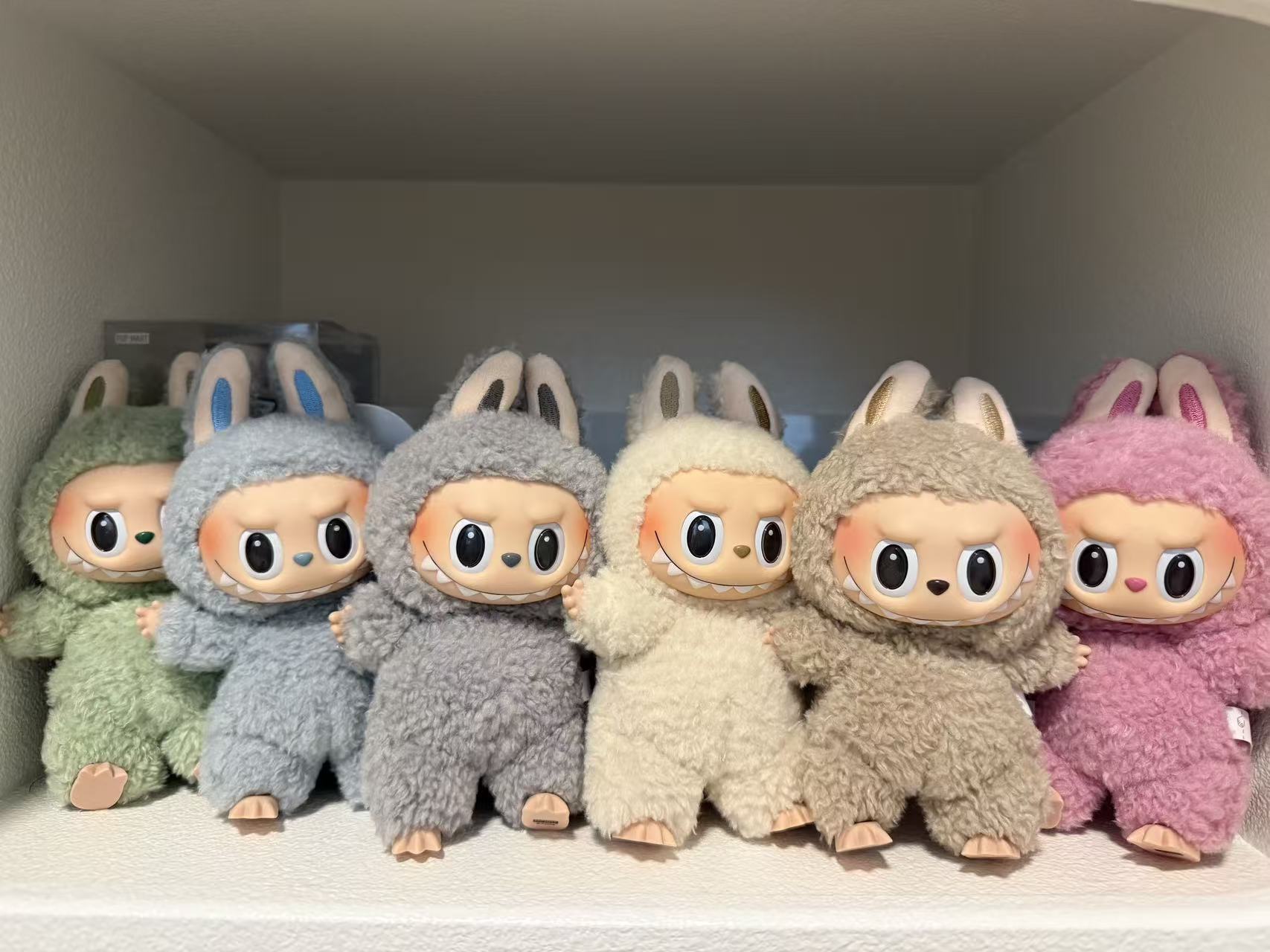
Market rarity is when the community collectively decides that a regular figure is the "best" one, and it becomes almost as hard to find as the secret.
My best example is from the Macaron series again. In our store, the pink "Lychee" and the light blue "Sea Salt Coconut" Labubus fly off the shelves. We can't keep them in stock. Meanwhile, the purple "Grape" and green "Pistachio" figures, which have the exact same production rarity, tend to linger. I've seen Lychee, a regular figure with a retail price of around $15, sell for $35-$40 on the secondary market, just because the demand is so high.
Why? The algorithm. Aesthetics. Hype. Maybe a popular influencer showed it off.
This is where the idea of a rare labubu color gets really messy. Is the pink Lychee "rare"? According to Pop Mart's production numbers, no. According to my stock levels and the frantic DMs I get asking if we have any more, yes, absolutely. This market-driven demand is a huge factor in why some people feel Labubus are so expensive.
A Seller's Confession: Debunking the Myths
Because everyone is hunting for that rare pull, a lot of myths have popped up. Let me, as someone who handles hundreds of these boxes, set the record straight.
The Box Weight Trick: Forget it. In the early days of blind boxes, you could sometimes feel a weight difference. Not anymore. Pop Mart got smart. Now, they often include counterweights or standardize the packaging so every box feels identical. For the last few Labubu series, I can tell you with 100% certainty that weighing boxes is a waste of time. I've tried it for science. It doesn't work.
The Box Color/Code Myth: I see this on TikTok all the time." It's not. It's confirmation bias. Someone got lucky once, made a video, and now thousands of people are squinting at boxes in the store. The packaging is mass-produced. The figures are inserted randomly. There is no secret code.
The "Shaking" Method: Please don't do this, especially in a store. You can't tell anything by shaking the box, and all you're doing is potentially scuffing the figure inside for the person who eventually buys it. All the figures are wrapped in plastic and have a collector card; they all rattle in a similar way.
The only way to guarantee a specific figure is to buy a full case (which usually guarantees all regular figures and a chance at the secret) or to buy the figure you want from a trusted reseller. If you're curious about how cases are priced, I've written before about the real deal on buying a Labubu box.
Okay, But What IS the Rarest Labubu Color?
I know, I know. You still want an answer. If you held my feet to the fire and asked me to name the absolute, undisputed rarest labubu color, I wouldn't point to a color at all. I'd point to a finish or a special edition.
The true "grails" of the Labubu world are often figures that were never available in a standard blind box series. These include:
* Translucent/"Jelly" Figures: These are often special event exclusives or super secrets (a tier even rarer than a regular secret, sometimes 1/720). The material gives them a ghostly, ethereal look that is impossible to replicate. The clear or semi-clear material itself is the "color." * Flocked Figures: These Labubus are covered in a soft, fuzzy material. Flocking is a delicate process and is usually reserved for very limited runs. The "color" is tied to the texture. * Glow-in-the-Dark (GID): A classic chase finish. The figure might look like a normal color in the light, but its rarity is revealed in the dark. * Artist-Specific Collaborations: Kasing Lung, the creator of Labubu, sometimes does special hand-painted runs or collaborations for art shows. These are often one-of-a-kind or limited to just a handful of pieces worldwide. Their colors are unique by definition. * The Ultimate Myth: The Gold Labubu: Then you have the legends, like the mythical 24k Gold Labubu. Is it real? Is it a meme? Its rarity is so extreme that it's become a piece of collector folklore. That's a level of rarity that color can't even begin to describe.
These are the figures that have collectors debating what the most expensive Labubu really is, with prices entering the thousands. So, the rarest "color" is often no color at all, but a special material or finish that signifies an extremely limited production run.
Real Talk: A Collector's Plea
Look, I run a store. I make money when you buy Labubus. But I got into this because I genuinely love these little monsters. And it pains me to see new collectors get burned out or feel disappointed because they're chasing a moving target.
So here's my honest advice.
Stop chasing the rarest labubu color. Start by finding a series you genuinely love the look of. Go browse the full LABUBU collection and look at all the designs. Which one makes you smile? Which color palette would you love to see on your desk every day?
The joy of collecting isn't in owning the most expensive or "rare" thing. It's in curating a collection that is personal to you. I have some of the "common" Labubus that I wouldn't trade for a secret, simply because I love their design or they remind me of the day I got them.
The FOMO (Fear Of Missing Out) in the toy community is real and intense. It drives people to pay insane prices for a figure that was hyped on social media for a week, only to see its value crash a month later. Before you drop $150 on a single figure, check its actual market value. Look at sold listings on eBay, StockX, or other platforms. See what the real figure price is, not just the asking price.
The most valuable Labubu isn't the one with the rarest color. It's the one you love the most. The thrill of the hunt is fun, but don't let it overshadow the joy of the find. Happy collecting.
Disclosure: PopNya may earn a commission if you purchase through links on this page.


