

I get a message on our PopNya Instagram at least three times a week. It's always a slightly blurry photo of a figure that almost looks right, with the caption: "Is this a Labubu or a Lafufu?"
And every time, my heart sinks a little.
Because the answer is almost always Lafufu. And that means someone either got ripped off or is about to. So, let's clear the air once and for all. What is a Lafufu? It's a fake. A bootleg. A counterfeit Labubu. It is not a special edition, a cousin, or a different character from Kasing Lung's universe. The name "Lafufu" itself has no real lafufu meaning; it's just a nonsense word that sounds similar enough to Labubu to trick unsuspecting buyers on platforms like AliExpress, Temu, and sketchy eBay listings.
The confusion is understandable. The labubu and lafufu names sound alike, and from a distance, the fakes are getting sneakily better. But as someone who has handled hundreds of both real and fake figures, the differences are glaring once you know what to look for. This isn't just about protecting your wallet; it's about respecting the artist and the hobby.
The Face-Off: How to Tell a Labubu from a Lafufu Instantly
Forget the box for a second. Forget the price. The fastest way to spot a fake is to look it right in the face. Counterfeiters can mimic a shape, but they can't replicate the soul of a design.
It's All in the Teeth.
This is the number one tell. I cannot stress this enough.
A genuine Labubu, designed by Kasing Lung, has seven teeth. They are distinct, slightly pointed, and have a mischievous but well-defined look. They sit perfectly in the little monster's grin.
So, how many teeth does a lafufu have? It varies. And that's the problem. I've seen Lafufus with six teeth, eight teeth, or just a mushy, undefined row of bumps that looks like they chewed on rocks. The teeth on a lafufu doll vs labubu are often rounded, poorly painted, and lack the sharp, clean molding of the authentic figure. Sometimes you'll even see a labubu with no teeth being sold, which is an immediate red flag unless it's a specific, intentional artist collaboration (which is extremely rare). If the teeth look "soft" or wrong, walk away. It's the easiest way to how to tell the difference between labubu and lafufu.
Look Them in the Eyes.
Next, check the eyes. Pop Mart's quality control is pretty solid. On a real Labubu, the eyes are glossy, the white catchlights are crisp and perfectly placed, and the black pupils are deep and even.
A Lafufu, on the other hand, often has dull, matte eyes. The white dots might be misplaced, smeared, or different sizes. I once saw a fake where the pupils were two slightly different ovals. It gives the figure a dead, vacant look. It's a subtle thing, but once you see the high-quality finish of a real Labubu's eyes, the fakes just look cheap. This is a key part of learning how to spot a lafufu.
The Shape of the Head and Ears.
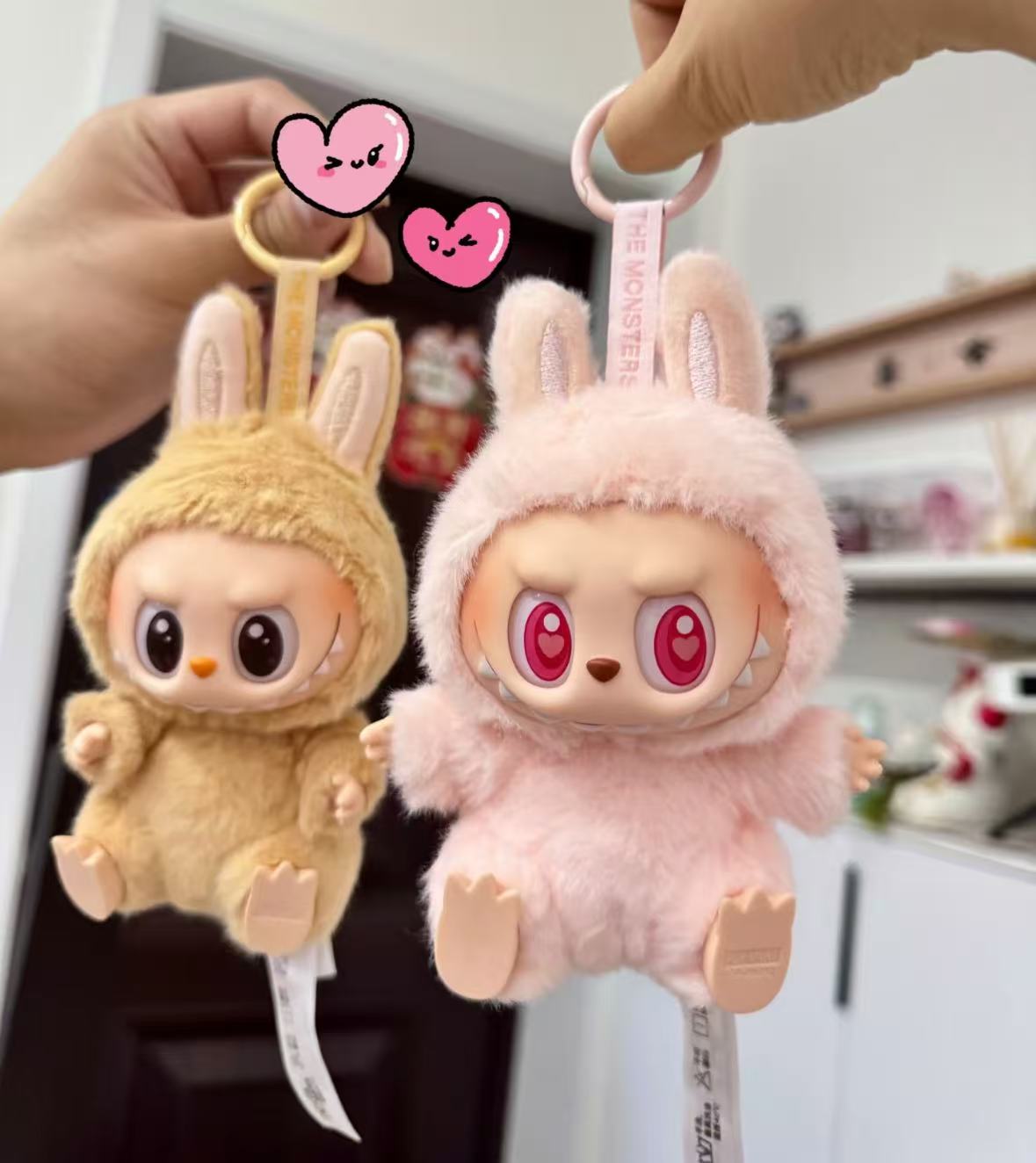
This is getting into pro-level spotting. Counterfeiters create their own molds by crudely copying a real figure, and the process always introduces flaws. A Lafufu's head might be slightly too round or too squat. The ears are another giveaway. Labubu's ears have a very specific curve and length. Fakes often have ears that are too long, too short, or angled incorrectly. They just don't have that same perky, inquisitive posture.
If you're ever in doubt, pull up a photo of the real series from the Pop Mart website and compare the silhouette. The difference between labubu vs lafufu becomes obvious when you compare them side-by-side.
The Unboxing Deception: Labubu vs Lafufu Box
Okay, now let's talk about the packaging. The counterfeiters are trying hard here, but they consistently fail on the details. The unboxing experience is a huge part of the blind box fun, and the labubu vs lafufu box difference is night and day.
The Box Itself: A real Pop Mart box is made of sturdy, high-quality cardstock with a satin finish. The printing is razor-sharp, the colors are vibrant, and the artwork is crisp. Run your fingers over it; it feels premium.
A Lafufu box feels flimsy. The cardboard is thin, the colors are often washed out or overly saturated, and the images and text can be blurry, as if they were scanned and reprinted from a low-resolution JPEG. Look for spelling errors! I've seen "POP MARTT" and "LABIBU" on fake boxes. It's a dead giveaway.
Also, check for the official holographic sticker and QR code. While fakers are starting to replicate these, the fakes are often just flat, non-holographic stickers. A real one will shimmer and show different details as you tilt it.
The Foil Bag: Inside the box, the figure is sealed in a foil bag. A real Labubu bag is made of thick, quality foil. The printing on it is clean and sharp.
A Lafufu bag is often made of thin, crinkly plastic that feels cheap. It might have a strong chemical smell when you open it, that's the smell of cheap plastic and paint, and it's a huge red flag. Real Labubus have a very neutral, almost non-existent "new toy" smell.
The Collector Card: This is almost as important as the teeth. Every real Labubu comes with a matching collector card. This card is printed on thick, textured cardstock. It has the same high-quality art as the box.
The fake card is usually just a flimsy piece of glossy photo paper. The image is often blurry, the colors are off, and it feels cheap and disposable. The lafufu doll vs labubu doll comparison is starkest when you hold both collector cards in your hands. One feels like a collectible; the other feels like trash.
Real Talk: My Honest Take as a Seller
Look, I'm in the business of selling designer toys. My passion is connecting people with authentic pieces from artists they love. So, here's my unfiltered opinion on the whole Labubu and Lafufu difference.
Buying a Lafufu, even for a laugh, hurts the entire ecosystem. It directly takes money away from the artist, Kasing Lung. He spent years developing these characters, and counterfeiters are shamelessly profiting from his creativity. It also supports unethical factories with questionable labor practices.
But here's a hot take: in a weird, twisted way, the Lafufu plague has made the community stronger. The constant threat of fakes has forced collectors to become more educated. People are learning how to tell a labubu from a lafufu with incredible precision. They're scrutinizing details, sharing tips, and developing a deeper appreciation for the quality and artistry of the genuine article. When you know what a bad fake looks like, you appreciate the craftsmanship of a real Labubu so much more. The community has a whole language now, and a big part of that is spotting fakes. If you're new and worried, don't be, we've all been there. Learning to spot the fakes is a rite of passage, and a good starting point is our Fake Labubu Guide, where I break it down even further.
That said, my advice is simple: Do not buy Lafufu. Not as a cheap alternative, not as a joke, not for a custom project. You're not getting a deal; you're buying a poorly made piece of plastic that devalues the art you claim to love.
The Market Price and The "Too Good to Be True" Trap
This is where people get hurt. A standard Labubu blind box from an official source retails for around $15-$18 USD. A Lafufu might sell for $3-$5. Seems like a bargain, right?
Wrong. The real value in collecting is in the chase. A regular series Labubu might hold its retail value, but a secret or chase figure can skyrocket. For example, the "Tycoon" secret from The Monsters Camping series was selling for over $200 shortly after release. The Lafufu version? It's worthless. Zero.
The danger is on secondary markets. A scammer will list a "Rare Secret Labubu" for $50. A new collector, thinking they've found an incredible deal, jumps on it, only to receive a cheap Lafufu in the mail. I've seen it happen dozens of times. If a price for a sought-after figure seems impossibly low, it is 100% a fake. No one is selling a real $150 chase figure for $40. They're selling you a $4 fake for $40.
Understanding the artist's intent and the world he built helps you appreciate the value of the real thing. Kasing Lung's creations are whimsical and full of personality, not just some rabbit with teeth. If you want to get a better sense of the creator, I wrote about my own journey discovering his work and what makes these little monsters so special. You can read about my journey with Kasing Lung, the Labubu creator here. It adds a layer of appreciation that fakes can never touch.
So, what does a lafufu look like? It looks like a cheap imitation. A hollow echo of a beloved design. It's the uncanny valley of designer toys.
The best way to avoid all this heartache is to buy from reputable sources. Official Pop Mart stores, authorized online retailers, and trusted specialty shops (like, ahem, ours) are your safest bets. It guarantees you're getting an authentic piece and supporting the artist who created it.
Learning the lafufu vs labubu difference is a key skill for any modern collector. It protects your investment, honors the artist, and ultimately makes you a smarter, more confident enthusiast. Don't let the fakes discourage you. See them as a challenge, a test of your collector's eye. Once you can spot a Lafufu from a mile away, you've officially leveled up.
Com/collections/labubu). It's a great way to train your eye and see the artistry that's worth collecting.
Disclosure: PopNya may earn a commission if you purchase through links on this page.


