

It started with a flood of DMs.
"Is this real?" "Can you check this for me?" "I think I bought a fake Labubu."
Attached were photos of little monster figures that looked… uncanny. The ears were a bit too pointy, the smile was a little too gappy, and the colors seemed washed out. This was my, and much of the collecting world's, introduction to the Lafufu.
So, what is a Lafufu? The short answer is simple: A Lafufu is a counterfeit, unauthorized copy of a POP MART LABUBU figure.
But that answer doesn't really capture the whole story. It doesn't explain why they suddenly exploded in popularity, the subtle panic they've caused in collector communities, or the nitty-gritty details of how to tell a Labubu from a Lafufu. As someone who handles these little guys every single day for our store, PopNya, I've gotten pretty good at spotting the impostors. And trust me, once you know what to look for, the difference between Labubu and Lafufu becomes glaringly obvious.
The Hype-Train That Spawned a Monster
Lafufus didn't just appear out of nowhere. They are a direct result of Labubu's meteoric rise. Kasing Lung's creation was always popular, but when Lisa of Blackpink was spotted with a keychain from The Monsters Exciting Macaron series, the internet lost its collective mind.
I watched it happen in real-time. A blind box that retailed for around $15 was suddenly impossible to find. The secondary market went nuclear. I saw the chase figure, Soymilk, go from its retail price to over $150 on StockX in a matter of weeks. When that kind of demand and scarcity hits, the counterfeiters see an opportunity.
They swooped in to fill the void with cheap knockoffs, giving them a cutesy, similar-sounding name: Lafufu. And a whole lot of new, unsuspecting fans got duped.
The Ultimate Takedown: Labubu vs. Lafufu
Let's get down to it. You have a figure in your hand, or you're looking at a sketchy online listing, and you need to know if it's the real deal. Forget the vague advice.This is how to tell the difference between Labubu and Lafufu.
The Face-Off: It's All in the Teeth
This is the number one tell. It's the first thing I look at.
A genuine LABUBU has a very specific smile. Turn it to the side and count. A real Labubu has seven teeth. They are distinct, well-molded, and have a slightly rounded, blocky shape. The two front teeth are prominent, and the grin stretches wide.
So, how many teeth does a Lafufu have? Almost never seven. Most Lafufus have five or six teeth. And they're not well-defined. They often look like little nubs, sharp triangles, or are just sloppily painted on. Sometimes they are unevenly spaced, with weird gaps. If you see a Labubu with no teeth, or teeth that look like tiny fangs, you're almost certainly looking at a Lafufu.
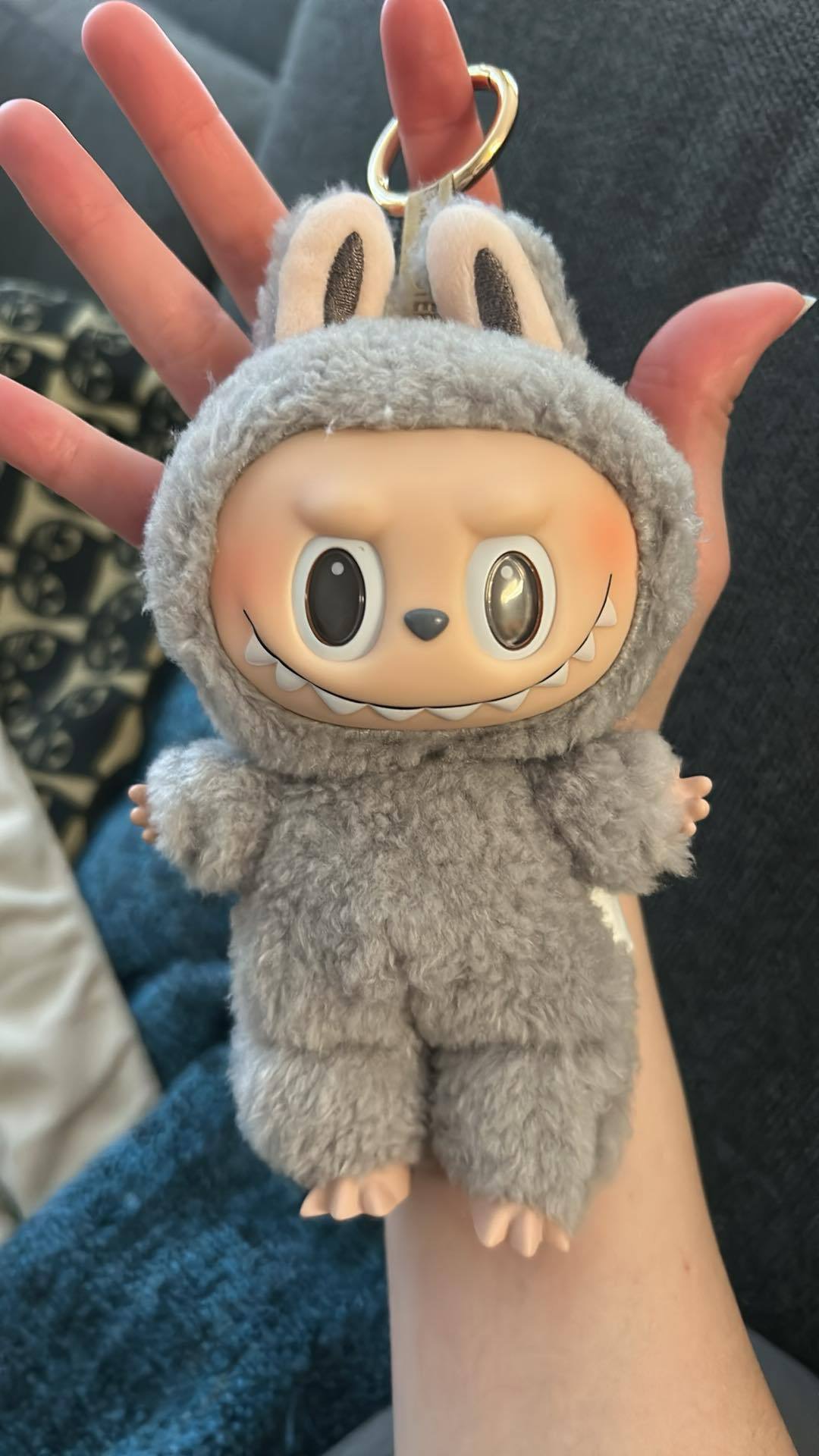
The eyes and ears are another giveaway. On a real Labubu, the eyes are perfectly round and placed with precision. The ears have a distinct shape, curving gently. A Lafufu's eyes might be slightly different sizes, or one might be placed higher than the other. The ears are often too pointy or too stubby. It just looks… wrong.
The Feel Test: Vinyl, Weight, and That Awful Smell
This is something you can't tell from a photo, but it's undeniable in person. Pick up a real Labubu. It has a satisfying weight and a specific texture. The vinyl is high-quality with a smooth, matte finish. It feels premium.
Now, the Lafufu doll vs Labubu doll feel is night and day. The Lafufu is almost always lighter. The plastic feels cheap, hard, and often has a glossy, greasy sheen to it. It feels like a toy from a dollar-store vending machine.
And then there's the smell. This is a real collector's tip that sounds weird but works. Genuine POP MART products have a neutral, faint vinyl scent or no smell at all. Counterfeits, on the other hand, are often made with cheaper, lower-grade plastics and paints. When I unboxed a suspected Lafufu for the first time, the smell hit me immediately, a sharp, chemical odor that screams "cheap production." If your "Labubu" stinks, it's a bad sign.
Box vs. Box: The Packaging Doesn't Lie
The counterfeiters are getting better, but the packaging is still a dead giveaway if you know what you're looking for. The Labubu vs Lafufu box comparison is critical.
* Print Quality: A real POP MART box has incredibly sharp, vibrant printing. The lines are crisp, the colors are saturated, and the artwork is perfect. A Lafufu box looks like a bad photocopy. The colors are often dull or washed out, the text can be blurry, and the images look pixelated. * The POP MART Logo & Hologram: Look for the official POP MART logo. On a fake, the font might be slightly off. Most importantly, genuine boxes have a holographic security sticker. Fakes might try to replicate this, but the counterfeit sticker won't have the same depth or color shift when you tilt it in the light. Some don't even bother with a sticker at all. * Cardboard Quality: Real boxes are made of sturdy, high-quality cardstock. They have clean folds and a solid feel. Lafufu boxes are flimsy, thin, and often feel like they'll fall apart in your hands. * The Collector Card: Inside every real Labubu blind box is a collector card with a crisp image of the character. The cardstock is thick. In a Lafufu box, the card is often printed on thin, flimsy paper, and the image quality is poor.That's a massive red flag.
Paint and Accessories: Sloppy Seconds
Look closely at the paint job. POP MART's quality control is excellent. On a real Labubu, the paint lines are clean, even on the tiniest details.
What does a Lafufu look like up close? Messy. You'll see paint bleeding over the lines, especially around the eyes, mouth, and on the accessories. The finish might be splotchy or have dust particles trapped in the paint.
The accessories on a Lafufu are also a joke. If it's a Macaron Labubu, the macaron it's holding will feel like a cheap piece of plastic with a terrible paint job. The chain on the keychain versions is often flimsy and a completely different color and weight from the real thing.
The "Lafufu Meaning": It's Deeper Than Just "Fake"
So we've established what are Lafufus: they're fakes. But in the collector community, the Lafufu meaning goes a bit deeper. It's a symbol.
On one hand, it's a sign that an artist's creation has become truly iconic. You don't see knockoffs of unpopular toys. The existence of Lafufu is, in a weird way, a testament to the massive cultural impact of Labubu. It's a phenomenon we've also seen with the Labubu PNG craze, where the character's image becomes so widespread that it takes on a life of its own.
On the other hand, it is a threat. It devalues the artist's work, sows confusion, and preys on new fans who just want to participate in the hobby. It's frustrating to see people get excited about their "first Labubu," only to realize they've been sold a cheap imitation. It can sour the entire experience. This is the opposite of the true Labubu meaning, which is rooted in the artist's imaginative world of elves and monsters.
Real Talk: My Honest Opinion on Lafufu
Look, I'm a seller, but I'm a collector first. And I hate Lafufu.
I understand the temptation. You see a real Labubu keychain selling for $50, and then you see a Lafufu for $5. It's easy to think, "What's the big deal? It looks close enough."
But it's not just about the quality. Every time someone buys a Lafufu, it's a vote against the artist, Kasing Lung. He's the man who spent years developing this world and these characters. The counterfeiters steal his intellectual property and profit from his genius without giving him a single cent. It undermines the entire designer toy ecosystem, which is built on supporting independent artists. If you want to learn more about the man behind the monster, I wrote about my journey with Kasing Lung's work and why his vision is so special.
Beyond the ethics, there's the simple feeling of joy and satisfaction. Unboxing a real Labubu, feeling the quality, admiring the perfect paint, and adding it to your collection is a genuinely happy moment. Unboxing a fake feels… hollow. It's a reminder that you settled for a cheap copy. You deserve the real thing.
How to Protect Yourself and Get the Real Deal
The explosion of fakes has made buying on secondary market platforms a minefield. My best advice is to be skeptical.
1. If the Price is Too Good to Be True, It Is. No one is selling a genuine, sold-out Labubu Macaron for $10. That's a Lafufu. Period. 2. Scrutinize Seller Photos. Ask for detailed, high-resolution pictures. Ask for photos of the box, the hologram sticker, and the bottom of the figure's feet (which should have copyright information). If a seller is cagey or uses blurry stock photos, run. 3. Buy From Reputable Sources. The safest way is to buy from POP MART's official stores/website or authorized retailers. That's it. This is the only way to guarantee you're getting a genuine product. For a more detailed breakdown of spotting fakes, you can check out my full Fake Labubu Guide.
At the end of the day, collecting is about passion and authenticity. The labubu and lafufu difference isn't just about the number of teeth or the quality of the plastic; it's about the difference between celebrating an artist and supporting a thief.
If you're looking to start or grow your collection with confidence, knowing every piece is 100% authentic and supports the creator, you can always browse the LABUBU figures we carry in our shop. We're collectors too, and we'd never sell anything we wouldn't be proud to have on our own shelves.
Disclosure: PopNya may earn a commission if you purchase through links on this page.


