

I had a customer email me last week, super excited. "Do your Labubu figures come with the graded card?" he asked. I had to pause. It was one of those moments that perfectly captures where the designer toy world is right now. A fascinating, sometimes confusing, collision of two completely different hobbies.
He was, of course, talking about the new Topps Chrome collaboration. But for years, the only "Labubu card" we knew was the little paper insert that came with the vinyl figure.
So, what is a Labubu card? The answer is, it depends on who you ask. And as someone who handles these little monsters daily at PopNya, I feel like I need to set the record straight. Because one is a companion piece, and the other is a speculative asset. One completes a toy, the other might just buy you a whole case of them.
The Original Gangster: The In-Box Character Card
Let's start with the classic. For every Labubu you've ever unboxed, from the first Fruits series to the latest Monsters Carnival, there's been a small card tucked inside that foil wrapper. This is the OG Labubu card.
Honestly, for a long time, most of us didn't think much about them. They were just... There. A little piece of paper with a cute drawing of the character you just pulled. I have a small photo album filled with them, sorted by series. Others, I know from Reddit threads, toss them in a drawer or use them as bookmarks. They're a fun little bonus.
But here's something only long-time collectors notice: their importance has grown. Go try to sell a Labubu figure from an older, sought-after series on a collector forum without its card. You'll get low-balled. Not by a lot, maybe $5 or $10, but it matters. The card has become the certificate of authenticity, the proof that it's a complete piece. It's the toy's birth certificate.
The quality of these cards has also been a journey. I remember some early series where the card was basically flimsy, uncoated paper that would crease if you looked at it wrong. Now, they're often thick cardstock with a matte finish. Some special releases, like The Monsters Pin for Love Series, had cards designed like little letters, which was a fantastic touch that really elevated the unboxing experience. It showed Pop Mart was starting to see the card as part of the art, not just an accessory.
Their value isn't monetary. You're not going to send your Macaron series Labubu card to get graded. Its value is purely about completion. It's sentimental. It's the final piece of the puzzle when you line up all 12 figures in a series on your shelf. For a figure collector, a Labubu without its card feels naked. Incomplete.
The Game Changer: Topps Chrome Labubu Trading Cards
And then, everything changed.
In late 2024, the announcement dropped: Pop Mart was collaborating with Topps, the titan of sports cards, to create a premium set of Labubu trading cards. The hobby collectively lost its mind.
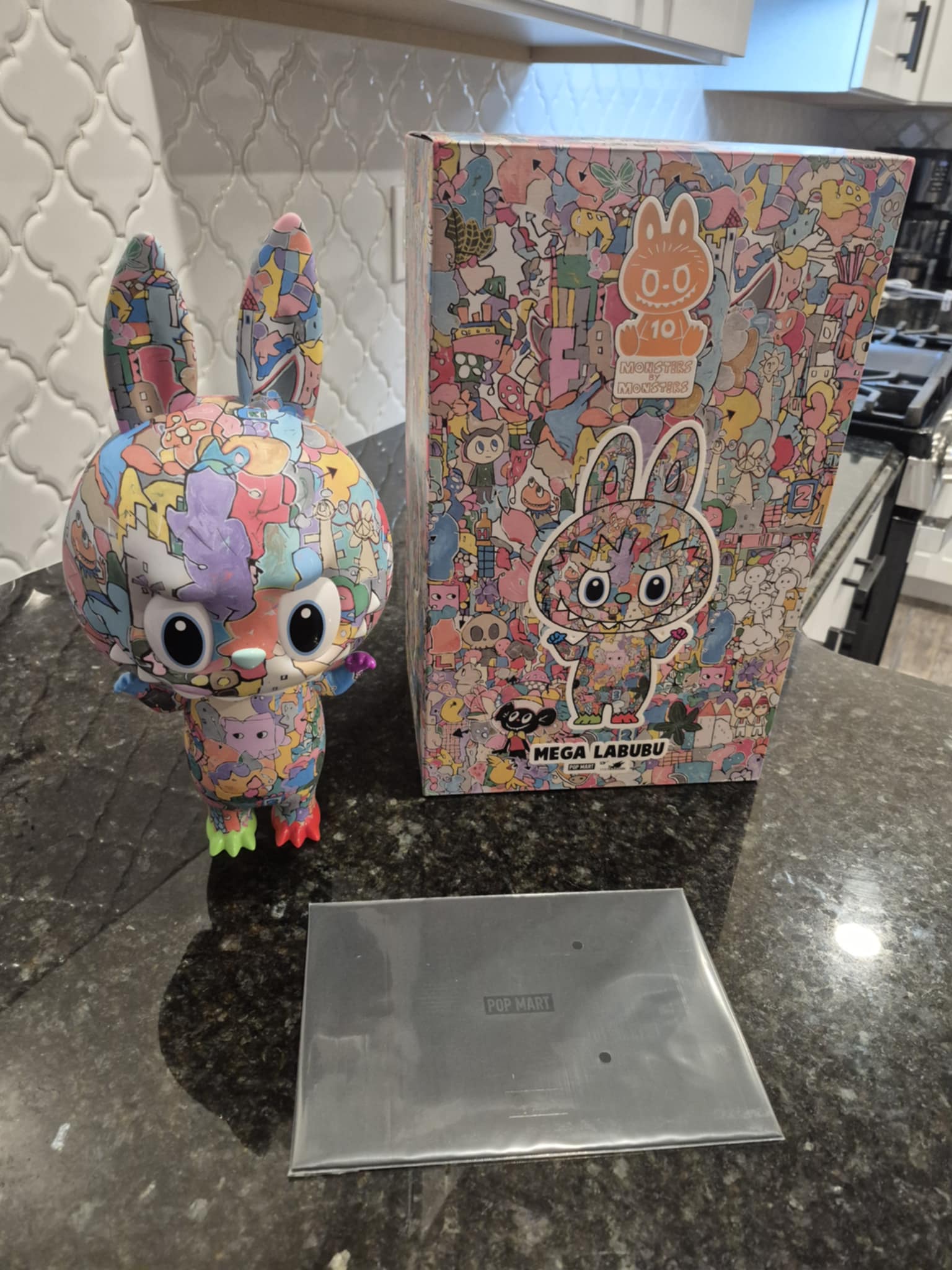
This wasn't just a new product; it was a paradigm shift. It took our cute, shelf-dwelling vinyl monsters and threw them into the high-stakes, high-gloss world of modern card collecting.
These are not the flimsy paper inserts. Not even close. Topps Chrome cards are built different. They are printed on thick, metallic "chromium" stock. They have weight. They have that signature rainbow sheen. And most importantly, they have rarity.
This is where the sports card DNA kicks in. A standard box of Topps Chrome Labubu contains packs of cards, and within those packs, you're hunting for "parallels." These are rarer versions of the base cards, distinguished by different colored borders or refractive patterns.
* Refractors: The standard shiny version. * X-Fractors: A checkerboard-like pattern, a bit rarer. * Numbered Color Parallels: This is the real chase. Blue /199 (meaning only 199 exist), Green /99, Gold /50, Orange /25, Red /5, and the holy grail, the 1/1 "Superfractor."
Suddenly, Labubu wasn't just about finding the secret figure in a case. It was about pulling a Gold Wave Refractor of Zimomo numbered to 50. The language changed overnight. We went from talking about "chases" and "secrets" to "rips," "hits," and "case breaks."
The market reacted instantly. A standard hobby box retails for around $150. But the value of the cards inside can be astronomical. Just last week, I watched a PSA 10 Gem Mint graded Gold Refractor /50 of the "Crying" Labubu sell on eBay for over $800. For a single card. That's more than the cost of five hobby boxes. It's a completely different stratosphere of collecting.
Head-to-Head: Which "Card" Wins?
So, how do they really stack up? It's not about which is "better," but about what kind of collector you are.
The Feel: Holding an in-box character card is like holding a movie ticket stub from a favorite film. It's thin, light, and its value is tied to the memory of the unboxing. Holding a Topps Chrome card is like holding a silver dollar. It's cool to the touch, rigid, and feels inherently valuable because of its construction and scarcity.The Thrill: The joy of the blind box is tactile. You shake the box, feel the weight, and tear open the foil to reveal a 3D object you can hold and display. The card is an afterthought, a confirmation of your prize. The thrill of labubu trading cards is a fast-paced, dopamine-fueled rip. You tear through multiple packs in minutes, quickly sleeving the base cards to get to the "hits" in the back. It's a treasure hunt on paper, a lottery of color and shine.
The Value Proposition: This is the biggest difference. The in-box card's value is tied to the figure. It might add 5-10% to the resale value. The Topps card's value is entirely independent. You could have a base card worth 50 cents and a parallel of the exact same art worth $500. It's a market driven by scarcity, grading, and speculative hype, much like sneakers or stocks. It has absolutely nothing to do with the vinyl toy itself.
The Community: The communities are still largely separate. Figure collectors congregate on Instagram, sharing beautiful photos of their displays. They trade figures to complete sets. Card collectors are on platforms like Whatnot doing live case breaks, talking about grading submissions with PSA, and tracking market prices on apps like Card Ladder. It's more analytical, more financially driven.
Real Talk: My Honest Take as a Seller
Okay, let's be real. The Topps Chrome labubu trading cards are a brilliant business move. They've introduced Kasing Lung's incredible world to a massive new audience of collectors who would have never bought a vinyl toy. The cards are stunningly well-made. I've opened a few boxes myself, and the thrill of pulling a numbered parallel is undeniable.
But I have to be honest, a part of me is worried.
I worry it dilutes what makes Labubu special. The core of this hobby, for me, has always been the physical figure. The weight of it in your hand, the texture of the paint, the cleverness of the design. A Labubu is a small sculpture. A trading card is a picture of a small sculpture.
My warning to new collectors is this: don't get so caught up in the trading card hype that you forget what the hobby is about. If you love the thrill of the chase and the potential for a big financial "hit," then by all means, dive into the Topps cards. It's a blast. But if you fell in love with Labubu because you love the character, the art, and the feeling of holding a physical toy, don't let the card market distract you.
The long-term value is also a question mark. While a 1/1 Superfractor will always be valuable, the prices for mid-tier parallels might cool off as more sets are released. A truly rare figure, like The Loyalty Labubu, has a proven history and a physical presence that a card just can't match. Its value is tied to an event and a story, not just a print number.
A Seller's Secret: Here's a little detail I've noticed from handling cases of the Topps Chrome product. The outer hobby boxes, even when they come directly from a sealed master case, often have slightly soft or dented corners. It's a minor packaging flaw from the factory. The cards inside are perfectly safe in their packs, but if you're someone who likes to collect sealed boxes as an investment, it's something to be aware of. Ask for pictures of the specific box you're buying if you're picky about box condition. It's a small thing, but it's the kind of detail that gets lost when you're just buying from a massive online retailer.
Ultimately, the emergence of two types of "Labubu card" is a sign of a healthy, growing universe. It offers different entry points for different kinds of people.
Are you a figure purist, where the card is just the cherry on top of the vinyl sundae? Or are you a card shark, hunting for that ultra-rare parallel to flip or get graded?
There's no wrong answer. For me, while I enjoy the thrill of the card rip, my heart will always be with the figure. There's nothing that can replace the feeling of unboxing a new series, lining them all up, and finding the perfect spot on the shelf for them. That's the magic. The little card that comes with it is just a souvenir of that moment. And if you're looking to experience that magic, you can always browse LABUBU figures in our shop to start your own collection. The new Topps cards are exciting, but the original joy of the toy is timeless.
Disclosure: PopNya may earn a commission if you purchase through links on this page.


