

I've seen the search terms. I've seen the hashtags. "Labubu boutique." It's a phrase that's suddenly everywhere in the designer toy community, and honestly, it's causing a lot of confusion. If you Google it, you get a weird mix of results: a random collection page on an online store, a Yelp listing for a physical shop in California, an Instagram handle, even a one-off pop-up event at a baseball game.
So, what is it? Is it one specific place? A franchise? A secret club?
As someone who lives and breathes these little monsters, both as a collector and as the person behind PopNya, I can tell you it's not one single thing. It's a concept. It's the community's way of describing a place that has a more specialized, curated experience than just walking into a big-box Pop Mart or scrolling through their official Tmall page.
But the term is getting messy. And I think it's time we had a real talk about what a `labubu boutique` is, what it should be, and what to watch out for.
The Myth of the Single "Boutique"
First, let's clear this up. There is no single, official entity called "The Labubu Boutique." It's a catch-all term that collectors have started using for a few different types of sellers. When people are searching for a `laboutique labubu`, they're looking for a dedicated source, a place with passion behind it. They're tired of the chaos of the mass market.
I see it as breaking down into three main categories:
1. The Event-Based Pop-Up: These are the unicorns. They're official or semi-official collaborations, here one day and gone the next. Think of the pop-up shop at the San Diego Padres game. These events are pure hype. They often have an exclusive figure or limited-edition merch. The lines are insane, the stock is low, and whatever they're selling is on the secondary market for 5x the price within hours. It's an experience, for sure, but it's not a reliable way to build your collection. It's more like a concert than a store.
2. The Independent Physical Shop: These are the heart and soul of the local collector scene. A great example is The Labu-tique Shop in Orange, California. These aren't Pop Mart corporate stores; they're small businesses run by people who are genuine fans. Walking into one is a totally different vibe. The shelves are packed not just with the latest series, but often with older, harder-to-find sets, individual figures for sale, and a whole ecosystem of accessories. The person behind the counter can actually talk to you about Kasing Lung's art or the specific texture of the latest Zimomo release. These places are vital, but they are incredibly rare. Most of us don't have one in our city.
3. The Curated Online Store: This is the category where we at PopNya fall, and it's the most common type of "boutique" you'll find. These are online shops, often run by a single person or a very small team, who have decided to specialize. We're not Amazon. We're not the official Pop Mart site with its endless menus. We are a focused collection. We do the hard work of sourcing, importing, and quality-checking so you don't have to. We build a relationship with our customers because we are our customers. We started these stores because we couldn't find what we were looking for in the mainstream market.
Real Talk: The "Boutique" Price Tag
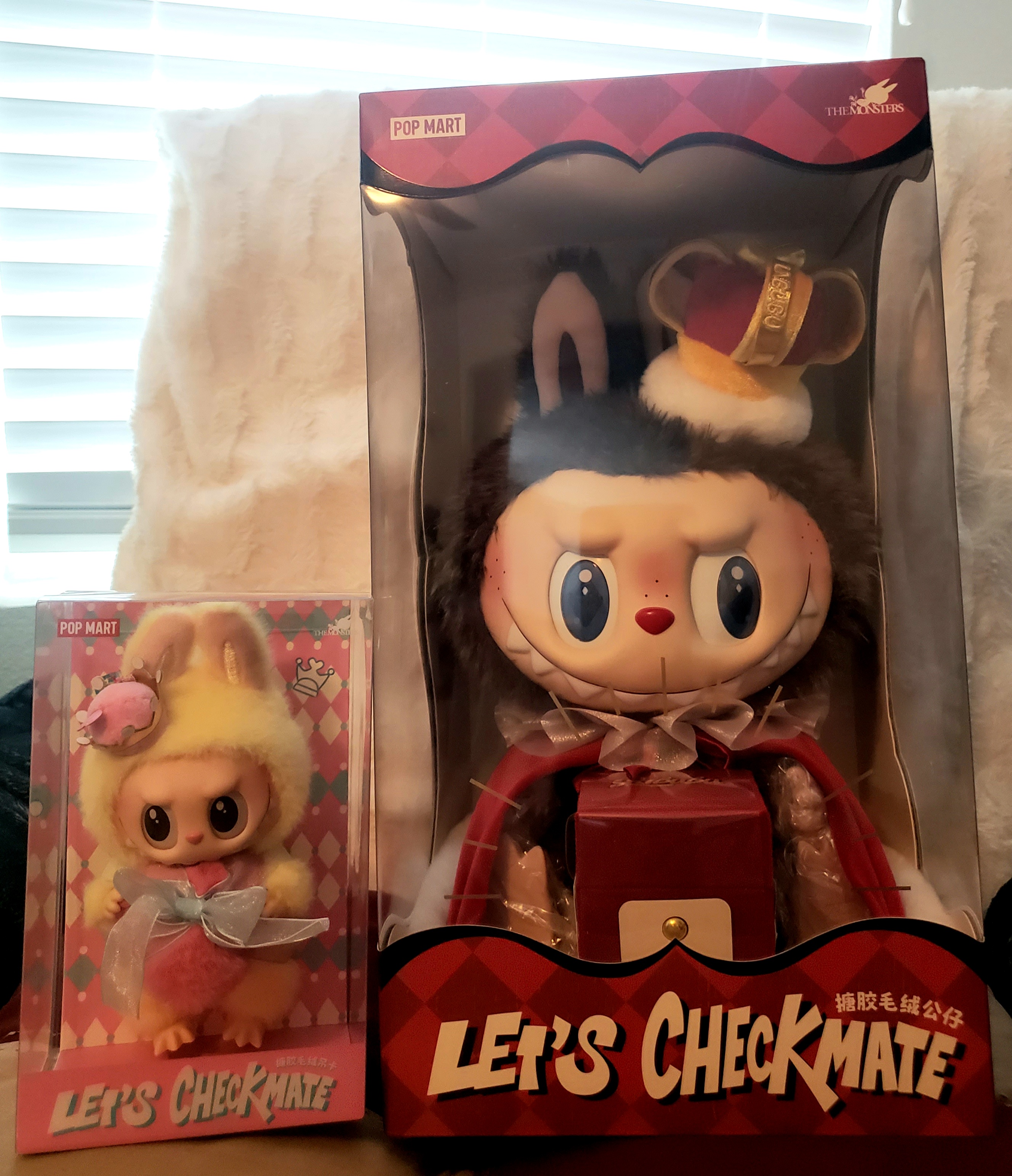
Okay, let's talk about the elephant in the room: the price. You'll almost always pay a bit more at a boutique, whether it's physical or online, than you would at a retail Pop Mart store in Asia. And I think it's important to be transparent about why.
Running a small, specialized shop isn't cheap. When I source a case of a new LABUBU series for PopNya, I'm not just paying the retail price. I'm paying for international shipping, which has gotten astronomical. I'm paying import taxes and customs fees. Sometimes, to get a popular or rare series, I have to work with a distributor who adds their own markup.
Here's a real-world example only a seller would know. For The Monsters "Let's Christmas" series from late 2023, I had two supplier options. One was the standard restock price. The other was about $4 more expensive per box, but it was guaranteed to be from the very first production run. Why does that matter? Because I've handled enough of these to know that the first batches, especially on a complex series like that one, often have a slightly crisper paint application and better quality control before the molds start to wear down. I paid the premium. My customers got the better product. That's a cost that doesn't show up on a big retailer's balance sheet, but it's the core of what a boutique experience is about.
When you buy from a place like ours, you're paying for that curation.You're paying to avoid the gamble of eBay or the Wild West of Facebook Marketplace, where fakes are rampant and a "mint condition" box looks like it was used for a game of soccer.
It's More Than Just the Figure
A true `labubu boutique` understands something fundamental: the figure is just the beginning. The real fun is in building a world around it. This is where specialized shops truly shine and where the big retailers completely drop the ball.
We're talking about the entire ecosystem. The tiny, perfectly-scaled clothes. The display cases and acrylic risers. The custom accessories. This is a huge part of the hobby. I've spent hours online trying to find a hoodie that actually fits a LABUBU's unique head-to-body ratio. It's a nightmare. Many collectors get so frustrated they end up buying from sketchy drop-shippers on AliExpress.
A good boutique does the legwork for you. They find the artists and small makers who create high-quality outfits and add-ons. They test the sizing themselves. When you see clothes on a boutique site, you can be more confident they'll actually fit. If you've ever felt the pain of trying to find good LABUBU clothes, you know exactly how valuable this is. In fact, we put together a whole guide on this because the problem is so widespread; you can find some of our best tips in The Unofficial Guide to Labubu Clothes: Sizing, Scams, and Where to Actually Buy.
It's the same with other items. A good shop will stock things that complement the collecting experience. They'll offer a curated selection of everything you need, from protective pouches to display stands. It's about creating a one-stop shop for the serious fan, which is why we've also tried to create a helpful resource with Your Complete Playbook for Labubu Accessories. The goal is to move beyond just selling boxes and start enabling the hobby itself.
Our Take: A Warning About the "Boutique" Buzzword
I'm going to be completely honest here. I'm starting to get a little wary of the term "boutique."
Because it's become a buzzword, I'm seeing a lot of low-effort resellers slap "boutique" in their Instagram bio, mark up a case of the latest LABUBU Macarons by 100%, and call it a day. They use stock photos, have zero community engagement, and can't answer a single question about the product.
That is not a boutique. That is a scalper with good branding.
A real boutique, online or off, is defined by passion and expertise, not by a fancy name. So, how do you tell the difference? Here's my personal checklist when I'm looking at a new-to-me shop:
* Original Photos: Are they using their own photography? Can you see the actual product from multiple angles? Or is it just the generic Pop Mart stock photos? Original photos show they have the product in hand and care about presentation. * Product Knowledge: Read their descriptions. Do they offer any insight or detail? Do their social media posts show they're actually opening these things and engaging with them? A real enthusiast can't help but share their excitement and knowledge. * Community Footprint: Look at their comments. Are they responding to people? Are they part of the wider collector conversation? A passionate seller is a member of the community they're selling to. * Curation, Not Just Volume: Does their shop feel like a thoughtful collection, or just a random dump of whatever is popular? A boutique has a point of view. They carry what they love and what they believe in. They might have older series alongside the new stuff because they personally think it's a great set.
This is especially critical when you're buying high-demand items like the keychains, which are a minefield of fakes and price gouging. A trustworthy boutique is your best defense. We see so many people get burned on these that we wrote up an entire survival guide on it, The Honest Guide to Buying a Labubu Keychain (Without Getting Scammed). The principles for spotting a good seller there apply to everything.
So, the next time you see "Labubu Boutique," pause for a second. Look past the name and look for the passion. Look for the expertise. That's where you'll find the places that are truly adding value to our hobby. These are the shops that deserve our support. They are the ones that make collecting more fun, more accessible, and more of a community.
And, if I can say so myself, that's exactly what we're trying to build here at PopNya. We invite you to browse our LABUBU collection and see the difference for yourself. We're not just moving boxes; we're sharing a passion, one monster at a time.
--- Disclosure: PopNya may earn a commission if you purchase through links on this page.


