

I'll never forget the first time I saw an albino labubu in person. It wasn't in a pristine display case or a flashy social media post. It was at a small toy swap in a crowded community hall, tucked away on a collector's trade blanket. Among a sea of colorful, grinning monsters, this one was just... White. Stark, silent, and somehow louder than all the others. The owner told me it wasn't for sale. Not for any price.
That's the kind of energy the Albino Labubu commands. It's less a toy and more a legend.
For anyone new to the rabbit hole, let's get the basics out of the way. The Albino is the "super secret" chase figure from The Monsters Toys Blind Box Series 1. This was one of the earliest labubu blind box collections from Kasing Lung and POP MART. While a regular blind box case has 12 unique figures, a "master case" (which is 12 full cases) has a chance of containing a secret. The Albino's pull rate is stated as 1/144.
That number sounds abstract, so let me break it down from a seller's perspective. It means you'd have to buy 144 individual boxes, on average, to find one. That's twelve full display cases. At a retail price of about $12 per box, you're looking at a theoretical cost of over $1,700 just for the chance to pull it yourself. And that assumes you can even find Series 1 boxes anymore, which you can't. They've been out of production for years.
This scarcity is the foundation of the Albino's mythos. But it's not the whole story.
The Anatomy of a Grail: Why This Little White Monster?
So why did this specific figure become the grail? It's not the most complex design. It's not a flashy crossover like The Monsters x One Piece Labubu. I think it comes down to a perfect storm of three factors.
First, the "OG" status. Being from the very first series gives it a historical weight that newer secrets can't match. It is the beginning of the Labubu craze. Owning one is like owning a rookie card of a hall-of-fame athlete. It's a piece of history. Many newer collectors, who might have gotten into the hobby with the wildly popular Macaron or Flower Elves series, have only heard stories about it. For a full breakdown of the Labubu phenomenon, you might want to read this ultimate guide to LABUBU dolls, but the Albino is truly in a class of its own.
Second, the aesthetic. In a world of vibrant, pastel, and sometimes chaotic designs, the Albino is an exercise in restraint. It's pure form. The all-white vinyl body with just those two piercing red eyes is incredibly striking. It looks less like a toy and more like a small sculpture. It stands out on a shelf precisely because it's so understated. It doesn't scream for attention; it commands it. It's the polar opposite of the bright, cheerful figures you see in, say, the various pink Labubu designs, and that contrast is powerful.
Finally, and most importantly, the market. The price of the Albino didn't just climb; it skyrocketed. When Series 1 was still available, you might see it pop up in collector groups for $150-$200. That felt like a lot back then. I watched it happen. By 2021, it was consistently hitting $350. As of me writing this, finding a legitimate, mint-condition Albino with its card for under $500 is a steal. I've seen them listed for as high as $700 on platforms like eBay, and they actually sell. This price tag isn't just about the toy itself; it's a status symbol. It's the ultimate flex in the Labubu community.
Real Talk: My Life with the Albino (and its Fakes)
As someone who runs PopNya and handles these figures daily, the Albino is a constant topic of conversation. Customers ask if we can get it. They send me photos from sketchy online listings asking, "Is this real?"
And that's the dark side of the hype: the fakes. They are everywhere.
The counterfeit market for Labubu is sophisticated, and the Albino is their crown jewel. If you're hunting for one, you have to be paranoid. I've seen fakes that are frighteningly good, but there are always tells if you know what to look for. Forget the box, that's easily replicated. You need to look at the figure itself.
Here's my personal checklist, learned from handling both real and fake Albinos:
1. The Vinyl Feel: A genuine POP MART Albino has a specific matte, almost soft-touch finish. It's smooth but not glossy. Most fakes use a cheaper, harder vinyl that has a slight sheen to it and feels slick or oily. This is the hardest thing to judge from photos, but in hand, it's a dead giveaway.
2. The Feet Stamping: Turn it upside down. The genuine article has crisp, clean copyright text ("© Kasing Lung," "POP MART," etc.) molded into the bottom of the feet. On fakes, this text is often soft, blurry, or slightly misshapen. The mold quality just isn't there.
3. The Red Eyes: This is a huge one. On a real Albino, the red paint in the eyes is a deep, rich crimson. It's perfectly applied within the lines of the eye socket. Fakes almost always get this wrong. The red is either too bright (almost a cherry red) or sloppily applied with tiny specks of bleed onto the white vinyl. Get a magnifying glass or use your phone's zoom. If it's not perfect, walk away.
4. The Collector Card: The card that comes with the Albino is as important as the figure. A real card has a distinct, slightly textured, linen-like finish. It feels premium. Fake cards are often printed on smooth, glossy cardstock. The colors might also be slightly off.
I once had a collector bring one to me that he'd bought for $300 online. He was so excited. It looked good from a distance, but the moment I held it, I knew. The vinyl felt wrong. It was too light, too hard. We looked at the feet, and the text was a blurry mess. It was a heartbreaking conversation to have. That's why I'm so vocal about this. The thrill of the hunt can quickly turn sour if you're not careful.
*Our Take: Is the Albino Labubu Actually* Worth It?Okay, let's be brutally honest. Is a three-inch piece of white vinyl worth $500 or more?
From a purely objective standpoint? No. Absolutely not. It's a mass-produced toy, even if it's rare.
But collecting isn't objective. It's emotional. So the real answer is: it depends entirely on why you're collecting.
You should consider hunting for an Albino if:** * You are a die-hard, completionist Labubu collector, and this is the final piece of your puzzle. For you, the price is the cost of completing your masterpiece. * You view high-end designer toys as an alternative asset class. While I never recommend buying toys purely as an investment, the Albino has held its value and appreciated better than almost any other blind box figure. * The story and the status mean something to you. You want the grail. You want the piece that makes other collectors stop and stare.
You should probably skip the Albino if:
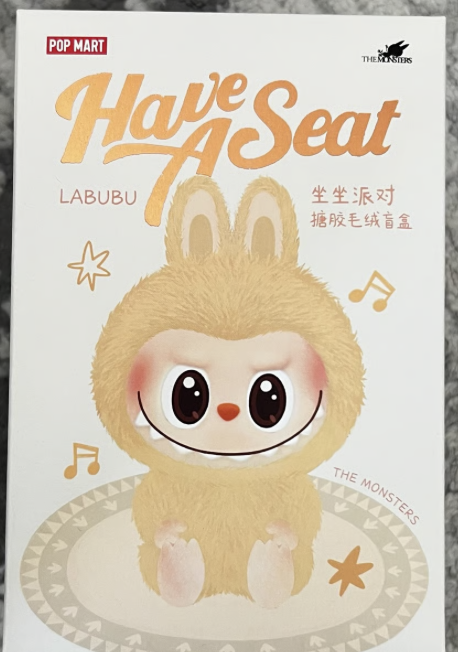
You're a casual collector who just loves Kasing Lung's cute monster designs. Your money would be so much better spent elsewhere. For the price of one Albino, you could buy multiple* complete sets of other fantastic labubu blind box collections. Seriously, you could get the entire Exciting Macaron Labubu series, the Have a Seat series, and maybe even a few from the latest drop.* You're more interested in design variety and color. The Albino is a one-trick pony in that regard. Its beauty is its simplicity, but if you love the vibrant chaos of other series, it might feel underwhelming in person. * The thought of spending that much on a single blind box toy gives you anxiety. Don't do it! This hobby should be fun, not a source of financial stress. There are so many amazing, affordable Labubus to enjoy.
My personal verdict? I respect the Albino immensely as a piece of collecting history. But I'd rather have a shelf full of colorful, expressive Labubus than one single white one. The joy for me is in the variety, the unboxing, and the community. But I also completely understand the collector who needs that one, ultimate piece to feel like their collection is complete. There's no right or wrong answer, only what's right for you.
The legend of the Albino has shaped the entire hobby. It created the blueprint for the "chase" that keeps people buying and trading. It fuels the excitement of opening every single blind box, that little voice in the back of your head whispering, "What if?" It's a key part of what makes browsing a full LABUBU collection so exciting, knowing that somewhere out there, these ultra-rare grails exist.
Whether you decide to hunt for the white whale or simply admire it from afar, the Albino Labubu is a fascinating case study in what makes a simple toy an icon. It's a story of scarcity, status, and the passionate, sometimes crazy, world of collecting.
Disclosure: PopNya may earn a commission if you purchase through links on this page.


