

I remember the first Labubu I ever bought. It was from The Monsters Camping series. I pulled the little guy with the tent on his head and was instantly hooked. The weight, the texture, the mischievous grin. Fast forward a few years and a few hundred boxes later, and I'm running PopNya, my own little corner of the internet for these adorable monsters.
A lot of the "guides" out there feel like they were written by someone who just Googled "what is labubu" five minutes ago. They list the series, talk about the designer Kasing Lung, and call it a day. That's not what this is. This is the stuff I've learned from opening cases, dealing with suppliers, and talking to hundreds of collectors. This is the real labubu collectors guide.
The "Where Do I Even Start?" Problem
The first thing that hits you is the sheer volume. There are dozens of blind box series. The Monsters Fruits, Sweets, Toys, Animals, Weather... It's overwhelming. New collectors often feel like they need to catch up, to own a piece of every series.
My advice? Don't.
You'll burn out and go broke. Instead of trying to collect everything, pick a lane.
- Collect a character: Maybe you only love Zimomo (the spiky one) or Tycoco (the skull-faced one). Focus on just getting their figures from each series.
- Collect a theme: Do you love food-themed toys? Just focus on the Sweets, Fruits, and Patisserie series.
- Collect a color: I know people who only collect pink or blue Labubus. It makes for an incredibly aesthetic shelf.
The point is to set your own rules. There's no "right" way to collect. Once you know what you want, the next question is where to get it. You have three main options: official channels (like the POP MART website), specialty retailers (like us at PopNya!), and the secondary market (eBay, Mercari, Facebook groups).
Official channels are great for new releases at retail price, but they sell out fast. The secondary market is where you'll find older series or specific figures, but you need to be careful about prices and authenticity. That's why stores like ours exist, we try to bridge that gap, offering a curated selection of both new and sought-after figures. If you're just starting and want to see the variety, you can browse our LABUBU collection to get a feel for the different series.
*The Money Talk: What You're Actually* Going to SpendLet's be brutally honest. This hobby can get expensive. A standard blind box retails for about $15-$18 in the US. A full case of 12 boxes will run you close to $200. And that's just the baseline.
The real cost comes from chasing "secrets" or "chases." These are the rare, unannounced figures in a series. The odds are usually 1 in 144 boxes.
Let me put that in perspective. To have a statistical chance of pulling one secret, you'd need to buy 12 full cases**. That's over $2,400.
And the market price reflects that. Take The Monsters x Kow Yokoyama Ma.K. Series. The regular figures are cool, but the secret, "S.A.F.S.," was a phenomenon. I saw it go from its "value" of being in a $17 box to selling for $250-$300 on secondary market sites within weeks of release. Is it worth it? Only you can decide. But don't go into this thinking you'll just "get lucky" and pull a secret on your first try. It happens, but it's like winning the lottery.
The market is also incredibly volatile. A figure that's hyped today might be forgotten tomorrow. I remember when the Loyalty Labubu was the absolute must-have figure. Prices were soaring. But then a new, shinier series came out, and the market for Loyalty cooled off a bit. It's still valuable, but the frantic energy is gone. It's a classic example of how hype drives this market. You can't treat these like stocks.
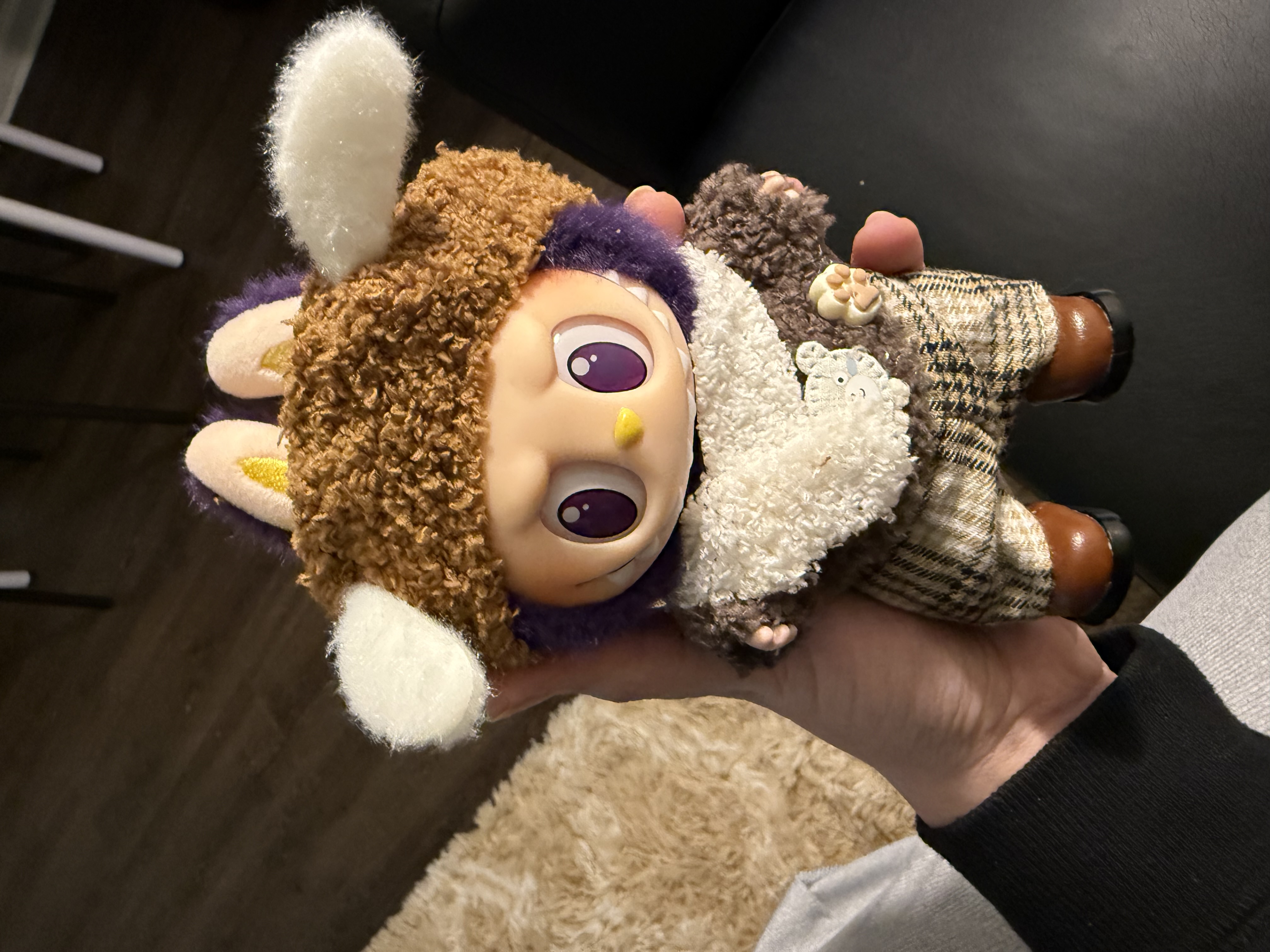
Real Talk: The Tricks and Traps of Blind Boxes
When I first started, I heard all the rumors. "Shake the box, if it rattles a lot, it's this figure." "Bring a small scale to the store, the secret is always heavier."
I'm here to tell you: most of that is nonsense now.
POP MART has gotten incredibly savvy. In the early days, you could sometimes tell a figure by its weight or the sound it made. Not anymore. I've opened recent cases where they've clearly added small cardboard inserts or standardized the internal packaging to make every box feel and weigh almost exactly the same. The weight difference between a regular figure and a secret might be less than a gram. You're not going to feel that holding a box in your hand.
So, what do you do when you pull a duplicate? It's the worst feeling, right? You have options. 1. Trade: This is the heart of the community. Find a local collector group on Facebook or Discord. Trading your duplicate for a figure you don't have is the most cost-effective way to complete a set. 2. Sell: You can usually sell a common duplicate for a bit less than retail price. You won't make money, but you can recoup some of your cost to put toward the next box. 3. Customize: Get creative! Some of the most amazing pieces I've seen are customized duplicates. A little paint can turn a common figure into a one-of-a-kind piece of art. It's a great way to engage with the hobby on a different level, and it's a big part of why fanart is so important to the community.
Beyond the Blind Box: Big Figures and Other Money Pits
As you get deeper into the hobby, you'll discover a world beyond the 3-inch blind box figures. You'll see "Mega Collection" 400% (about 11 inches tall) and 1000% (about 27 inches tall) figures. These are statement pieces. They're also expensive, often running from $150 to over $1,000.
Then there are the special collaborations and limited editions. These are often released at conventions like ComplexCon or DesignerCon, or they're exclusive to certain regions. This creates instant scarcity and insane hype. The recent Blue Boo Boo figure from the Fall in Wild series is a perfect example. It was a social media sensation, and prices on the secondary market reflected that immediately. People were paying hundreds for a figure that started in a $25 box.
My advice on these big-ticket items is to be patient. The initial release hype is always the peak. If you can wait a few months, the price often settles into something more reasonable. Unless it's a truly limited piece (like, under 100 made), the FOMO is usually worse than the reality of missing out.
Our Take: Is Collecting Labubu a Good "Investment"?
Okay, let's have a real heart-to-heart. People ask me all the time if Labubu is a good investment.
Honestly? No. Not if you're treating it like the stock market.
Can you make money? Yes. I've seen people buy a case, pull a secret, sell it for $300, and basically get the rest of their case for free. But for every person that happens to, there are ten others who bought 12 boxes and got 4 duplicates of the one figure they didn't want.
The market is driven by hype, social media trends, and pure emotion. It's not rational. A figure can be worth $200 one month and $80 the next. If you're buying with the primary goal of reselling for a profit, you're more likely to get burned than get rich.
So why do it? Why do we fill our shelves with these little monsters? I've written before about why people like Labubu, and for me, it comes down to joy. They're little pieces of art from Kasing Lung's incredible imagination. They are a physical connection to a world of mischievous, lovable monsters. The fun is in the hunt, the surprise of the unboxing, the community of trading, and the satisfaction of placing a new friend on your shelf.
Collect because you love the design. Collect because it makes you happy. Don't collect because you think you've found the next Beanie Baby craze.
Quality, Fakes, and What to Look For
One last thing every new collector needs to know about is quality and fakes.
POP MART's quality control is generally very good, but it's not perfect. I've opened thousands of these. I've seen figures with tiny paint smudges, a slightly loose joint, or a faint scratch. It happens. It's part of the mass-produced nature of the toy. If you're buying on the secondary market, always ask for detailed photos.
Fakes are a bigger problem, especially for the high-value figures. As a seller, I've learned to spot them. Here are a few tells:
- The Box: Fakes often have slightly blurry printing or colors that are a little off. The cardboard might feel thinner or flimsier.
- The Vinyl Feel: This is the hardest to describe but the easiest to feel. Genuine Labubus have a specific density and a smooth, matte finish. Fakes often feel lighter, more plasticky, and have a glossy sheen.
- The Collector Card: This is a big one. Real cards are printed on high-quality, thick cardstock with crisp graphics. Fakes often have flimsy, poorly printed cards. The details of the card itself can be a whole collecting world, and knowing what a Labubu card is can help you spot inconsistencies.
My best advice against fakes is simple: buy from reputable sources. If a price on a super rare figure seems too good to be true, it absolutely is.
Starting a Labubu collection is an adventure. It can be thrilling, sometimes frustrating, but always full of character. Forget the hype and the market prices for a second. Find a figure that speaks to you, that makes you smile. That's the real secret chase.
Disclosure: PopNya may earn a commission if you purchase through links on this page.


