

I got an email from a customer last week. It was frantic.
"Hi, I just bought a Labubu Macaron from you and my friend told me it has a microphone inside? Is this true? Is it listening to me?"
I sighed, but I wasn't surprised. This is probably the tenth time this month I've had to address the great labubu microchips conspiracy. If you spend any time on TikTok or in Labubu fan groups on Facebook, you've seen it. Videos of people performing surgery on their poor, unsuspecting figures. Whispers of GPS trackers, listening devices, and all sorts of sci-fi surveillance tech packed into our favorite big-eared monster.
As the owner of PopNya and a collector myself, I've unboxed, inspected, and shipped literally thousands of these figures. I've seen the evolution of the packaging, the subtle shifts in vinyl quality between batches, and yes, the introduction of the infamous chip.
So I'm here to tell you what's really going on. This isn't a generic summary of Reddit threads. This is a field report from the trenches.
What Is Actually Inside Your Labubu?
Let's get this out of the way first. There is no microphone. There is no GPS tracker. Your Labubu is not reporting your secret conversations back to Pop Mart headquarters.
What you're seeing in those dramatic TikTok videos is a tiny, passive NFC tag.
NFC stands for Near Field Communication. It's the same technology that lets you tap your phone to pay for coffee or tap your transit card on a reader. It's a simple, unpowered coil of wire and a minuscule chip that can be activated when it comes very close (like, a few centimeters) to an NFC reader, like the one in your smartphone.
It has no battery. It cannot transmit data on its own. It can't do anything until your phone is basically touching it.
The chip itself is usually embedded in the vinyl of the head or torso. It's tiny, often smaller than a grain of rice and flat as paper. It feels like a slightly firm spot if you really squeeze the vinyl, but most people would never notice it. When people cut their dolls open, they're often surprised at how underwhelming the "spy tech" actually is. It's just a little metallic sticker, essentially.
Why Did Pop Mart Put Chips in Labubu Dolls?
This is the real question, and the answer is all business. It has almost nothing to do with you, the collector.
The primary reason is anti-counterfeiting.
Labubu, especially The Monsters series, has exploded in popularity. And with popularity comes fakes. A lot of fakes. These counterfeits hurt Pop Mart's brand, they dilute the market, and they trick collectors into buying inferior products.
By embedding an NFC chip in each authentic figure, Pop Mart creates a unique digital fingerprint. In theory, their internal systems and authorized distributors can scan a case or even an individual box to verify that it came from their factory and is not a knock-off. It's a way to secure their supply chain from the factory to the retailer.
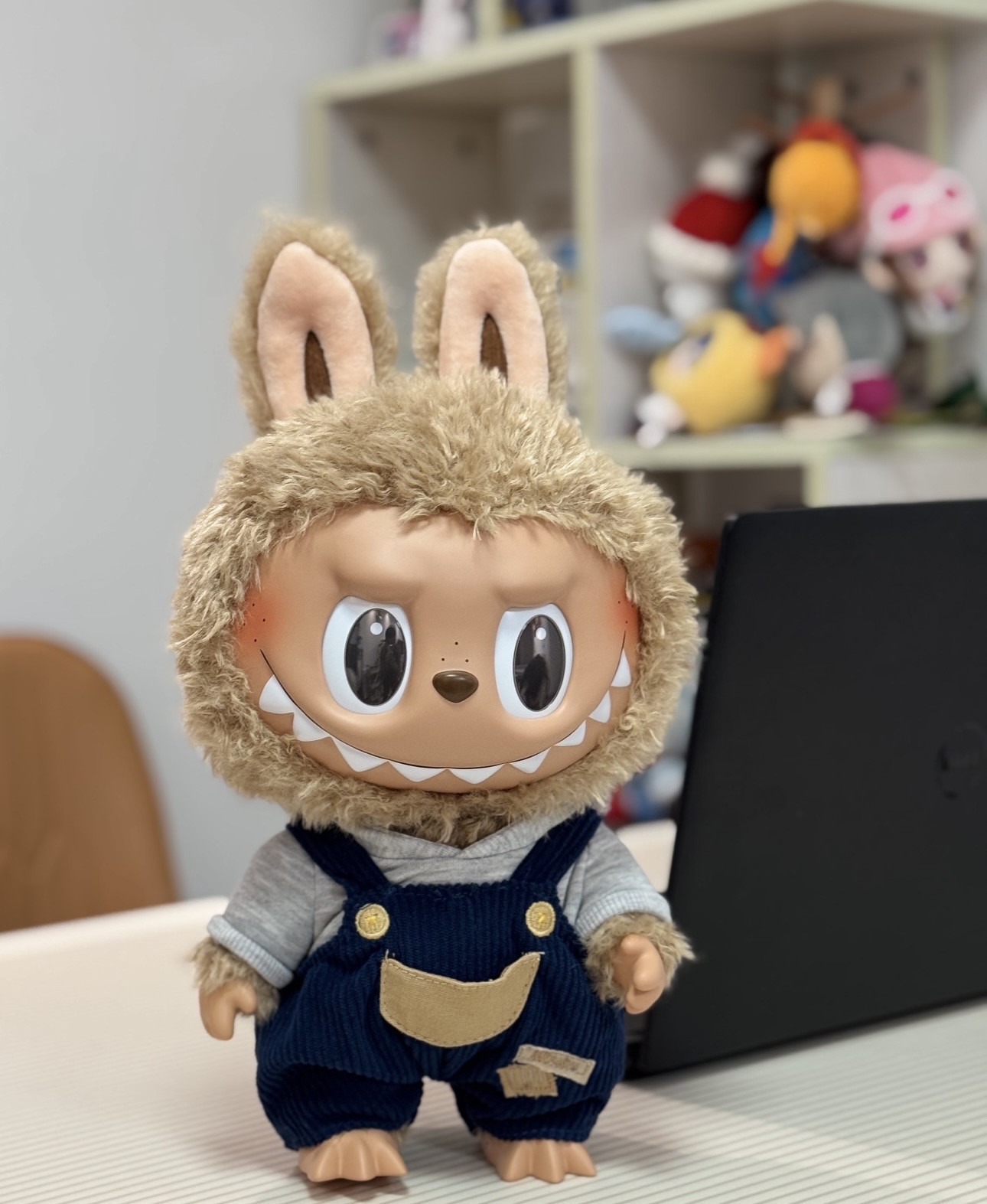
I first started noticing these chips appearing consistently with the mega-popular releases, like The Monsters Exciting Macaron series (the keychains everyone went nuts for). If you have an older Labubu series from, say, 2019 or 2020, it almost certainly does not have a chip. This was a later addition to their manufacturing process as the brand's value skyrocketed.
The whole labubu dolls microchips phenomenon is a direct response to the brand's massive success. It's a tool for them to protect their intellectual property on a global scale.
So, Can I Use The Chip For Anything?
Okay, this is where the reality gets a little disappointing for all the tech enthusiasts out there.
Yes, you can try to scan your Labubu with your phone. Turn on the NFC function on your Android or iPhone (on newer iPhones, it's always on) and tap the back of your phone all over the figure's head and body.
Here's what I've found from trying this on dozens and dozens of different Labubus from our inventory:
1. It's finicky. You have to find the exact right spot. Sometimes it's in the head, sometimes the chest. The vinyl is thick and can interfere with the signal. I'd say I only get a successful scan about 50% of the time I try. 2. The result is underwhelming. When it does work, it almost always just opens a web browser to a generic Pop Mart page. Sometimes it's their main website, sometimes it's their WeChat mini-program login. There's no cool animation, no unique certificate of authenticity for your specific doll, no "Congratulations, you own the real Soy Macaron!" message.
It's not an interactive experience. It's not a digital passport for your toy. It's a glorified link.
This is a huge piece of information gain that most discussions miss. People assume the chip unlocks some secret digital world. Right now, it doesn't. It's like having a QR code embedded inside the toy, but one that's much harder to scan. Perhaps Pop Mart has future plans for it, but as of today, its utility for the end collector is basically zero.
Real Talk: My Honest Verdict on the Chips
) getting twisted by social media algorithms that reward outrage and conspiracy.
The labubu microchips are a non-issue. They are a boring, corporate anti-theft device, not a James Bond gadget. The fear is rooted in a general, and sometimes justified, anxiety about technology and privacy. But in this case, it's completely misdirected.
My honest warning to every collector: Do not cut open your Labubu to "check for a chip." You will accomplish nothing and destroy a piece of art that you (or someone else) paid good money for. You're more likely to find a small, boring NFC sticker than you are to uncover a global surveillance plot. And in the process, you've turned a $15 (or if it's a chase, $150+) collectible into a piece of trash.
The chip is a symptom of Labubu's success, not a threat to your privacy. It's a testament to how valuable Kasing Lung's creation has become.
Does the Chip Affect a Labubu's Value?
This is a question I can answer with absolute certainty from my position as a seller.
No. Not at all. Zero.
In the secondary market, the value of a Labubu is determined by three things: 1. Rarity: Is it a chase? A secret? A super-secret? A 1-of-1 custom? 2. Series Popularity: The Monsters Exciting Macaron and Fall in Wild series are hot right now. An older, less-hyped series will have a lower value. 3. Condition: Is it new in box? Is the box in good shape? Is the figure free of paint defects?
In all my time buying and selling, not a single person has ever asked me, "Does this Zimomo have the NFC chip?" Nobody cares. A chase figure's value comes from its scarcity, not its internal hardware. The 'Heart Macaron' Labubu keychain sells for a premium because it's beautiful and hard to find, not because it might have a tiny scannable tag inside. Debating which keychain is the best is a much more interesting conversation; in fact, the whole Macaron vs. Pin for Love debate is a hot topic in the community, and chips never even enter the discussion.
The market has spoken, and it has decided that the chips are irrelevant to a figure's worth as a collectible. People are more concerned with finding the right Labubu clothes and accessories to style their figures than they are about their internal electronics.
The Future of Designer Toy Tech
While the current implementation is boring, the potential is actually pretty cool. Pop Mart is sitting on a technology that could change the game if they wanted to.
Imagine scanning your Labubu and it pulling up a digital certificate of authenticity registered to you on a blockchain. Imagine it unlocking exclusive digital content, like filters for your social media or a virtual version of the toy for a metaverse game. Brands like Nike have already experimented with this, linking physical sneakers to digital assets (NFTs).
This could be a way to definitively verify ownership and provenance, which would actually impact the secondary market. It could create a whole new layer to collecting.
But we're not there yet. For now, the chip is a ghost in the machine, a feature built for the company, not for the fan. It's a solution to a problem that we, as collectors, don't really have.
So, the next time you see a video of someone about to perform a Labubutomy, just scroll on by. Your little monster is safe. It's not listening to you, it's just sitting there, looking adorable. And that's all we really want from it, isn't it?
Instead of worrying about what's inside, focus on the joy of the hunt and the fun of displaying your collection. If you're looking to add a new, non-sentient member to your monster family, you can always browse our LABUBU figures over at the shop. We promise they're just vinyl and paint.
Disclosure: PopNya may earn a commission if you purchase through links on this page.


