

I get this question all the time. In emails, DMs, at toy conventions. "Why don't you just buy all your LABUBU from China? They must be so much cheaper there!"
And every time, I kind of smile and take a deep breath. Because the answer isn't a simple yes or no. It's a "yes, but..." that's wrapped in a riddle, hidden inside a shipping box that might get stuck in customs for three weeks.
As the owner of PopNya, I've spent more hours than I can count navigating the world of labubu doll sales china. I've celebrated scoring a rare piece for a steal and I've mourned a package lost to the international shipping void. So, let's pull back the curtain. This isn't a news report about Pop Mart's stock price. This is a playbook from the trenches.
The Big Question: How Much Are Labubus in China?
Let's get the numbers out of the way first, because that's what everyone wants to know. The official retail price for a standard Labubu blind box at a Pop Mart store in Shanghai or on their Tmall page is 69 RMB.
At today's exchange rate, that's about $9.50 USD.
Seeing that, you're probably thinking, "Wow, that's a few bucks cheaper than what I pay!" And you're right. On paper, the labubu price in china at retail is fantastic. But here's the catch: that price only applies to standard, in-stock series that aren't immediately sold out. For anything popular, hyped, or even remotely limited, that 69 RMB price is a beautiful myth.
The real market, the one where 99% of the action happens, is on the resale platforms. The undisputed king is Xianyu (闲鱼), which is basically China's answer to a combination of eBay, Facebook Marketplace, and a chaotic group chat. This is where you find everything from common figures to ultra-rare chases.
And the prices? They're a rollercoaster.
Let me give you a concrete example. The Labubu "The Monsters Camping" series. The "Hiding" secret figure is a fan favorite. I've personally tracked its price on Xianyu for months. In the week after release, it was hitting 900 RMB ($125+). A month later, as more boxes were opened, it dipped to around 650 RMB ($90). Then, a popular influencer on Xiaohongshu (China's Instagram) posted a cute video with it, and boom, it shot back up to 800 RMB overnight.
This is the reality of the labubu price in china. It's not a fixed number; it's a living, breathing stock market ticker driven by hype, scarcity, and social media trends. Understanding it requires more than a currency converter; it requires knowing the pulse of the community. It's a full-time job, and honestly, the price fluctuations are so wild that even we find it hard to create a simple guide to what a figure is worth. It's why we wrote a whole post on the real Labubu figure price to try and explain the madness.
Where to Buy Labubu in China (And the Risks You Take)
So you see that 650 RMB price and think, "I'll take that deal!" Not so fast. Getting that figure from a seller in Guangzhou into your hands in Ohio is a multi-step odyssey.
The Official Route (The Fortress of Unobtainability)
Your first thought might be to buy from Pop Mart's official Chinese website or their Tmall store. It's a great idea in theory. In practice, it's nearly impossible for anyone without a Chinese bank account, a Chinese phone number, and a shipping address within mainland China. They simply do not cater to international customers on their domestic platforms. So, for 99.9% of us, this route is a dead end.
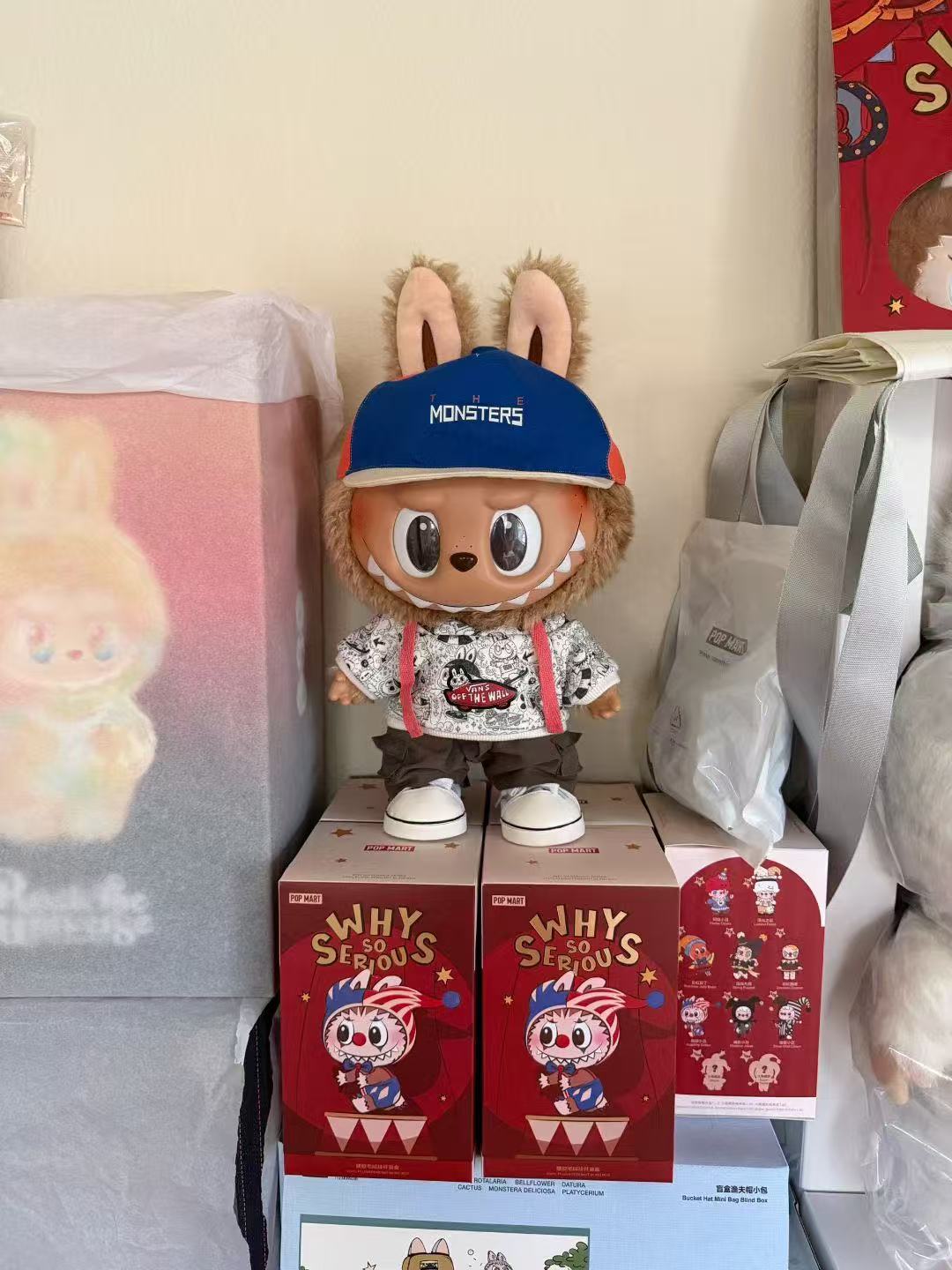
The Resale Route (The Wild West of Xianyu)
This brings us back to Xianyu. This is genuinely where to buy labubu in china if you're looking for past series or specific figures. You can find almost anything if you're willing to dig.
But it's a jungle. First, you need to search in Chinese (拉布布). Then you have to navigate an interface that's not designed for you. You'll need to communicate with sellers who likely don't speak English. You'll be using translation apps to ask crucial questions like, "Is this authentic?" and "Can you send me a photo with today's date written on a piece of paper next to the toy?"
My Personal Xianyu Horror Story (And Tip): I once found a listing for a chase I'd been hunting for ages. The price was good. Too good. The seller's account was new, with no feedback. Red flag #1. I asked for a time-stamped photo. They sent one, but the lighting was weirdly different from the main listing photos. Red flag #2. I did a reverse image search on the original listing photos and found them on another collector's Weibo account from six months prior. The seller had stolen the photos. I dodged a bullet.
Pro Tip: Always check the seller's "Sesame Credit" (芝麻信用) score. It's a general trustworthiness score in the Alipay ecosystem. I don't even bother talking to anyone under 700. It's not foolproof, but it's a start.
The Proxy Route (The Necessary Middleman)
Because of these hurdles, most international buyers use a proxy or buying agent (like Pandabuy, Superbuy, etc.). This is how it works:
1. You find the Xianyu listing you want. 2. You give the link to the proxy service. 3. They contact the seller and buy the item for you. 4. The item is shipped to their warehouse in China. 5. They inspect it (hopefully), take photos, and then you pay a hefty international shipping fee to get it to you.
This sounds great, but it turns the how much is labubu in china question into a complicated math problem.
That 650 RMB ($90) figure? Now it's: * 650 RMB (Item Cost) * + 35 RMB (Proxy Service Fee) * + 12 RMB (Domestic Shipping from seller to warehouse) * + 250 RMB (Cheapest International Shipping to the US)
Total: 947 RMB, or about $130. Plus, you've waited 3-4 weeks. Suddenly, that "deal" isn't much of a deal at all, especially when you factor in the risk. And that's before considering the definition of what a "rare Labubu" even is can change from week to week.
Our Take: The Real Talk on Buying from China
Honestly, for most collectors, buying directly from the Chinese market is a trap.
The allure of a lower sticker price is strong, but it's an illusion. By the time you add up proxy fees, two separate shipping charges, and the currency conversion fees, you've often spent more than you would have from a trusted domestic seller.
And that's the best-case scenario.
The worst-case scenario? You get a well-made fake. Or the item arrives damaged because the seller threw it in a bubble mailer. Or it gets lost in transit and you have zero recourse because you can't navigate the Chinese postal service's claims department.
This is why we started PopNya. We take on that risk. We have trusted partners on the ground. We spend the hours authenticating, dealing with customs, and consolidating shipping to bring genuine, quality figures to our store. When you browse our LABUBU figures, you're not just buying a toy. You're buying peace of mind. You're buying authenticity. You're buying customer service from a fellow collector who you can actually email in English. You're paying to skip the three-week anxiety attack of watching a tracking number that hasn't updated in 12 days.
The Details No One Else Will Tell You
Beyond the price and logistics, there are other quirks of the Chinese market.
Here's a detail I've noticed from handling hundreds of boxes from different regions: the first production runs of a new series, which almost always debut in China first, can sometimes have slightly lower quality control. I'm talking about a tiny paint smudge, a slightly looser joint, or a different texture on the vinyl. It's nothing major, but I've noticed that the batches that arrive for the international market a few months later often feel a little more refined. It's a classic trade-off: do you want it first, or do you want it perfect?
Another thing is the obsession with box condition. In the Chinese resale market, a tiny dent on the corner of a blind box can justify a 15% price reduction. Sellers will explicitly list items as "好盒" (hǎo hé - good box) or "盒损" (hé sǔn - box damage). As an out-of-box collector, you can sometimes use this to your advantage and snag a deal. But as a seller trying to source mint-condition inventory, it's another variable to manage.
The entire phenomenon is a whirlwind, fueled by a level of social media hype that's hard to comprehend unless you see it. The artist Kasing Lung's creation has been elevated to something more than a toy; it's a status symbol, a social token, and a piece of art all at once. It's no wonder the man behind Pop Mart, Wang Ning, became a billionaire, even if the market has its ups and downs. The cultural impact is undeniable.
So, are Labubu cheaper in China? Yes, technically, for a fleeting moment, at a specific store, if you happen to be there at the right time. But for the rest of us, the labubu doll sales china market is a complex ecosystem best navigated with a guide, or avoided altogether in favor of a trusted local source.
My final piece of advice is simple. Don't let the hunt for the "cheapest" price ruin the joy of collecting. The point isn't to save $3 on a figure if it costs you a month of stress. The point is to get a piece you love, to add it to your shelf, and to smile when you look at it.
If you're ever curious about a specific figure or just want to talk shop about the market, drop a comment. We're all in this crazy, wonderful hobby together.
Disclosure: PopNya may earn a commission if you purchase through links on this page.


