

I saw it on a customer's phone.
She was scrolling through Instagram while waiting for me to wrap up her blind box purchase, and she stopped on a picture. It was Labubu, but not one I'd ever seen before. This one was drawn in a soft, painterly style, sitting in a field of glowing mushrooms, looking almost… serene. A complete departure from the usual mischievous monster vibe.
"I wish they'd make this one," she sighed, showing me the screen. And in that moment, I got it. The explosion of labubu fanart isn't just a side effect of the toy's popularity; it's become a core part of the collecting experience itself. It's a feedback loop of love, creativity, and sometimes, market chaos.
As someone who runs PopNya and stares at these little monsters all day, I've watched this phenomenon grow from a few sketches on DeviantArt to a full-blown subculture. It's more than just people drawing a labubu picture cute for their profile icon. It's a living, breathing part of the hobby that directly influences what people want to buy.
Why Labubu? What's the Big Deal?
So why Labubu? Why not some other character?
I've thought about this a lot. I think it comes down to Kasing Lung's genius design. Labubu sits in this perfect sweet spot. The long bunny-like ears and round body are undeniably cute, but the sharp little monster teeth and the slightly manic glint in his eyes give him an edge. He's not just a passive, cute creature. He's a character with an attitude.
That duality is a goldmine for artists.
You can draw Labubu being adorable, sipping boba tea or wearing a little frog hat. Or you can lean into the monster side, drawing him in a spooky forest or pulling a prank on Zimomo. The design is simple enough to be a blank canvas but has enough personality to give artists a starting point.
I've seen fanart of Labubu as a tiny baker, a Gundam pilot, a character from Demon Slayer, and even a grumpy office worker. Each interpretation feels valid because the core design is so flexible. It's a character that invites you to imagine, "What if?" And the community has answered that question in thousands of different ways.
The Good: How Fanart Builds Our World
At its best, labubu fan art is the glue that holds the collector community together. It's a shared language. When a new series drops, the fanart is almost as anticipated as the figures themselves. It's how we celebrate our favorite pulls and cope with the ones we didn't get.
I remember when The Monsters Pin for Love series came out. The figures themselves were adorable, with their little letter blocks. But the fanart that followed was next-level. Artists created entire comic strips and romantic scenes based on the concept. It gave the series a narrative and an emotional weight that went far beyond the vinyl in the box. It wasn't just about collecting letters anymore; it was about the story the community was telling with those letters.
This is the magic of it. It transforms a static collectible into a dynamic, living character. It's a constant stream of new content that keeps the excitement alive, even between official releases from Pop Mart. It's the joy of seeing an artist you follow post a new piece, or finding a sticker at a convention that perfectly captures the vibe of your favorite figure. It makes you feel like you're part of something bigger than just buying toys.
The Market Impact: A Seller's Honest Observation
Now for the part most people don't talk about. Fanart directly, and I mean directly, moves the secondary market.
Here's a real-world example I've seen happen multiple times. An artist on Instagram with a decent following will post a stunning illustration of a specific, non-secret Labubu. Let's say it's the "Gardener" from The Monsters Flower Elves series. The artwork is beautiful, it goes viral within the community, and suddenly, everyone needs the Gardener.
The figure that was trading for maybe $2-3 above retail is now selling for $35, $40, even $50. People who never cared about that specific design are now scrambling to find it because the fanart made them see it in a new light. It created an emotional connection.
As a seller, it's wild to watch. I'll see a spike in searches on the PopNya site for a specific figure and can almost always trace it back to a popular piece of fanart that dropped a few days earlier. It's a more powerful marketing tool than anything Pop Mart could ever produce because it's authentic. It's born from genuine love for the character.
This hype can be a double-edged sword. It's great for raising the profile of the line, but it can also lead to the kind of speculative buying that prices regular fans out of the market. The hype around a figure like the Loyalty Labubu wasn't just from its rarity; it was amplified by countless pieces of fanart depicting it as the ultimate grail, a king among Labubus. Fanart helps write the story of which figures are "important."
Real Talk: The State of Labubu Fanart
Okay, let's be real for a minute. The world of Labubu fanart is incredible, but it's not all sunshine and cute stickers.The biggest problem is art theft.
You see a super cute Labubu design on a t-shirt or a phone case on sites like Redbubble, TeePublic, or even some sketchy Amazon listings. You buy it, thinking you're supporting an artist. The hard truth? In a huge number of cases, you're not. The "seller" is often just a bot or a person who has scraped that image from an artist's Instagram, Pixiv, or X (Twitter) account without permission. The original creator sees zero dollars from that sale.
I've seen it happen to artists I personally follow. They post a beautiful piece, and within 48 hours, it's on a dozen different POD (print-on-demand) sites. It's heartbreaking and infuriating.
Here's a real collector's tip that I use all the time: If you see a piece of fanart you love and want to buy it as a print or sticker, do a reverse image search on Google. It will almost always lead you to the original artist's social media page. From there, check their bio. Most artists will have a link to their actual store, which is usually on Etsy, Big Cartel, or their own personal website. Buy from there. Yes, it might be a few dollars more. Yes, it might take longer to ship. But you are directly supporting the person whose creativity brought you joy. That's a win.
The other, more subtle issue is the pressure it creates. The fan community imagines and draws these incredible, elaborate Labubu designs. It sets an impossibly high bar. I sometimes wonder how Kasing Lung feels, seeing thousands of fan-made concepts, knowing he has to come up with the next official series that will somehow live up to all that fan-fueled imagination. It's a lot of pressure.
Beyond the Screen: Physical Fan Creations
The creativity doesn't stop at digital drawings. The fanart world has bled into the physical space, and this is where things get really interesting for a hands-on collector.
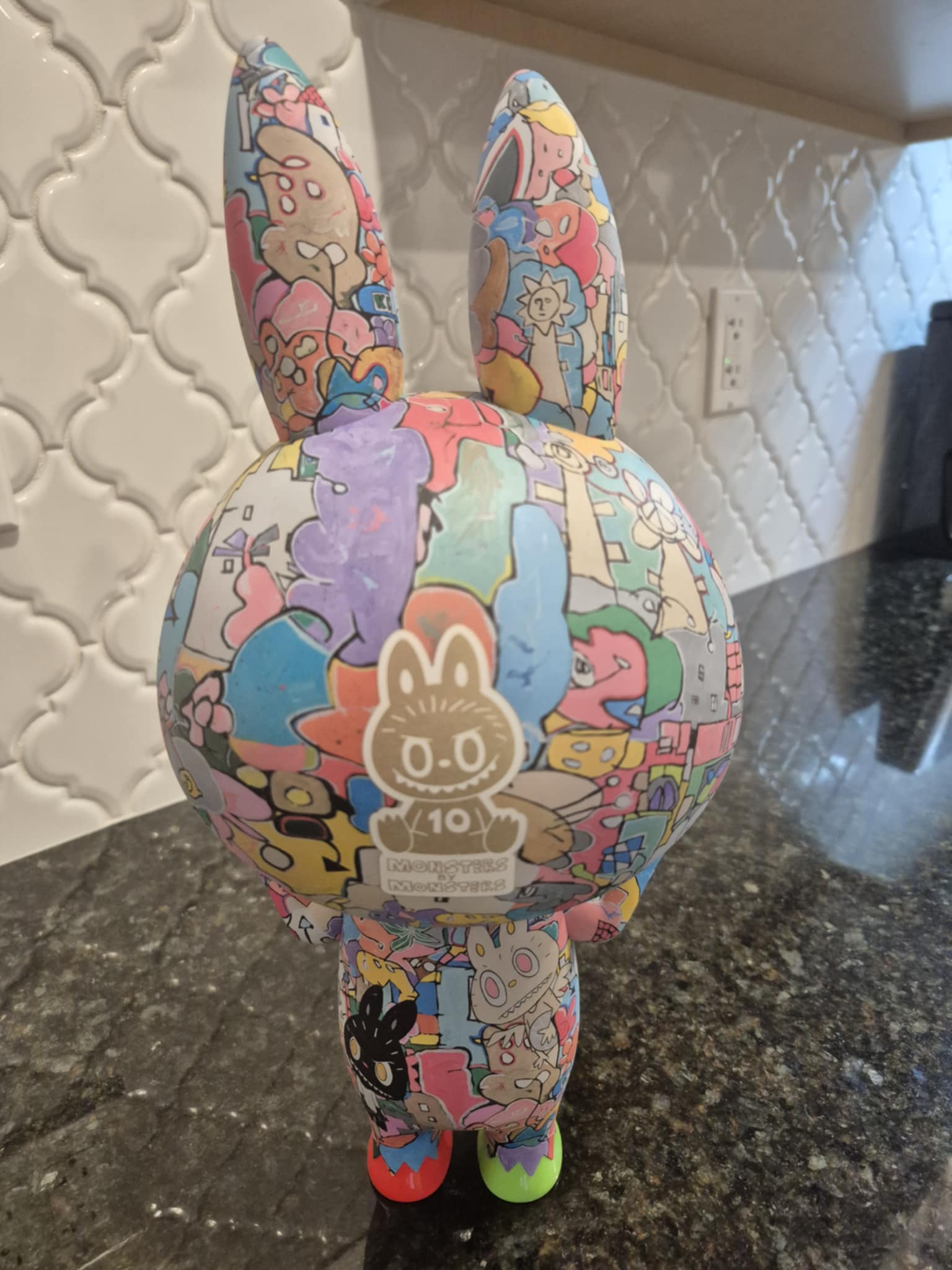
I'm talking about fan-made stickers, enamel pins, acrylic keychains, and even custom-painted Labubu figures. I've bought a ton of these myself. My work laptop is covered in vinyl stickers of Labubu dressed as different food items.
The quality varies wildly. I've bought stickers that faded in a week and others that have survived years of abuse on my water bottle. I have a fan-made enamel pin that's higher quality, thicker metal, cleaner enamel fill, than some official merchandise I've seen.
This is another area where you have to be a savvy consumer. Look for reviews, check the artist's other work, and understand that you're often buying from a one-person operation. There might be small imperfections. That's part of the charm.
One of the coolest trends I've seen is people using fanart to customize their collections. They'll buy stickers that mimic the design of a rare figure and put it on their display case. Or they'll commission an artist to paint a duplicate Labubu into a design they saw in a piece of fanart. It's a way of making their collection uniquely their own, a physical manifestation of that "What if?" that started with a drawing. It's a bit like the culture around what exactly a Labubu card is; fans are always finding new ways to interact with the IP beyond just the figure itself.
Ultimately, the fanart scene is the heart of the Labubu world. It's chaotic, beautiful, and driven by an incredible amount of passion. It's a conversation between the creator and the community, a constant re-interpretation of a character we all love. It's why, after a long day of packing orders from our own LABUBU collection, I still find myself scrolling through the #labubufanart tag, just to see what new magic the community has cooked up.
It's a reminder that we're not just collecting vinyl. We're collecting stories. And the fans are writing some of the very best ones.
--- Disclosure: PopNya may earn a commission if you purchase through links on this page.


