

It's the question I get in my DMs almost daily, phrased in a dozen different ways. "Is it true Labubu is a billion-dollar toy?" "How much money has Labubu made?" "Can you believe the Labubu money craze?"
Honestly, it's wild. I've been in the designer toy scene for years, running PopNya and seeing trends come and go. I remember when you could find The Monsters series sitting on shelves. Now, they're a global phenomenon. The official numbers are staggering. Pop Mart, the company behind the mass production of Kasing Lung's creation, reported that the LABUBU IP generated over 1.02 billion yuan (about $140 million USD) in just the first half of 2024.
Let that sink in. $140 million. In six months.
The business news sites love these headlines. They talk about Pop Mart's stock price and their CEO, Wang Ning, becoming a billionaire. And yes, that's all part of the story. But it's not the whole story. It doesn't capture what that number feels like on the ground, for a collector trying to complete a set or a small seller like me trying to keep them in stock.
From Niche Art Toy to Global Money Machine
So, how many Labubus have been sold to generate that kind of revenue? Let's do some quick, back-of-the-napkin math. A standard LABUBU blind box retails for about $14-$17 in the US. If we take an average of $15, that $140 million figure translates to roughly 9.3 million individual LABUBU blind boxes sold in six months.
Nine. Point. Three. Million.
That's not even counting the plushies, the keychains, the mega-sized figures, or the special collaborations. It's an astronomical number that has completely reshaped the landscape.
I remember ordering cases of the early "The Monsters" series. They were popular, for sure, but it was a slow burn. You had a dedicated community of Kasing Lung fans who appreciated the mischievous charm of his characters. Now? The game has changed. The turning point, for me and many others, was undeniably The Monsters Exciting Macaron series. And one person: Lisa from BLACKPINK.
When she posted a photo with her collection, it was like pouring gasoline on a bonfire. The demand didn't just double or triple; it went up by a factor of 100. Overnight, my inbox at PopNya went from manageable to a constant flood of "Do you have Macaron?" "Restock Macaron?" "How much for a full case of Macaron?"
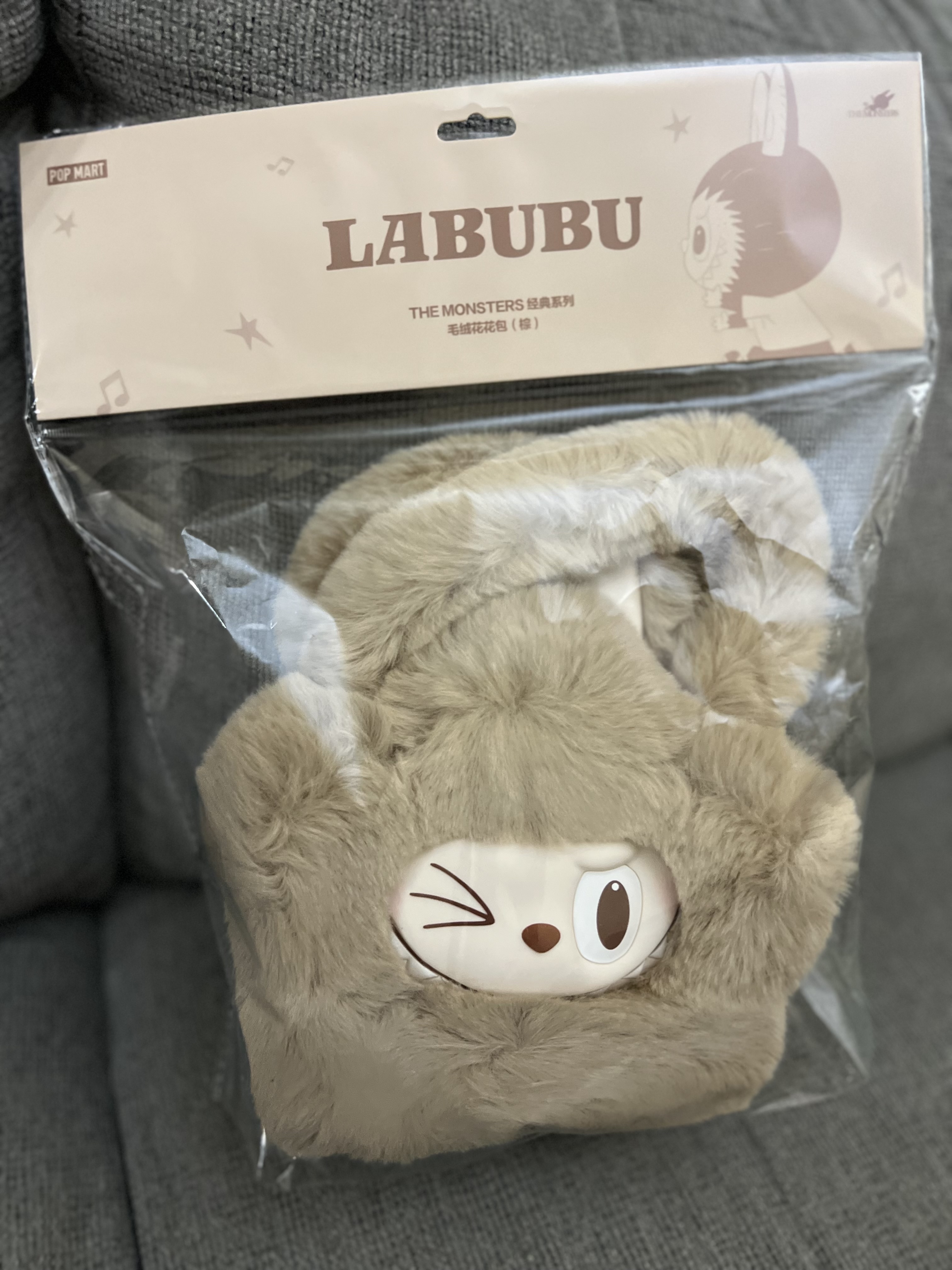
This is where the big LABUBU revenue numbers start to connect with the real world. That $14.90 blind box was suddenly impossible to find. We saw people on secondary markets asking for $35, $40, even $50 for a common figure from that series. The secret, "Soy," was hitting $200-$250 within days of release. That's not Pop Mart's revenue; that's the secondary market, the "LABUBU money" ecosystem that has sprung up around the hype. It's a clear indicator of demand completely outstripping supply.
The Real Talk: What a Billion-Dollar IP Feels Like for a Collector
This is where I have to be honest. As a seller, the massive demand is technically "good for business." But as a collector, it's been… frustrating. The joy of the hunt, of walking into a store and being surprised by a blind box pull, has been replaced by the stress of online drops that sell out in seconds.
Here's what those huge revenue numbers actually mean for us:
1. The Scalper Apocalypse: The moment a toy becomes a financial instrument, the game changes. Professional resellers with sophisticated bots now target every single LABUBU drop. They aren't collectors. They don't care about Kasing Lung's art. They see a supply/demand imbalance and exploit it. They buy up entire stocks to create artificial scarcity, then flip them for 2x, 3x, or even 10x the price. This is why you see so many people asking why LABUBUs are so expensive; it's often not the retail price, but the reseller market they're looking at.
2. A Dip in the "Magic": I've opened thousands of blind boxes over the years. You get a feel for them. And I have to say, with the insane production ramp-up to meet this demand, some things have changed. It's subtle. For example, the vinyl on some of the more recent, mass-produced series feels a tiny bit lighter than the older, smaller-batch runs. The paint application, while still generally excellent, occasionally has minor imperfections that were rarer before. I've seen a few smudges or slightly misaligned details that likely would have been caught in a slower production cycle. It's the inevitable consequence of trying to produce millions of figures in a short time.
3. The Box Weight Myth is Officially Dead: For a while, savvy collectors could use a precision scale to "guess" the figure inside a blind box. Heavier figures might be one character, lighter another. With the Macaron series and beyond, Pop Mart got wise. They started adding small, variable-weight cards or silica packets inside the boxes. I've tested it myself with a case of the Fall in Wild series, the weights are all over the place. There is no reliable way to weigh for a secret anymore. Don't waste your money on a scale.
Our Take: The Double-Edged Sword of Success
Look, I'm genuinely happy for Kasing Lung. He's a brilliant artist who created a world full of character and charm, and he deserves all the success. It's amazing to see his creation get this level of recognition. But the question of how much did LABUBU make is tied to a machinery, the Pop Mart hype engine, that has fundamentally altered the hobby.
The massive revenue is a testament to a brilliant design meeting a perfect storm of marketing and celebrity influence. It has brought millions of new people into the world of designer toys, which is fantastic. But it has also created a high-pressure, FOMO-driven environment where the price tag can sometimes overshadow the art. The most common question I get is no longer "What's the story behind this character?" but "What's this one worth?" It's a subtle but telling shift.
For new collectors, it can be incredibly intimidating. You see a figure you love, but then you see the aftermarket price and feel completely priced out. It's easy to get discouraged. That's why understanding the real Labubu figure price versus the inflated reseller price is so important. Patience is your best friend in this market. Pop Mart will restock. The hype on a specific series will eventually cool down.
So, How Many LABUBUs Have Been Sold? And Does It Matter?
The answer is millions. Tens of millions, easily, if you count the entire history of the IP. The revenue is in the hundreds of millions and climbing. But the more important question is, what does this mean for the future of collecting?
I've seen a pattern with my customers at PopNya. The initial frenzy for a new series is always the most intense. But the true collectors, the ones who are here for the long haul, are learning to wait. They might miss the first drop, but they'll catch the second or third wave a few months later when the prices are back to retail. They focus on building their LABUBU collection with figures they genuinely love, not just the "hype" piece of the month.
The people asking what "rare Labubu" actually means are starting to understand that "sold out" doesn't always equal "rare" in the long term. A limited-edition 100-piece artist collaboration is rare. A mass-produced blind box series that sold out in 10 minutes is just temporarily scarce.
The LABUBU phenomenon is a fascinating case study in art, commerce, and hype. The money is real, the revenue is massive, and the demand is undeniable. But behind the numbers are millions of little monster figures, each with a personality, waiting to be unboxed. And for me, that's the part of the story that still matters most. It's about the joy of the pull, the thrill of adding a new face to your shelf, and the community of people who share that same passion. The money is just a side effect.
If you're just getting started or looking to add a specific piece to your collection without feeding the scalpers, be sure to browse LABUBU figures from trusted retailers who stick to official pricing. The hunt is part of the fun, but it shouldn't be a battle.
Disclosure: PopNya may earn a commission if you purchase through links on this page.


