

So, you did it. You bought a blind box, maybe a whole case, and there it is. The duplicate. That familiar little pang of disappointment, immediately followed by the spark of an idea: "Maybe I can trade this."
Welcome to the club. This is how it starts for most of us.
As someone who runs PopNya and has seen hundreds of these little monsters pass through my hands, I've been on every side of a trade. I've felt the high of landing a grail and the gut-punch of a trade gone wrong. The online world of labubu trading is a fantastic, chaotic, and sometimes frustrating place. It's a community built on trust, bubble wrap, and a shared obsession.
But it's not as simple as posting a photo and saying "trade me.Forget the generic YouTube videos. Let's talk about how this really works.
The Actual Value of Your Duplicate (It's Not What You Think)
First thing's first: not all LABUBUs are created equal, even within the same series. Before you even think about where to trade labubu, you need to understand what your figure is actually worth in the trade market.
It's not about the retail price. It's about a messy, constantly shifting combination of four things:
1. Character Popularity: Tycoco is queen. A common Tycoco from a recent series will almost always have more trading power than a common Pato or Spooky from the same set. It's just the way it is. People love that mischievous little face. 2. Series Hype: Remember The Monsters Camping series? It was a phenomenon. Even now, a common from that series, like the one with the little lantern, holds more weight than commons from a dozen other series that have come and gone. The recent Macaron series, on the other hand, had such a huge production run that the commons are, well, very common. 3. Rarity vs. "Chase": There's the official rarity (the semi-rares, secrets, and super-secrets), and then there's the "chase" factor. This is the figure everyone in the community decides they need. A few years ago, it was the Labubu Heart-to-Heart. Right now, as I'm writing this, the secret from The Monsters Mischievous Diary series is a hot ticket. I saw it trading for a solid $150 in early May, but with new series announcements, that excitement has cooled, and it's now hovering around the $110-$120 mark. The market moves that fast. 4. Condition: This is non-negotiable. A figure with sun damage, a paint scuff, or a wobbly head is trade-devalued. Period.
A common mistake I see is someone trying to trade a common, less popular character for a common, highly popular character 1:1 and getting frustrated when no one bites. You have to be realistic. Sometimes your duplicate Pato is what you use to sweeten a bigger deal, not the centerpiece of the trade itself.
Gearing Up: Your Pre-Trade Checklist
Okay, you've assessed your figure's real-world trade value. Now you need to get your stuff together. Being prepared makes you look like a trustworthy, experienced trader, even if it's your first time.
Get Your Photos Right. No, Better Than That.
Your phone's camera is your best friend. Do not be the person who posts a blurry, dark photo. We need to see everything.
* Clean, neutral background: A plain white piece of paper works great. * Good lighting: Natural light from a window is best. Avoid harsh shadows. * Multiple angles: Front, back, both sides, and the bottom to show the Pop Mart/Kasing Lung stamp.
Timestamp: This is a pro move that builds instant trust. Write your username and the date on a small piece of paper and include it in the photo. This proves you have the figure in your possession right now*.Honesty upfront prevents drama later. I once received a figure in a trade that had a tiny black speck on its nose. The trader hadn't mentioned it, and while it was small, it soured the whole experience. Don't be that person.
Create Your "Haves" and "Wants" List
No one can read your mind. The most effective traders are organized. Use an app like Figgy, or just create a simple photo collage. An Instagram Story Highlight is perfect for this. One highlight for "For Trade" (your haves) and one for "In Search Of" (your ISO/wants). It makes it incredibly easy for someone to see if you have a potential match.
The Trading Floor: Where to Find Your People
This is where you go from planning to action. The communities are fragmented across different platforms, and each has its own vibe.
Facebook Groups: The Main Event
This is the heart of the English-speaking trading community. Search for "LABUBU Trade," "Pop Mart Trade," etc. You'll find them. They are big, active, and your best bet for finding a specific figure.
But be warned: they can be cliquey and full of drama. The most important concept here is the "vouch." A vouch is a public post or comment from someone confirming you completed a successful trade with them. It's your reputation.
My hard-and-fast rule: Never, ever trade with someone who has zero vouches and isn't willing to ship their figure first. If you're the one with fewer vouches, it's common courtesy to offer to ship first. It's the cost of entry to prove you're trustworthy.
Discord & Instagram: The Faster, Wilder Options
Discord servers are faster-paced and a bit more chaotic. Trades can be agreed upon in minutes. Instagram is all about the visuals. Use hashtags like #labubutrade, #popmarttrade, and #toytrade. It's great for browsing, but be extra cautious. Instagram profiles are easy to fake. Dig into their profile. Do they have other collector posts? Do real people comment on them?
The Exchange: A Step-by-Step Guide to Not Getting Scammed
You've found a partner. You've agreed on a trade. Don't celebrate yet. The execution is where things can go wrong.
Step 1: Confirm Everything in DMs. Get it in writing. "So, to confirm: my Camping series Tycoco (with lantern) for your Macaron series Zimomo (the blue one). We both ship via USPS with tracking on Tuesday?" This creates a record.
Step 2: Pack It Like You Care. As a shop owner, nothing hurts me more than seeing a beautiful toy ruined by bad packaging. I've received packages that look like they were drop-kicked here from Hong Kong.
* Wrap the figure itself in a layer of soft foam or tissue paper. * Then, wrap it in bubble wrap. More than you think you need. * Place it in a small, sturdy cardboard box. Not a bubble mailer. I repeat: NOT A BUBBLE MAILER. A box. Fill any empty space in the box with more bubble wrap, packing paper, or air pillows so the figure can't move. * Include the original box and card if that was part of your agreement.
Step 3: The Simultaneous Ship. Agree on a shipping day. Go to the post office, get your tracking number, and immediately send a photo of the receipt/tracking number to your trade partner. They should do the same. This is the moment of truth. Now you just have to wait and compulsively check the tracking status every ten minutes like the rest of us.
Real Talk: Is Trading Even Worth It?
Okay, let's have an honest chat. Is all this effort, the photos, the negotiations, the packaging, the anxiety, actually worth it?
Sometimes, yes. Absolutely. There is no feeling quite like opening a package and finally holding that one figure you've been hunting for months. It's how you meet people and become part of the community. It's how you turn the "disappointment" of a duplicate into the thrill of the chase.
But sometimes… no. It's not.
I've seen people spend a week negotiating a trade, pay $5-6 for tracked shipping, only to swap one $12 common for another $12 common. When you factor in your time and shipping costs, you might have been better off just selling your duplicate and buying the one you wanted.
This is my seller-brain talking, but it's true: for common figures, it's often cheaper and infinitely less stressful to just buy the single you need. Before you dive into a week-long negotiation for a common, take 30 seconds to browse LABUBU figures online. You might find it for $15 with no hassle. Your time is valuable, too.
The other trap is the obsession with a "fair" 1:1 trade. The market isn't fair; it's based on demand. Don't be afraid to offer a 2:1 trade (two of your less-desirable commons for one more-desirable common) or to offer a figure plus a bit of cash to even things out.
The Next Level: Secrets, Outfits, and International Trades
Once you've mastered the basics, you might get the itch to trade for something bigger. A secret, a chase, or a rare older figure. The stakes are higher. The value is higher. Your due diligence needs to be flawless. For these, I'd recommend only trading with established community members with dozens of vouches.
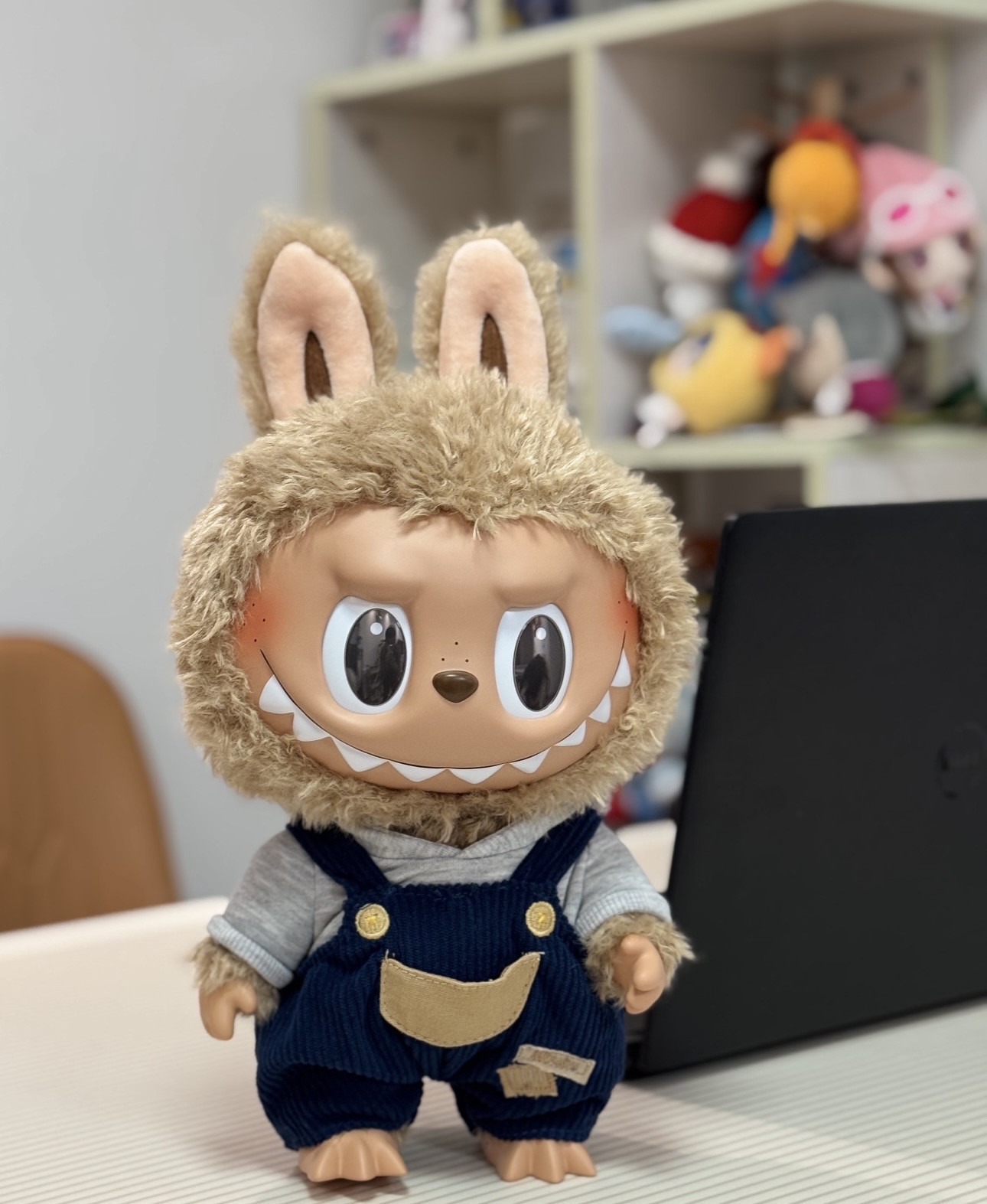
And then there's the whole other dimension: outfits. The figure is just the start. The community around making, buying, and trading tiny clothes for these monsters is a universe unto itself. A figure's trade potential can skyrocket if it comes with a sought-after, handmade outfit. In fact, we've noticed that understanding the unspoken rules of the Labubu outfit game is key to understanding the deeper collecting market. A "nude" Tycoco has one value; a Tycoco in a custom-knitted sweater and tiny overalls has a completely different one.
Trading is a core part of this hobby. It's a skill, and like any skill, it takes practice. You'll probably make a few mistakes along the way. But it's also how you turn a solo hobby of opening boxes into a shared experience.
Just be smart, be safe, and pack your figures well. Happy hunting. And if the hunt gets too tiring, you know where to find us. Our LABUBU collection is always ready for you, no trades required.
--- Disclosure: PopNya may earn a commission if you purchase through links on this page.


