

I remember the first time a shipment of the Pop Bean Labubu sets arrived at the PopNya workshop. It was a massive box, way bigger than the usual blind box cases. Inside was the giant, blue, plastic gachapon machine and bags upon bags of what looked like oversized, colorful pills. My first thought was, "What have I gotten myself into?"
That's the thing about the labubu popbean series. It's not just another blind box. It's an entire ecosystem, a different way of collecting that can be either incredibly fun or incredibly frustrating. And since I've sold dozens of these sets and opened a frankly embarrassing number for my own collection, I feel like I need to give you the real, unfiltered playbook.
First things first: No, they are not candy. Please do not eat them. I've had to put that disclaimer on more than one invoice.
What Exactly Is a Pop Bean?Think of it like this: if a standard Labubu blind box is a carefully curated three-course meal, a Pop Bean is a massive bowl of M&M's.
The core of the system is the "bean" itself, a small, plastic, egg-shaped capsule. You twist it open, and inside is a teeny-tiny Labubu figure, about the size of your thumbnail. The main series you'll see is "The Monsters Morning Tea," which features Labubu in various food-themed designs like a croissant or a slice of toast. They are ridiculously cute. They are also ridiculously small.
The big ticket item, of course, is the gachapon machine dispenser. It's a huge, Labubu-shaped plastic toy that you fill with the beans. You turn the crank, and a random bean pops out. It's a fantastic display piece, a real centerpiece for a collection. But do you need it? Honestly, no. You can just buy the beans in bags. The machine is the premium experience, but the beans are the actual collectibles.
The Pop Bean Game vs. The Blind Box Grind
Collecting Pop Beans is a totally different beast than hunting for a standard 3-inch figure. The feeling is different, the cost structure is different, and the community interaction is different.
With a blind box, you're on a mission for one of twelve (or thirteen, with the secret) specific, detailed figures. It's a targeted hunt. With Pop Beans, it's more about volume and the thrill of the gacha. The figures are simpler, the paint jobs less intricate, they have to be at this scale. But the sheer quantity and randomness make it a different kind of fun.
One of the best things about Pop Beans is how they've supercharged the trading community. Because the beans are tiny and light, you can ship a handful to another collector for the cost of a postage stamp. Trading a full-sized, 3-inch Labubu can cost $5-$10 in shipping alone. This low barrier makes completing a set through trades not just possible, but practical. I've seen more community trading threads for Pop Beans than for almost any other series.
But there are downsides. And they are tiny, Labubu-shaped downsides. These things are so easy to lose. I have a "graveyard jar" on my desk for unidentified tiny plastic accessories from various toys. At least three Pop Bean toast slices are in there. If you have pets or small children, these are a legitimate hazard and a source of constant anxiety. The detail, while charming, is also a step down from the main lines. You won't find the same subtle paint washes or complex textures you see on, say, the Exciting Macaron Labubu series. That's not a flaw, just a reality of the scale.
The Market, The Money, and The Bottles
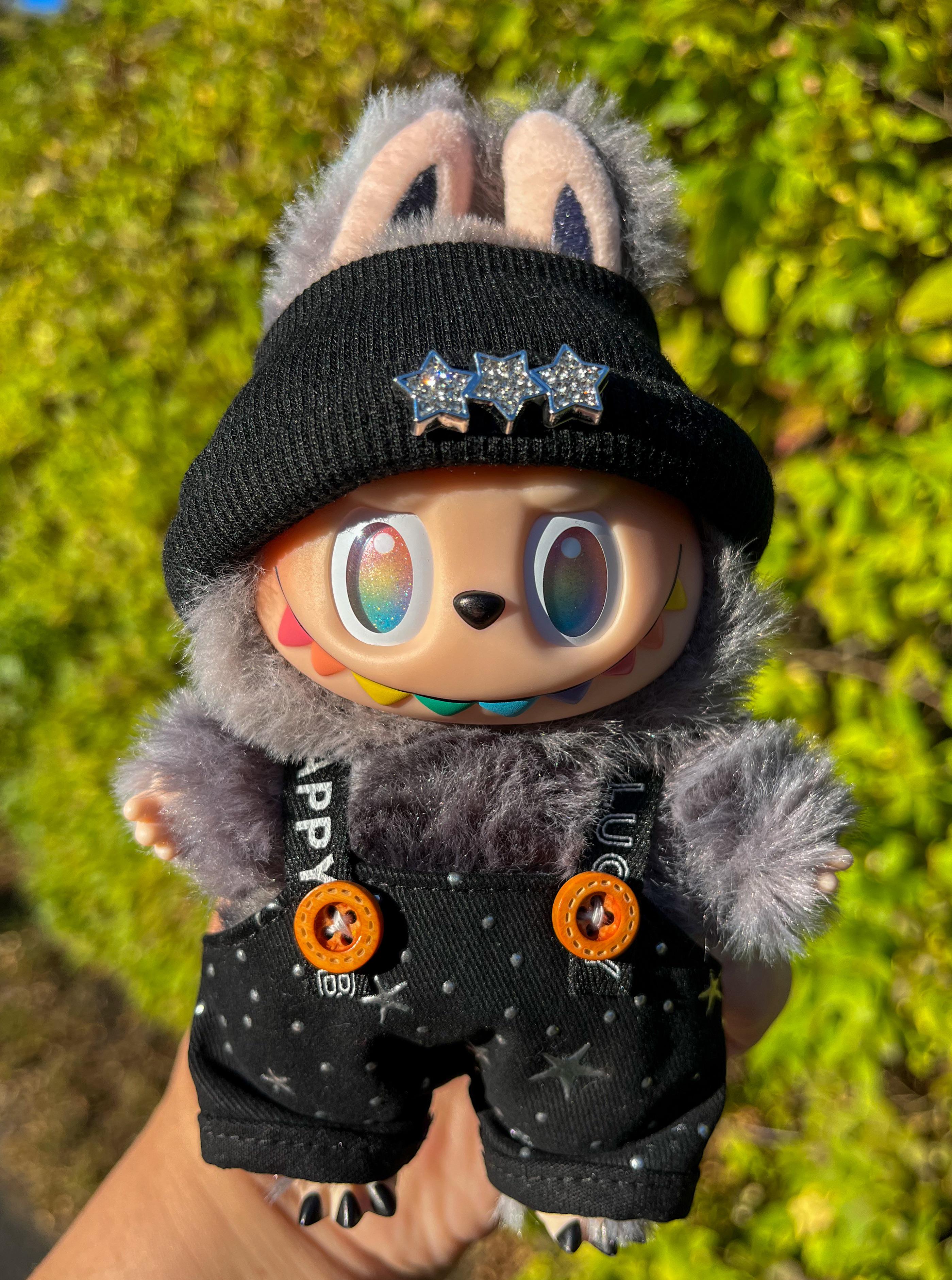
This is where my seller brain kicks in. The Pop Bean Labubu series was, for a long time, a China exclusive. This single fact has dictated its entire life on the international market. When something is exclusive to one region, it creates a ripple effect of scarcity and high prices everywhere else.
Let's talk numbers. The Labubu gachapon machine with a full set of 60 beans retailed in China for around ¥599, which is about $85 USD. When they first started trickling onto the global secondary market, I saw them hitting StockX and eBay for $300-$400. That price has cooled off a bit as more have made their way out, but the markup is still very real. Individual beans, which might cost a dollar or two in their home market, can sell for $5-$8 a pop from resellers.
Then there are the bottles. Oh, the bottles. Pop Mart, in a stroke of marketing genius (or evil, depending on your bank account), also sells special Labubu-shaped clear display bottles in various sizes (M, L, XL) specifically for showing off your Pop Bean collection. They look amazing. They also add another $20-$50 to your collecting journey.
Real Collecting Tip: Skip the official bottles. I'm probably not supposed to say that as a seller, but it's the truth. Unless you are an absolute purist who needs everything to be official, just go to a craft store. A beautiful, thick-glass apothecary jar costs a fraction of the price and, in my opinion, looks even better. It gives your collection a more personal, "mad scientist" vibe.
Real Talk: My Honest Verdict on Pop Beans
Okay, so are they worth it?
Here's my take as someone who has a giant jar of them on his desk right now. The Pop Bean Labubu series is a delightful, but demanding, side-quest in the world of Labubu collecting.
They are for you if: * You love the physical, tactile thrill of a gachapon machine. * You want a "desk army" of tiny figures to fidget with. * You're deep into the trading scene and want something easy and cheap to trade. * You appreciate the "collection as a display" concept, with the big jar of colorful beans.
You should probably skip them if: * You're a stickler for paint detail and high-fidelity sculpts. Stick to the 3-inch figures.
You have a limited budget. While individual beans are cheap, the cost of the machine, the bottles, and hunting for a full set adds up fast*. The fluctuating market makes it a gamble, similar to what we saw with the initial Have a Seat Labubu V2 hype.* You are disorganized or have a cat that likes to knock things off shelves. You will be finding these things in your vacuum cleaner for years.
A detail nobody talks about: The plastic capsules, the "beans" themselves, are surprisingly high-quality. They have a satisfying weight and a great "click" when you close them. However, I've had two separate customers contact me after a few weeks to say the hinge on a few of their beans had snapped. This was after their kids were using them heavily. It's a crucial reminder: these are not toys for play. They are collector's items. The dispenser is a toy, but the beans and their contents are for display.
Your Pop Bean Playbook: How to Get Started
Convinced you want to dive in? Don't just go buy the giant machine. That's a rookie mistake. Follow this playbook.
Step 1: The Sampler. Before you commit, buy a small bag of 5 or 10 beans. See how you feel about them. Do you like the size? The feel? The tiny figure inside? Open them, hold them, put one on your monitor. If you don't get a little spark of joy, you've saved yourself hundreds of dollars.
Step 2: Know Your Goal. What's your endgame? Do you want to collect one of each design from the Morning Tea set? Do you just want a big, colorful jar of randoms? Are you hunting for a specific one, like the little coffee cup Labubu? Knowing your goal will stop you from buying indiscriminately.
Step 3: The Display Dilemma. Decide on your display strategy before your collection gets out of hand. Are you going with the official bottles? A custom jar? A small acrylic case? Having a home for them makes the collection feel intentional, not like a pile of clutter.
Step 4: The Hunt. Now you can look for them. Official Pop Mart channels are your best bet for fair pricing if they are available in your region. If not, you're entering the world of resellers. This is where having a trusted source is key. You can always browse our LABUBU collection at PopNya to see what we have, as we often get small batches of beans and sets. On platforms like eBay, be wary of sellers with no feedback and prices that seem too good to be true.
For me, the Pop Beans are a quirky, weirdly satisfying corner of the hobby. They're not as prestigious as a rare secret from a numbered series, but they have a charm all their own. They represent the sheer, unadulterated fun of collecting, the randomness, the color, the community, and the simple joy of turning a crank and seeing what you get.
If you're still on the fence, I suggest you check out LABUBU in all their different sizes and forms.You just have to find it.
Disclosure: PopNya may earn a commission if you purchase through links on this page.


