

The first time a customer emailed PopNya asking if we had any "la la bobo" in stock, I honestly had to Google it myself. I've been collecting and selling LABUBU for years, and the name just didn't register. What I found was a confusing mess: a mix of a fast-fashion clothing brand, some incredibly sketchy-looking Amazon listings, and a handful of social media posts using the term interchangeably with LABUBU.
It clicked. "Lala bobo" isn't a new character. It's a widespread mispronunciation or misspelling of LABUBU, the iconic, toothy monster character created by Hong Kong artist Kasing Lung.
And this isn't just a harmless typo. This confusion is a gateway for a flood of fakes and scams that prey on new collectors. If you've been searching for la la bobo, you're in the right place. We need to talk. Because what you're likely looking for is so much better than what that search term will show you.
The "Lala Bobo" Rabbit Hole and Why You Should Be Careful
Go ahead, type "lala bobo doll" into a marketplace like AliExpress or a general search engine. You'll see a gallery of horrors. The figures you'll find are what we in the community call knock-offs, fakes, or bootlegs. They try to mimic the real thing, but they miss the mark. Badly.
I've ordered a few out of morbid curiosity, just to understand what my customers might accidentally buy. The difference is staggering. The fakes often have a gross, shiny plastic finish, like a cheap vending machine toy. The real LABUBU figures have a beautiful, high-quality matte PVC that feels substantial in your hand. The paint on the fakes is a disaster, colors bleed, lines are smudged, and the eyes are often painted asymmetrically, giving them a vacant, soulless stare instead of LABUBU's signature mischievous glint.
The box is another dead giveaway. Official Pop Mart boxes are sturdy, with crisp printing, often featuring foil or spot UV effects. The knock-off "lala bobo" boxes are made of flimsy, thin cardboard that feels like it would fall apart in a light breeze. The text is often riddled with spelling errors or awkward translations.
So, if you're seeing listings for a full set of 12 figures for $30, that's a giant red flag. A single authentic LABUBU blind box retails for around $15-$18. The price alone tells you you're not looking at the real deal.
So, What About "Real Boo"?
This is another term I've seen pop up, particularly in keyword data: real boo. Its volume is lower, but the intent is the same. People are trying to find the authentic figure. My best guess is that it's a garbled combination of "real" and "LABUBU," or perhaps the name of a specific bootleg that gained some traction.
Here's my honest warning as a seller: If you see a listing using the term "real boo," run the other way. Or, at the very least, proceed with extreme caution. No official seller, not Pop Mart, not Kasing Lung, uses this term. It's a phrase used almost exclusively by sellers who either don't know the official name (a bad sign) or are deliberately using confusing keywords to attract buyers looking for a cheap alternative (an even worse sign). It's a signal that you are likely looking at a fake.
The desire for a "real" one is understandable, especially when the market is so confusing. That's why learning the actual name, LABUBU, is your first and most powerful tool in collecting.
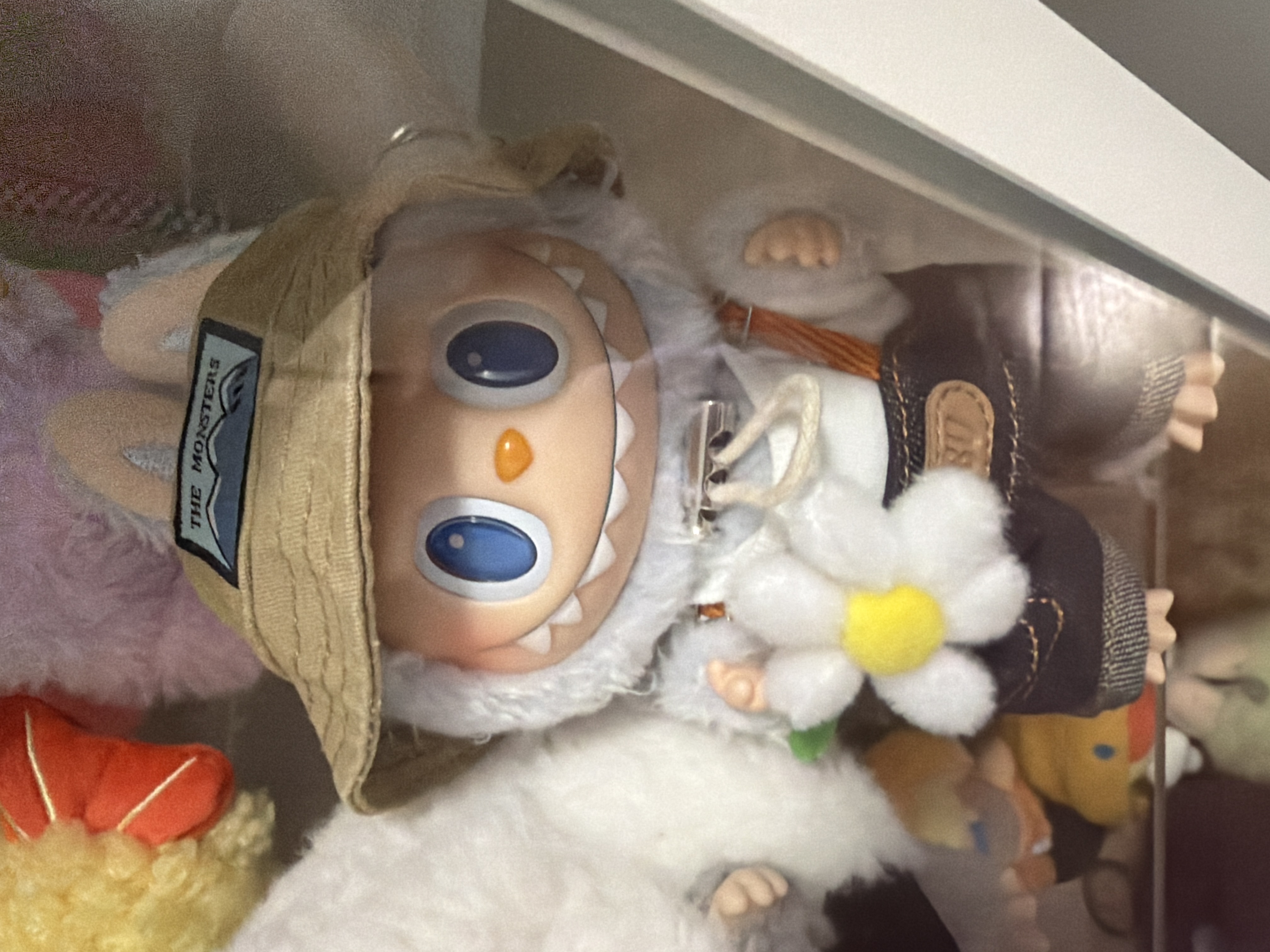
The Real Deal: An Introduction to LABUBU
Now for the good part. Let's forget the fakes and talk about the character you're actually looking for.
LABUBU is a creature from a world called "The Monsters," a whimsical and sometimes dark universe created by artist Kasing Lung. LABUBU is the most famous of these monsters, a rabbit-like creature with long ears, a single prominent tooth (or two), and an endlessly expressive face. They are curious, mischievous, and a little bit naughty, but ultimately good-hearted.
Kasing Lung's initial creations were high-end vinyl art pieces, but his collaboration with mega-brand Pop Mart is what launched LABUBU into global stardom. By putting LABUBU into a blind box format, Pop Mart made the character accessible to millions. Each series features LABUBU dressed in different themed outfits, from desserts and flowers to epic crossovers like the The Monsters x One Piece Labubu collection. The thrill of not knowing which one you'll get is a huge part of the fun.
These aren't just toys; they're pieces of art designed by a celebrated artist. That's the key difference that the "lala bobo" fakes will never capture. They can copy the shape, but they can't copy the soul.
Real Talk: My Honest Verdict as a Collector
Look, I get the appeal of a bargain. But the whole "lala bobo" phenomenon is genuinely bad for the hobby. It confuses newcomers, devalues the artist's work, and supports factories that engage in art theft.
When I hold a real LABUBU, like one from the wildly popular Exciting Macaron Labubu series, I can feel the quality. The weight is perfect. The texture is satisfying. The little details, like the tiny swirl of frosting on its head or the subtle gradient in the coloring, are executed perfectly. Then I pick up the fake I bought. It's light, hollow-feeling, and reeks of cheap plastic. The joy just isn't there.
My advice is simple and unwavering: Do not buy the fakes. You're not saving money; you're wasting it on a product that will only bring disappointment. You're also sending a message to the market that you're okay with counterfeit goods, which encourages more of them to be made.
Forget the term "lala bobo." Erase it from your vocabulary. When you're searching online, use "LABUBU" and "Pop Mart." Your search results will instantly become more accurate, and you'll be protecting yourself from scams. If you want to learn more about the different series and what makes them special, checking out a general guide to LABUBU dolls can be a great starting point.
A Collector's Playbook: How to Spot a Real LABUBU from a Mile Away
Ready to hunt for the real thing? Here's my personal checklist, honed from handling hundreds of these figures for PopNya.
1. The Box Is Your First Clue. Authentic Pop Mart boxes are a work of art in themselves. * Feel the Cardboard: It's thick, sturdy, and has a premium, smooth finish. * Check the Printing: Look for sharp, high-resolution artwork. Many series use special printing techniques like metallic foil, embossing, or a spot gloss effect that fakes can't replicate cheaply. * The Official Seals: There should be a Pop Mart hologram sticker and clear copyright information for Kasing Lung.
2. Scrutinize the Figure. Once it's out of the box, the difference becomes even more obvious. * The Butt Stamp: This is my go-to verification method. Turn the figure over and look at the bottom of its feet. A real LABUBU will have a crisp, clear, and deeply molded stamp that says "POP MART," "Kasing Lung," and the year of production. On fakes, this stamp is often blurry, shallow, misspelled, or completely absent. * Weight and Material: A real LABUBU has a satisfying density. It doesn't feel hollow or feather-light. The PVC material has a distinct matte finish. If it's super shiny and slick, it's almost certainly a fake. * The Paint Job: Pop Mart's quality control is pretty solid. Lines are clean, colors are vibrant and match the box art, and there's no sloppy overlap. Look closely at the eyes and the tooth, that's where fakers mess up the most. * Articulation: Most LABUBU figures have articulated heads and sometimes arms. The movement on a real figure is smooth but firm. On fakes, the joints are often either terrifyingly stiff or so loose the head just flops around.
3. The Price Tells a Story. I said it before, but it bears repeating. Price is a huge indicator. * Retail Price: A new, in-production LABUBU blind box costs between $15 and $18 USD. * Secondary Market: For sold-out or popular series, prices can go up. A common figure from a sought-after series like Have a Seat Labubu V2 might be $25-$30. * Chase Figures: The rare "secret" or "chase" figures are a different ballgame. I've seen the secret from the Macaron series sell for over $250. The price reflects its rarity, which is usually 1 in 144 boxes.
If you see a price that seems too good to be true, it is. Nobody is selling a real, new LABUBU for $5. They're selling you a "lala bobo."
Embracing the Real Monster
The popularity of LABUBU isn't an accident. It's a combination of Kasing Lung's brilliant character design and the addictive "gacha" nature of blind box collecting.The character's simple but expressive face allows it to fit into any theme, from sweet and pastel to edgy and cool.
It's the thrill of shaking the box, carefully tearing open the foil, and the moment of reveal. Will it be the one you wanted most? Or a surprise favorite? Or maybe, just maybe, the ultra-rare chase? That entire experience is cheapened when you know you're just opening a poorly made copy.
So next time you hear someone ask about "la la bobo," you'll know what's really going on. You can be the one to help them find the real magic of Kasing Lung's world. It's a much more rewarding corner of the internet, I promise.
Com/collections/labubu) here at PopNya. We're collectors first, so we guarantee everything is 100% authentic, straight from the source.
Disclosure: PopNya may earn a commission if you purchase through links on this page.


