

I get this email at least once a week. It usually starts with, "Hi, I'm new to collecting and I found this really cute Lafufu online, is it a rare Labubu?"
My heart sinks every time.
Because I have to be the one to break the news: Lafufu is not a cousin, a special edition, or a quirky collaboration. The pop mart lafufu you're seeing is a counterfeit. A fake. An imposter.
And the hardest part? Sometimes, they're scarily good fakes. Which is what makes this whole situation so messy for collectors, and frankly, a huge headache for sellers like me who are committed to keeping the hobby authentic. Let's get into the weeds on this, because if you're into LABUBU, you need to understand the enemy.
The Bizarre "Quality" of Lafufu
Okay, let's address the most controversial point head-on."
I'm gonna call that a half-truth, and a dangerous one at that.
From a distance, or in a poorly lit photo, a Lafufu can look shockingly clean. The paint lines might seem crisp, the colors vibrant. This isn't your typical, melty-faced knockoff from a street market. These are sophisticated fakes. But when you actually get one in your hands, and yes, I've handled them for research purposes, the illusion shatters.
A genuine Pop Mart LABUBU has a specific density. It's got a satisfying heft, and the PVC has a smooth, almost soft-matte finish. A Lafufu feels… hollow. It's lighter. The plastic has a harder, cheaper, more brittle feel to it. It clicks when you tap it, whereas a real Labubu has a duller, more solid thud.
And then there's the smell. Open a real LABUBU blind box, and you get a faint, almost neutral new-product smell. Open a Lafufu, and you're hit with a wave of sharp, industrial chemicals. It's the smell of cheap plasticizers, and it's a dead giveaway.
So while a photo might show a "clean" paint job, the physical object tells a different story. The fakers might be getting better at mimicking the look, but they haven't replicated the feel or the quality of the materials. It's like a perfect photo of a gourmet meal that's actually made of plastic. Looks good, but you wouldn't want to eat it.
So, Who Made Lafufu? And Are Labubus Made in China Anyway?
This is where a lot of the confusion comes from. People ask me, "are labubus made in china?" The answer is yes. Pop Mart, like most major toy companies in the world (including giants like Hasbro and Mattel), uses manufacturing facilities in China. The country has an incredibly advanced and efficient infrastructure for producing high-quality collectibles.
This is a point of pride, not shame. The craftsmanship on a genuine Pop Mart figure is a result of this expertise.
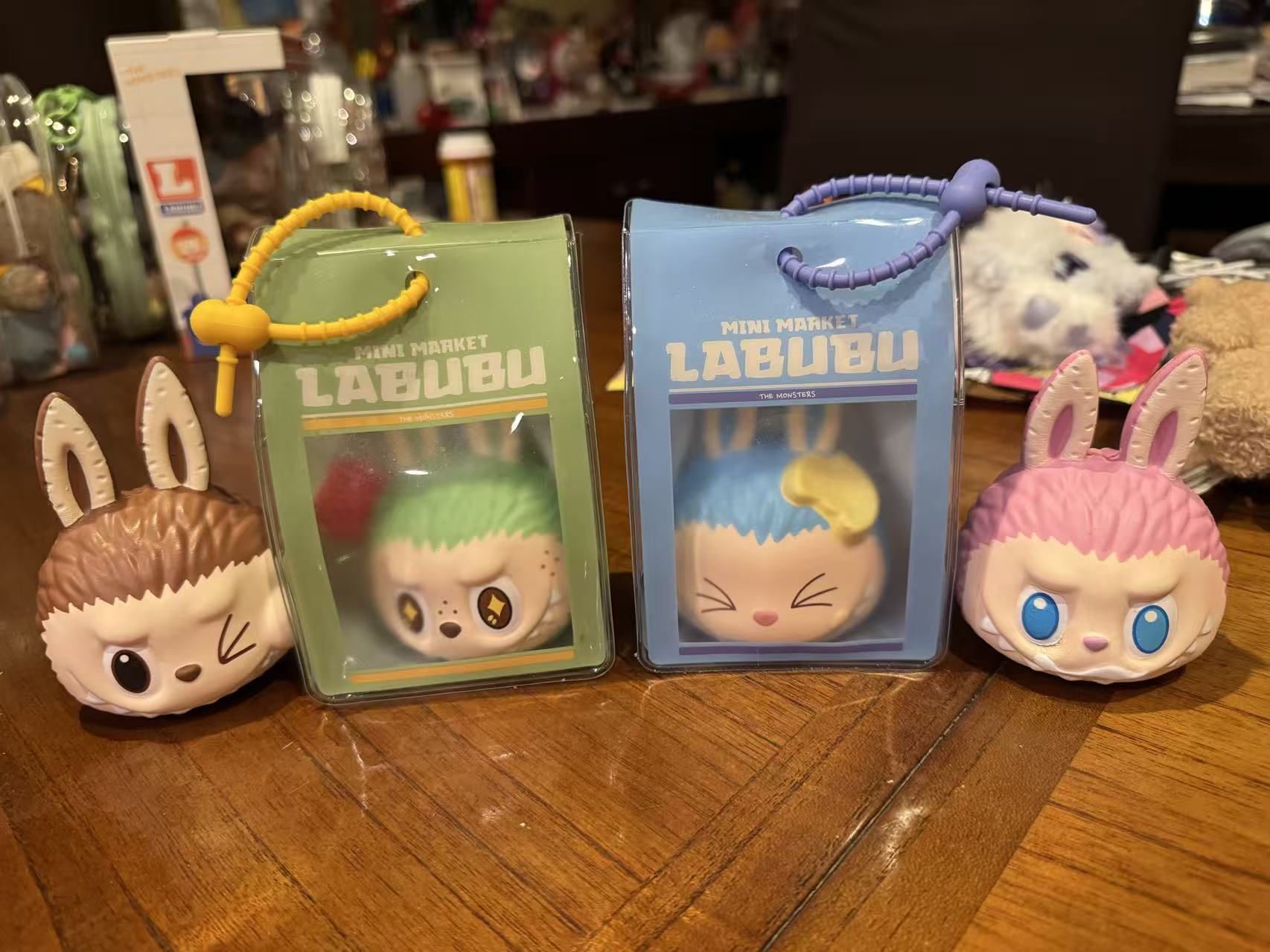
But here's the twist. The same ecosystem that allows Pop Mart to produce millions of perfect little monsters also provides the tools and knowledge for counterfeiters to operate. The question "who made lafufu?" doesn't have a simple answer like "Artist X." It's made by anonymous, illegal factories that have reverse-engineered the real product. They've stolen the designs of the original artist, Kasing Lung, and are profiting from his creativity without permission or compensation.
So, when someone asks, "is labubu made in china?" the answer is a confident "yes, and they are high-quality, legitimate products." But Lafufu is also made in China, and it is the dark side of that manufacturing power, theft of intellectual property. Pop Mart has been actively fighting this, taking legal action against the producers of Lafufu, but it's a game of whack-a-mole. For every factory they shut down, another seems to pop up.
It's a critical distinction: "Made in China" is a country of origin label for a legitimate product. "Lafufu" is a brand name for an illegal counterfeit.
A Side-by-Side Takedown: The Macaron Showdown
Let's make this practical. I recently had to verify a batch of The Monsters Exciting Macaron series, and it's a prime target for fakers. The hype around this series was insane, and as I've covered before, the Macaron Labubu market is a minefield of fakes and inflated prices.
Let's compare a real "Soymilk" Labubu Macaron with its Lafufu counterpart.
The Box:
Real: The cardboard has a premium, slightly satin finish. The printing is razor-sharp. The Pop Mart logo and Kasing Lung's signature are crisp. Fake: The box feels flimsy. The colors are often slightly oversaturated or washed out. The fonts can be almost right, but if you look closely, the spacing between letters (the kerning) is often off. The "hologram" is usually just a flat, shiny sticker with a weak rainbow pattern. It's a cheap imitation that lacks the depth of the real deal.The Figure: * Real "Soymilk": The body has a beautiful, consistent matte finish. The "drizzle" on its head has a slightly glossier texture, creating a subtle, deliberate contrast. The flocking on the ears is dense, soft, and doesn't shed when you touch it. The mold lines are minimal and clean. * Fake "Soymilk": The entire figure often has a uniform, cheap-looking semi-gloss sheen. There's no textural contrast. The flocking on the ears is the biggest tell, it's often sparse, rough, and you'll see little fibers flaking off right out of the bag. I've seen some where the flocking is literally just glued-on fuzz. The mold lines, especially around the arms and legs, are much more prominent and sometimes even a little sharp.
The Collector Card: * Real: Printed on thick, quality cardstock with a nice finish. The artwork is vibrant and clear. * Fake: The card feels like cheap, thin paper. The image is often blurry, pixelated, or the colors are completely wrong. It looks like it was scanned and reprinted on a home printer.
These aren't huge, glaring differences that you'd spot from across the room. They're subtle. But once you know what to look for, you can't unsee them. It's the difference between a designer handbag and a "super-fake" from Canal Street. The details matter.
The Price Game is Designed to Trick You
Here's the most insidious part. You'd think fakes would be dirt cheap, right? Sometimes they are. But savvy counterfeit sellers are smarter than that.
I've seen a fake Lafufu Macaron listed for $20. A new collector sees that the retail price for a real blind box is about $15-$17 and thinks, "Okay, a little markup for a specific character, seems fair." They don't realize that the real chase Macarons, like Chestnut or Toffee, can fetch $50, $80, or even more on the secondary market. The fake is priced just high enough to seem plausible, preying on people who don't know the aftermarket.
Just last month, I saw a real, authenticated "Grape" from the Zimomo The Green Labubu series sell for $180. A week later, a Lafufu version of the same figure was on a marketplace for $45. The seller's description was vague. To an uninformed buyer, $45 seems like a steal compared to $180. In reality, they're paying $45 for a worthless piece of plastic. It's a trap. As I've discussed in my Green Labubu Survival Guide, knowing the real market value is your best defense.
The goal of the counterfeit market isn't just to offer a cheap alternative. It's to infiltrate the legitimate market and create confusion, tricking you into paying a premium for garbage.
Real Talk: My Honest Take as a Seller
Look, I'm going to be blunt. There is no good reason to buy a Lafufu. Ever.
I understand the temptation. You love the design, but the real one is sold out or the aftermarket price is insane. The Lafufu looks close enough, and it's available. I get it. But you're not just buying a toy; you're casting a vote with your wallet.
When you buy a Lafufu, you are directly funding criminal enterprises that steal from artists. Kasing Lung, the creator of The Monsters, sees zero dollars from Lafufu sales. All his years of developing this charming, whimsical world are being exploited for profit by people who have contributed nothing. It's a slap in the face to him and every other artist in this space.
You're also hurting the community. The flood of fakes devalues everyone's collection. It makes trading and selling a nightmare because everyone is paranoid. It erodes the trust that holds this hobby together. How can you be excited about a rare pull if you have to wonder if it's even real? The entire experience becomes stressful instead of joyful. For a deeper look at what makes collecting special, I've written about the core appeal of LABUBU and why authenticity is key.
And finally, you're hurting yourself as a collector. That Lafufu will never have resale value. It will never be a treasured part of your collection. It will always have that asterisk next to it. It's a hollow victory. Is saving a few bucks worth supporting theft and owning a soulless copy? For me, the answer is a hard no.
The only way to fight this is to starve the beast. Don't buy fakes. Educate your friends. Report listings for counterfeit items. Support official retailers and trusted resellers. If you're looking for authentic figures, you can always browse our carefully curated LABUBU collection at PopNya, where every single item is verified.
The rise of Lafufu is a symptom of LABUBU's incredible popularity. It's a sign that Kasing Lung and Pop Mart have created something truly special that people desperately want. But celebrating that success means protecting it. Don't let the fakes win. Your collection, and the artist, will thank you for it.
Disclosure: PopNya may earn a commission if you purchase through links on this page.


