

I got an email last week that I've gotten a dozen times before. It had a subject line in all caps: "IS MY LABUBU FAKE?!?!" Attached were three slightly blurry photos of a Chestnut Cocoa LABUBU, the coveted brown one from the Macaron series. The customer had bought it from a third-party platform for what seemed like a "decent" price, around $40. Not cheap enough to be an obvious scam, but low enough to be tempting.
My heart sank a little. I could tell from the first photo. The blush on its cheeks was too perfect, too round. A perfect circle.
That's not how a real one looks.
The LABUBU Macaron series has been a blessing and a curse. It's the collection that truly shot LABUBU into the stratosphere, thanks in no small part to Lisa from BLACKPINK. But that insane popularity created a feeding frenzy for counterfeiters. And as a seller and collector, I'm on the front lines of the labubu macaron original vs fake war. I've held the fakes. I've seen the subtle (and not-so-subtle) differences.
Forget the generic checklists. Let's get into the nitty-gritty details that I've learned from handling hundreds of these little guys.
Why the Macaron Series? The Perfect Storm for Fakes
Before we compare, you have to understand why this specific series is the ground zero for fakes. It was a perfect storm.
1. The Hype: The demand was astronomical. Pop Mart couldn't keep them in stock. When that happens, prices on secondary markets like eBay and StockX explode. 2. The "Chase" Regular: The real brown labubu, Chestnut Cocoa, became a phenomenon. It wasn't a secret or a chase in the traditional sense, but its popularity made it one. I saw it go from a retail price of about $17 to over $100 in a matter of weeks. That's a massive incentive for counterfeiters. 3. The Simplicity: The Macaron designs are adorable but relatively simple. Solid colors, basic shapes. This makes them easier to replicate than, say, the intricate designs of the Monsters x One Piece crossover.
This created a market flooded with fake labubu blind box listings, promising a chance at that coveted brown bunny-eared monster for a fraction of the resale price. It's a trap, and way too many new collectors are falling into it.
The Head-to-Head: Real vs. Fake Macaron
Let's put them side-by-side. I'm going to break this down into the four stages of unboxing, from the sealed box to the figure itself.
The Box: Your First Clue is in the Cardboard
Before you even see the toy, the box can tell you almost everything. Fakers have gotten good, but they almost always cut corners on packaging.
* The Shrink Wrap: A genuine Pop Mart box has a clean, tight shrink wrap with a neat "Y" fold at the top and bottom. The plastic feels substantial. Fakes often use flimsy, crinkly plastic that feels loose, and the seams are messy and melted-looking. * Print Quality & Color: Hold the box under a good light. A real box has incredibly sharp, vibrant printing. The colors are saturated and match the official product photos perfectly. Fake boxes often look… washed out. The colors are slightly duller, the lines are a bit fuzzy, and the text can have a blurry edge to it. The pink on a fake box is often a sickly, pale pink, not the rich pastel of the original. For a long time, the easiest tell was the anti-counterfeit QR sticker on the top or bottom. On a real box, this sticker is well-cut, has a slightly holographic sheen, and the QR code is sharp. Fakes used to have terrible, blurry stickers that looked like a bad photocopy. Here's the insider tip: The high-tier fakes have now replicated the sticker almost perfectly. So while a bad sticker is a dead giveaway of a fake, a good-looking sticker is no longer a guarantee of authenticity. Don't rely on this alone. * The Feel of the Box: This is something you can't see in a photo. A real Macaron box has a smooth, almost soft-touch matte finish. It feels premium. Most fakes use cheaper, standard glossy or semi-gloss cardstock. It feels slick and a little flimsy.
The Foil Bag: The Crinkle Test
You've opened the box. Inside is a foil-wrapped mystery. This is your next checkpoint.
Material and Sound: A genuine inner bag is made of a thick, soft-feeling foil. When you crinkle it, it makes a dull, low-pitched sound. Fake bags are almost always made of a thinner, cheaper material that feels stiff and makes a loud, high-pitched crinkly* noise. It sounds and feels like a cheap potato chip bag.* The Crimp: Look at the sealed edges at the top and bottom. Pop Mart uses a clean, uniform crimping pattern. Fakes often have messy, uneven, or overly aggressive crimping, sometimes with little bits of melted plastic sticking out.
The Tear: It sounds weird, but the tear* is different. A real bag tears open cleanly along the designated notch. A fake bag often shreds or tears unevenly because the material is lower quality.The Figure: The Unmistakable Truth
Okay, the moment of truth. You have the figure in your hand. This is where the differences become undeniable, especially if you know what to look for.
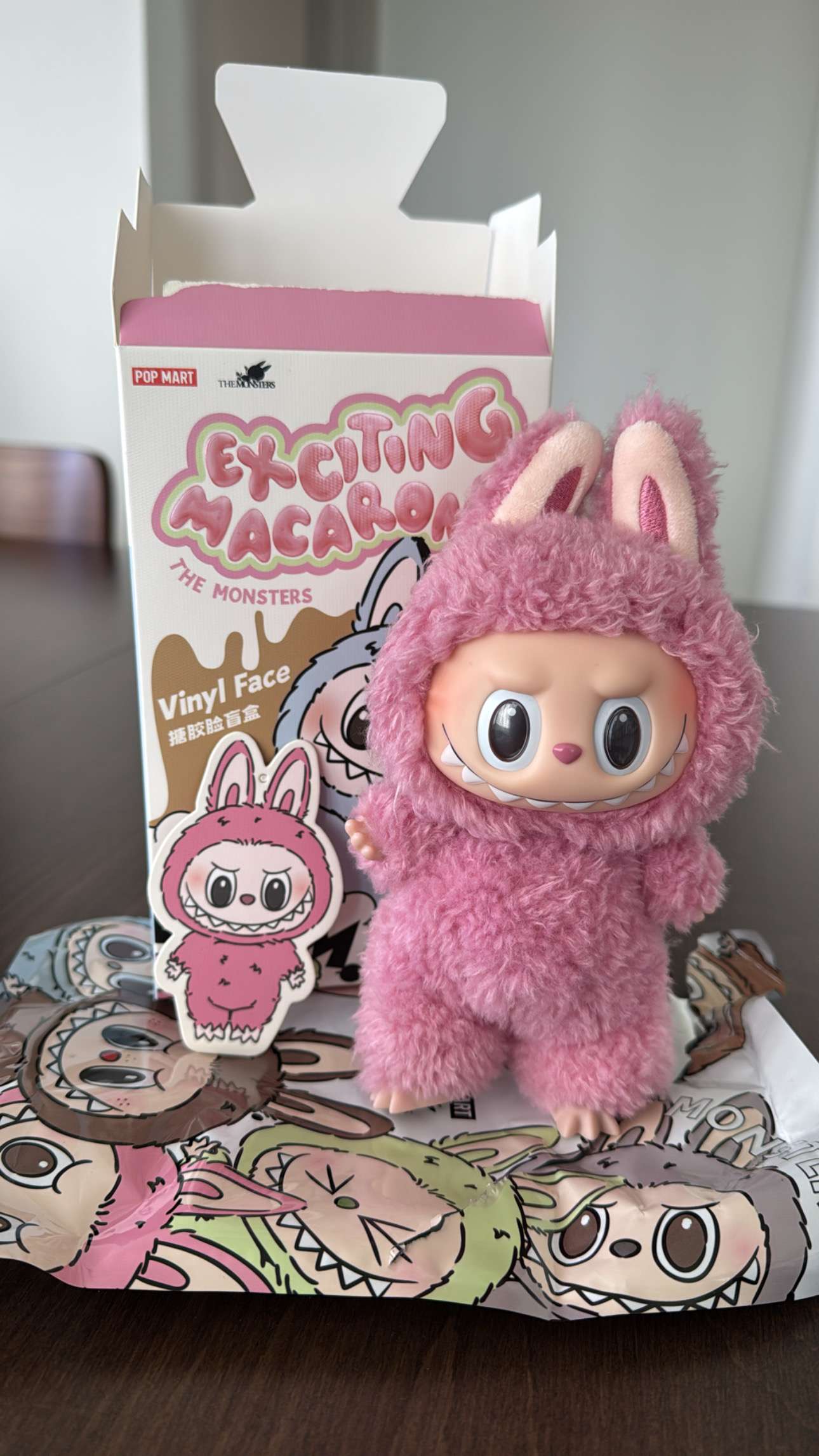
* The Vinyl Feel (The #1 Tell for Me): This is my go-to test. A real LABUBU is made from a high-quality vinyl that has a distinct feel. It's soft, almost velvety, and has a slight give to it. It's not squishy, but it's not rock-hard either. Fakes are almost always made of a cheaper, harder PVC plastic. They feel slick, cold, and rigid. There's no softness to them at all. This difference is night and day once you've felt a real one. * The Smell: Open the bag and take a sniff. A real Pop Mart figure has a very faint, neutral, new-vinyl smell, or no smell at all. A fake often has a strong, sharp chemical smell. It's the smell of cheap plastic and paint. If it gives you a headache, it's probably a fake. * Paint & Finish: This is where that customer's "perfect" blush came in. * Blush: Real LABUBUs have a soft, airbrushed blush on their cheeks. It fades out at the edges. It's subtle. Fakes almost always have a hard-stamped, perfectly circular blush spot. It looks like a sticker. * Eyes & Teeth: Look at the white in the eyes and the teeth. On a real figure, the paint is crisp and clean, applied with precision. On fakes, you'll often see fuzzy edges, paint bleeding into the black outlines, or tiny specks of white where they shouldn't be. * Color Matching: Fakes often struggle with color consistency. The color of the head might be a slightly different shade than the body. On the real brown labubu, for example, the deep chocolate brown is consistent across the entire figure. On fakes, the head might be a shade lighter or have a different finish than the torso. * The "Fluff" Texture: The Macaron series has a molded texture on the body to simulate a fluffy suit. On a genuine figure, this texture is fine, detailed, and consistent. You can feel it under your thumb. On a fake, this texture is often shallow, poorly defined, or completely smooth. They skip this expensive molding detail to save money.
The Card and Accessory
Don't throw out the card! It's a final, crucial piece of evidence.
* The Collector Card: A real card is printed on thick, high-quality cardstock with a matte finish. The image is razor-sharp. A fake card feels thin and flimsy, like a cheap business card. The printing is often slightly blurry, and the colors are off. * The Accessory: Each Macaron comes with a tiny corresponding macaron accessory. Look at the paint job on this tiny piece. On a real one, it's clean. On a fake, it's a mess, sloppy lines, paint bleeding, just a total rush job.
Real Talk: My Honest Verdict on Buying Macarons Now
Look, I love this series. It's iconic for a reason. But the market is a minefield. The fakes are getting scarily good. Some of the tells I've mentioned, especially the packaging ones, are being actively improved upon by the counterfeiters. They read these guides too.
Here's my honest take as a seller: If a deal on a single, unboxed "chase" Macaron like Chestnut Cocoa or Soy Milk seems too good to be true, it is 100% fake. No one is selling a real, $100+ collectible for $40 out of the goodness of their heart. They're selling you a $2 piece of plastic.
The risk with buying a fake labubu blind box is also high. Scammers will buy cases of fakes and sell them as individual, sealed boxes. You think you're getting a real shot at the collection, but you're getting a guaranteed fake.
My advice? The safest way to get into this series now is to either buy a sealed case from a reputable dealer or wait for an official restock from Pop Mart. The thrill of the hunt is fun, but the crushing disappointment of unboxing a fake and realizing you've been scammed is just not worth it. You're not just getting a lower-quality product; you're supporting an industry that directly harms the artist, Kasing Lung, who puts his heart into these designs.
The joy of collecting is in the authenticity, the community, and the support for the art. A fake figure has none of that. It's an empty replica. So please, be careful out there. The hunt for your favorite little monster should be exciting, not a source of anxiety. If you want to skip the stress and guarantee you're getting the real deal, you can always browse our LABUBU collection at PopNya, we stake our reputation on the authenticity of every single item we ship.
Disclosure: PopNya may earn a commission if you purchase through links on this page.


