

I need to get something off my chest. Every single day, my DMs and emails at PopNya are filled with the same question: "Do you have the jjk labubu?"
And every single time, I have to start my reply with a deep breath and a clarification.
The viral Jujutsu Kaisen cat ear plush you're looking for? It's not a LABUBU.
I know, I know. That's what everyone calls it. The name has stuck. It's all over TikTok, Instagram, and reseller listings. But as someone who lives and breathes designer toys, and especially Kasing Lung's LABUBU, the distinction is important. It's a classic case of internet-fueled mistaken identity that has taken on a life of its own.
So, what is it, really? The series is an officially licensed Jujutsu Kaisen product, usually produced by a company called Eaki (you might also see the name ThrillJoy associated with it). It has absolutely no connection to Pop Mart or Kasing Lung, the artist behind the genuine LABUBU universe. The confusion likely started because the format, a small, big-eared, monster-like plush keychain, is visually similar to some of the popular LABUBU plush series. The internet saw a cute, pointy-eared creature and just ran with the name it knew.
Now that we have that out of the way, let's talk about the actual product, because despite the naming mix-up, it's a phenomenon worth discussing.
What's Actually in the JJK "Labubu" Blind Box?
The product at the center of all this is the Jujutsu Kaisen Cat Ear Plush Series Blind Box. Each box contains one randomly assorted plush keychain. They stand about 5.5 inches tall and feature a character from the anime with adorable cat ears and a matching tail.
The lineup for the main series includes: * Yuji Itadori * Megumi Fushiguro * Nobara Kugisaki * Satoru Gojo (Masked) * Kento Nanami * Toge Inumaki * Panda (who is, well, already an animal)
And this is where the trouble starts.
The plushies themselves are... Fine. They're made from a standard, short-pile velour fabric that you'd find on most mass-market plush keychains. The embroidery is decent, and they have a plastic clip to hang on your bag or keys. They are perfectly cute and serve their purpose as merchandise for a massively popular anime. They are not, however, on the same level of design or material quality as what you'd find in a premium designer toy line. For a comparison, a series like the Monsters x One Piece Labubu shows what a true high-end anime crossover looks like, with unique sculpting and textures that reflect the artist's style. This JJK series is more straightforward character merch.
The Gojo Effect: A Case Study in Hype Pricing
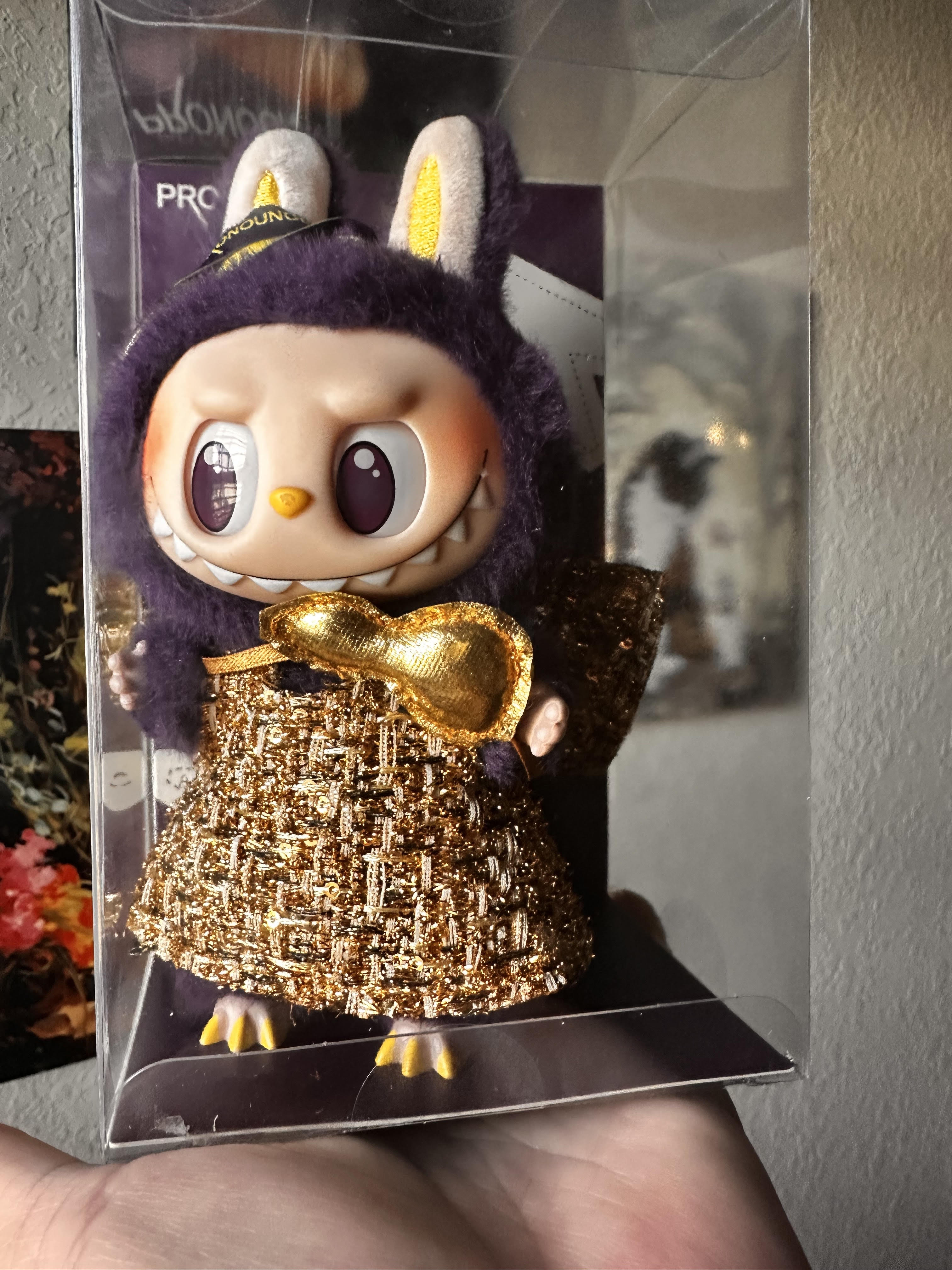
Let's talk about the elephant in the room: the price. A single jjk labubu blind box retails for around $15 to $20, depending on the retailer. This is a pretty standard price for a licensed blind box of this type.
But then there's Gojo.
Because of the blind box format, you have a 1-in-8 (or whatever the case ratio is) chance of getting the character you want. And since Satoru Gojo is arguably the most popular character in modern anime, the demand for his specific jjk labubu plush has created a secondary market that is, frankly, insane.
The moment someone pulls a Gojo, masked or, god forbid, the secret unmasked version, its value multiplies. I've been tracking the market since these first hit. On platforms like Mercari, eBay, and Depop, I've seen the standard masked Gojo plush sell for $60, $80, and at the peak of the hype, over $100. The secret version can fetch even more.
Think about that. A plush that came from a $15 box is being sold for 5-6 times its value, simply because it's the one everyone wants. This isn't unique to this series, but the scale of it with the JJK plush has been particularly intense. We see this with all sorts of collectibles, but the combination of JJK's massive fandom and the gambling-like thrill of blind boxes has created a perfect storm. People are buying entire cases of 8 boxes for $150+ just to increase their chances of getting a Gojo, and even that isn't a guarantee.
Real Talk: Is It Worth It?
Okay, here's my honest take as a seller and a collector.
Are they cute? Yes. If you are a die-hard Jujutsu Kaisen fan and you absolutely love the cat-ear aesthetic, then getting one of these at retail price is a fun experience. The thrill of opening a blind box is real.
But is the Gojo plush worth $100? Absolutely not.
The hype is driven entirely by the character's popularity, not by the quality, rarity, or artistry of the toy itself. This is a mass-produced item made in the tens of thousands. It is not a limited-edition art piece. Paying exorbitant secondary market prices for it is, in my opinion, just feeding the scalpers.
As a LABUBU enthusiast, the comparison feels night and day. When you buy a LABUBU, you're buying into an artist's original world. The value comes from Kasing Lung's unique design language and the story behind the characters. If you want to understand the difference, just read up on what makes LABUBU dolls special in the first place. The JJK plush is licensed merchandise; it's a different category. It's like comparing a fun, well-made superhero action figure from Hasbro to a hand-painted statue from Sideshow Collectibles. Both are cool, but they are not the same thing and shouldn't be valued the same way.
My advice: If you must have the Gojo, be patient. Hype cycles die down. More stock will eventually hit the market, or a new "it" item will come along, and the prices will normalize. Don't let FOMO (Fear Of Missing Out) drain your wallet.
Your Buyer's Playbook: Where to Buy the JJK Plush (and How to Avoid Fakes)
So, you've weighed the pros and cons, and you still want to try your luck. The big question is jjk labubu where to buy? Your options are varied, and so are the risks.
The Safer Bets: * Specialty Toy Stores (Online and Brick-and-Mortar): Your local anime shop or a dedicated designer toy store like ours (PopNya!) is your best bet for getting authentic products at retail prices. Stock is often limited and sells out fast, so signing up for newsletters or following on social media is key. * Official Brand Stores: Occasionally, the manufacturer (Eaki) or a major distributor might sell them directly online. This is rare for US customers but more common in Asia. * Trusted Reseller Communities: Facebook groups or Discord servers dedicated to anime merch or designer toys can be good places to trade or buy from other fans. You're more likely to find fair prices here, but always use secure payment methods like PayPal Goods & Services.
The Risky Territories: * Amazon/Walmart: Be very careful here. The listings you see are almost always from third-party marketplace sellers, not from Amazon or Walmart directly. Prices are usually inflated, and you run the risk of getting a fake. Read seller reviews and check the shipping origin and estimated delivery time. If it's shipping from China and takes 4-6 weeks, the risk of it being a knockoff increases. * eBay/Mercari: These are the hubs of the secondary market. You can find any character you want here, but you'll be paying the hype tax. It's a good place to secure your chase character if you have the money to burn, but it's also where you need to be most vigilant about fakes. * AliExpress/Temu/Wish: Do not buy from these platforms if you want an authentic product. Period. They are absolutely flooded with cheap, low-quality knockoffs. If you see a Gojo plush for $7 with free shipping, you know exactly what you're getting. It won't be the real deal.
How to Spot a Fake JJK Plush
I've handled both the official product and the knockoffs that customers have sadly brought to me for comparison. The fakes are getting better, but there are still tell-tale signs.
1. The Price: This is the number one red flag. No one is selling a legitimate, highly sought-after Gojo plush for $10. It's a fake. 2. The Face Embroidery: This is where the fakes fall apart. On the authentic plush, the facial has are neatly embroidered with clean lines. On the knockoffs, the eyes might be uneven, the mouth can be crooked, and the threads are often loose or fuzzy. Gojo's blindfold or glasses are a huge giveaway, on fakes, they are often made of a cheap, shiny felt that's sloppily glued on. 3. The Tags: The authentic Eaki plush comes with proper tags. There should be a professionally printed cardboard hang-tag with the Jujutsu Kaisen logo and licensing information (© Gege Akutami/Shueisha, JUJUTSU KAISEN Project). There should also be a fabric "tush tag" sewn into the plush's body. Fakes often have no tags, a poorly photocopied paper tag, or a fabric tag with generic "Made in China" text and nothing else. 4. The Box (If Buying Sealed): If you're buying a sealed jjk labubu blind box, look at the print quality. Knockoff boxes often have blurry images, washed-out colors, and are made from flimsy, thin cardboard that feels cheap.
Ultimately, the "JJK Labubu" phenomenon is a fascinating look at how internet culture, anime fandom, and the designer toy scene can collide. It's a cute product that has brought a lot of people joy, but the confusion and the wild secondary market have also created pitfalls for unsuspecting buyers.
Know what you're buying, set a budget, and don't fall for the hype. There are so many amazing and creative toys out there to discover. If this series is your gateway into the world of collecting, that's awesome! Just be sure to explore what else is out there, you might even find you love the actual LABUBU collection for what it is.
Disclosure: PopNya may earn a commission if you purchase through links on this page.


