

I get this email at least once a month. "Hi, do you have any labubu first generation figures?"
It's the collector's equivalent of asking a record store owner if they have a spare copy of the Wu-Tang Clan's single-copy album just lying around. It's a valid question, but one that opens up a whole can of worms about rarity, history, and frankly, a whole lot of money.
As someone who runs PopNya and stares at Labubu boxes all day, the first gen labubu is a ghost. It's the legend that predates the worldwide frenzy. Before the slick Pop Mart packaging, before the blind box craze took over, before you could just walk into a store and grab a case.
So, let's get real about what this "first generation" actually is, and what it means if you're seriously considering hunting one down.
What Are We Even Talking About? The Pre-Pop Mart Era
First, a crucial clarification. When collectors talk about the "first generation," they are NOT talking about The Monsters Toys Blind Box Series 1 (the one with Soy, Spooky, and the gang). They're talking about the original set of vinyl figures released by How2Work around 2015-2016, long before Kasing Lung's partnership with Pop Mart sent Labubu into the stratosphere.
These weren't blind boxes.
They were individual figures sold in window boxes. You knew exactly which one you were getting. The lineup was simple: Labubu, Tycoco, Spooky, Pato, and sometimes you'll see the little mushroom-like Yaya included in this group. They were standalone art pieces, produced in much smaller quantities. Think of it as an indie band's first self-pressed vinyl before they signed to a major label.
I remember seeing them pop up in niche designer toy forums back then. They were cool, quirky, and had this raw, almost storybook-like charm. They didn't have the super-smooth, matte finish of today's Pop Mart figures. The vinyl feels a bit different, it's a harder, slightly glossier plastic. The paint application, while good, has a more "hand-painted" feel. You might see tiny imperfections that would never pass Pop Mart's modern QC.
This isn't a flaw. It's its fingerprint. It's a sign of a different time in production.
The Brutal Reality of the Market: Price and Scarcity
Okay, let's talk numbers. Because that's what everyone really wants to know.
I have personally seen a single, boxed, original green Labubu from this first generation sell for over $800 USD on secondary market platforms. A loose one, without the box? You're still looking at $300-$500, depending on the condition and the desperation of the buyer. Just last week, I was scrolling through a collector's group on Facebook and saw an ISO ("in search of") post where a buyer was offering $1,000 for a complete set of the main three (Labubu, Tycoco, Spooky) in good condition with boxes.
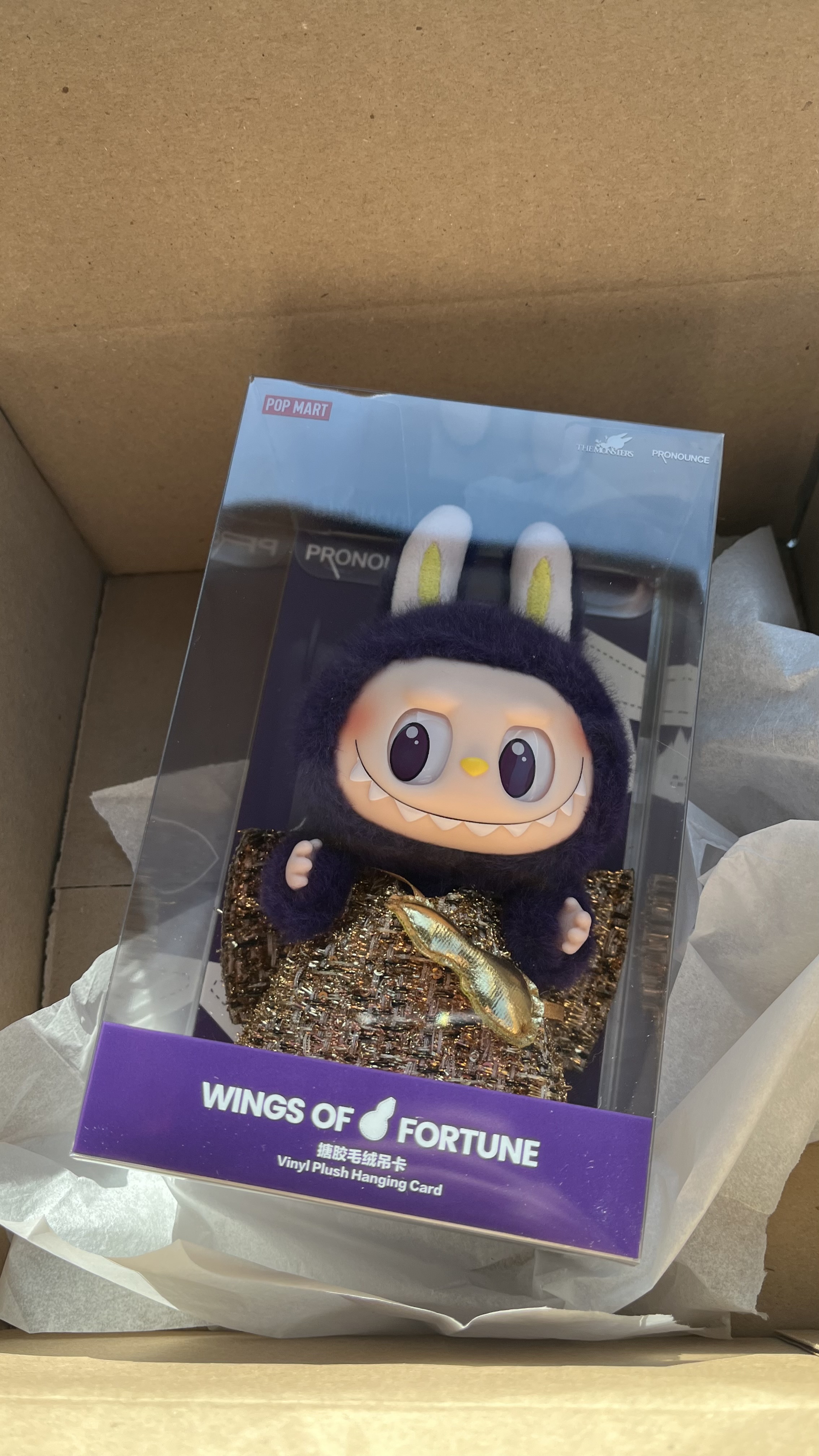
The original retail price was probably somewhere in the ballpark of $30-$50 per figure. The jump is astronomical.
Why? Simple supply and demand. The production run was tiny compared to the millions of units Pop Mart produces now. Most of the people who bought them back then were hardcore designer toy enthusiasts, not the casual collectors of today. They're held in very tight-knit circles. Many will simply never go back on the market.
This scarcity has created a minefield for new collectors. And that minefield is littered with fakes.
A Buyer's Playbook for the First Gen Hunt
If you've read this far and you're still determined, I respect the dedication. But you cannot go into this hunt casually. You need a plan.
Step 1: Abandon All Hope, Ye Who Enter Retail
You will not find a labubu first generation figure in any retail store. Not on Pop Mart's site, not on ours, not anywhere. Your quest will take place entirely on the secondary market. This means places like:
* eBay: The most accessible, but also rife with fakes and inflated "dreamer" prices. You need to be an expert at vetting sellers. * Collector Facebook Groups: A better option. You're dealing with fellow fans, but deals are often fast and based on trust. Always use PayPal Goods & Services. Always. * Xianyu (闲鱼): This is the big one. It's Alibaba's secondhand marketplace in China, and it's where most of these rare figures surface. The problem? It's entirely in Chinese, and most sellers won't ship internationally. You'll need a proxy agent (a service that buys on your behalf in China and ships to you), which adds another layer of fees and complexity.
Step 2: Become a Counterfeit Detective
The fake market for the first gen is terrifyingly sophisticated. Because the originals had a slightly less "perfect" finish, counterfeiters can get away with a lot. I've had to help a few devastated customers who thought they scored a deal, only to realize they bought a very convincing fake. If you're serious about this, you need to read our in-depth guide on spotting fake Labubu, but for the first gen, here are some specific tells:
* The Box: This is your best friend. The original How2Work boxes have a specific cardboard texture and print quality. Fakes often have slightly blurry text, off-colors, or use a flimsy, overly glossy cardstock. The font for "Kasing Lung" and "How2Work" should be crisp. * The Feet: The copyright information on the bottom of the feet is a huge tell. On authentic figures, the text is sharp and clear. On many fakes, it's soft, mushy, or slightly illegible. It should say "© 2015 Kasing Lung" and "How2work®". * The "Smell Test": This sounds weird, but it's a real thing in the toy world. Authentic, aged vinyl has a neutral or very faint, specific smell. Fakes, especially newer ones, often have a strong, sharp chemical odor from the cheaper plastics and paints used. * The Price: This is the biggest red flag. If you see a first gen labubu for $100 in its box, it is 100% fake. No one who knows what they have would sell it for that low. It's a painful truth, but a cheap price is a guaranteed sign of a counterfeit.
Step 3: What's a "Fair" Price in This Crazy Market?
* Loose Figure (No Box, Good Condition): $300 - $550 * Boxed Figure (Good Condition Box & Figure): $600 - $900+ * The Green Labubu: This is the hero piece. Expect to be at the absolute top end of that range, or even exceed it. It's the most iconic of the originals.
These prices fluctuate wildly. A big auction or a celebrity endorsement could send them soaring overnight. This is not an investment for the faint of heart.
Real Talk: Is It Actually Worth It?
Okay, PopNya seller hat off, collector hat on. Is owning a labubu first generation figure worth the price of a new iPhone?
For 99% of collectors, my honest answer is no.
The joy of collecting Labubu comes from the art, the community, and the thrill of the chase in blind boxes. You can get all of that, and arguably more fun, by exploring the dozens of incredible series Pop Mart has released. For the price of one single first-gen figure, you could buy entire cases of the Macaron, Forest Concert, or Monsters Carnival series and have an absolute blast opening them. You could fill a whole shelf and still have money left over.
Owning a first-gen is a status symbol. It's a piece of history. It's an incredible grail for the most dedicated collectors who appreciate the story of where it all began. It's a way to connect directly with the origins of the character, a time before the global phenomenon. It's a nod to the incredible journey of Kasing Lung as an artist. But it does not, in itself, give you a "better" collecting experience.
The original set established the core characters, and it's fun to see how their names and personalities were there from the start. If you're ever confused about who's who in the Monster world, we actually put together a guide to all the Labubu character names that traces them back to these origins.
My advice? Don't start here. Fall in love with the modern Labubu first. Enjoy the accessibility, the variety, and the community. You can browse the current LABUBU figures and find a design that speaks to you without needing to take out a small loan.
If, after years of collecting, you find yourself wanting that one, ultimate historical piece to cap your collection, then by all means, begin the hunt. But go in with open eyes, a healthy dose of skepticism, and a very prepared wallet. It's a marathon, not a sprint, and the prize at the end is as much about the story and the search as it is about the toy itself.
Disclosure: PopNya may earn a commission if you purchase through links on this page.


