

I remember the day the Pop Mart Labubu The Monsters Exciting Macaron series dropped. It was chaos. We all knew this series would be popular, the Macaron V1 was a hit, but nobody was prepared for the absolute mania that would form around one specific figure. The Chestnut Cocoa Labubu.
Within hours, it was gone. Sold out online, lines out the door at physical stores. And the aftermarket prices… they were immediate and they were brutal. A plush pendant that retailed for around $15 was suddenly listed for $150. Then $200. I saw one sell for $280 in the first week. It was, and still is, completely wild.
So what happened? Why did this one specific chestnut labubu capture the hearts (and wallets) of the entire designer toy community?
Honestly, it's a perfect storm. The color palette is one thing. That warm, neutral chestnut cocoa combination is just chef's kiss. It's aesthetic. It fits the beige-and-cream Instagram feed vibe that's so popular right now. It's not loud or garish like some other designs. It's subtle, cute, and has that cozy, café-au-lait feel. Kasing Lung's design is, as always, brilliant in its simplicity. The slightly worried expression, the floppy ears, the little macaron accessory, it's just an incredibly endearing figure.
But the main driver of the hype is its status as a "secret" or "chase" figure. In any given case of the Labubu Exciting Macaron Chestnut Cocoa series, you get 12 blind boxes. The odds of pulling the regular Chestnut Macaron Labubu are 1 in 12. The odds of pulling the Chestnut Cocoa Labubu Secret? Officially, it's 1 in 144. That's one per master carton of 12 cases.
Those odds create instant scarcity. And scarcity creates insane demand.
A Seller's Look at the Chestnut Cocoa Labubu Price Madness
As someone who runs PopNya, an online store specializing in these little monsters, I watch the market like a hawk. The chestnut cocoa labubu price is a fascinating case study in hype economics.
Initially, the price spiked due to pure scarcity and FOMO (fear of missing out). But it never really came back down. As of writing this, a confirmed Cocoa Labubu still consistently sells for between $180 and $250 on platforms like StockX and in private collector groups. Why? Because the supply has never caught up to the demand. Pop Mart produces these in batches, and once a series is done, it's done. They move on to the next thing, like the Big into Energy series or the crossover with One Piece.
This isn't new for a chase figure. We saw a similar, though less intense, frenzy for the Grape figure in the Fall in Fruits series, which you can read about in my Green Labubu Survival Guide. But the Cocoa Labubu Secret hit a different level of mainstream appeal, pushing its value into a category all its own. People who had never collected a Labubu before suddenly wanted this specific one.
Real Talk: My Honest Opinion on the Hype
Okay, let's be real. Is a 4-inch plush keychain worth $200?
From a pure materials and manufacturing standpoint, absolutely not. It's a well-made little item, don't get me wrong. The plush is soft, the vinyl face is nicely painted, and the stitching is solid (on the real ones, at least). But it's not made of gold.
You are not paying for the toy. You are paying for the scarcity. You're paying for the status symbol within the community. You're paying to have "the one" that everyone wants. And there's nothing wrong with that! Collecting is emotional. We buy what we love. But it's important to go into it with open eyes. Don't think you're buying a $200-quality object; you're buying a $15 object with $185 of hype attached.
Personally, I think the design is top-tier. It's one of my favorite Labubu colorways ever. But the price makes my eyes water. I've had dozens of these pass through my hands for the shop, and while I admire each one, I can't help but feel the hype has gotten a little out of hand. If you're new to collecting, I'd strongly suggest exploring some of the other amazing figures in our LABUBU collection that won't require you to take out a small loan.
The Most Important Part: Labubu Chestnut Cocoa Real vs Fake
Because of the insane price, the market is FLOODED with fakes. Seriously. If you see a Chestnut Cocoa Labubu for sale for $50, it is 100% fake. If you see one for $100, it is 99.9% fake. The counterfeiters are getting better, but as someone who handles these daily, there are still dead giveaways.
Forget weighing boxes or shaking them. That doesn't work, especially for plushies. You need to inspect the item itself. If you're buying from a reseller, DEMAND these specific photos. If they refuse, walk away.
1. The Tag is Your Best Friend. This is the number one way to tell. The real tag is a multi-layered cardboard affair. * The Hologram: The authentic tag has a small, square hologram sticker with the POP MART logo. On fakes, this is often just a flat, non-holographic silver sticker, or it's missing entirely. * The Font and Printing: The text on a real tag is crisp, clean, and uses a specific font. Fakes often have slightly blurry text, different font weights, or spelling errors. The black ink on fakes is often a washed-out gray-black, not a deep, solid black. * The Barcode: The barcode sticker on the back of the tag should be a separate, clean sticker. On many fakes, the barcode is printed directly onto the tag itself and looks fuzzy.
2. The Feel of the Plush. This is harder to judge from photos, but it's obvious in person. The authentic Chestnut Labubu has a very soft, dense, minky-style plush. It has a slight sheen to it. Fakes use a cheaper, rougher fleece material that feels thin and sometimes a bit scratchy. The color is also often slightly off, a bit too yellow or too gray compared to the warm, creamy brown of the real deal.
3. The Vinyl Face. Kasing Lung's art has a very specific look. * The Finish: The real face has a beautiful, high-quality matte finish. It's smooth to the touch. Many fakes have a semi-gloss or even a fully glossy finish that looks cheap and reflects too much light. * The Paint: Look closely at the eyes and mouth. On a real Cocoa Labubu, the lines are razor-sharp. The whites of the eyes are a clean, bright white. On fakes, the lines can be fuzzy, the paint might bleed, and the "white" of the eyes is often a dingy, yellowish off-white. The color of the brown "cocoa" part of the face is also a key tell, fakes often get this shade wrong, making it too dark or too reddish.
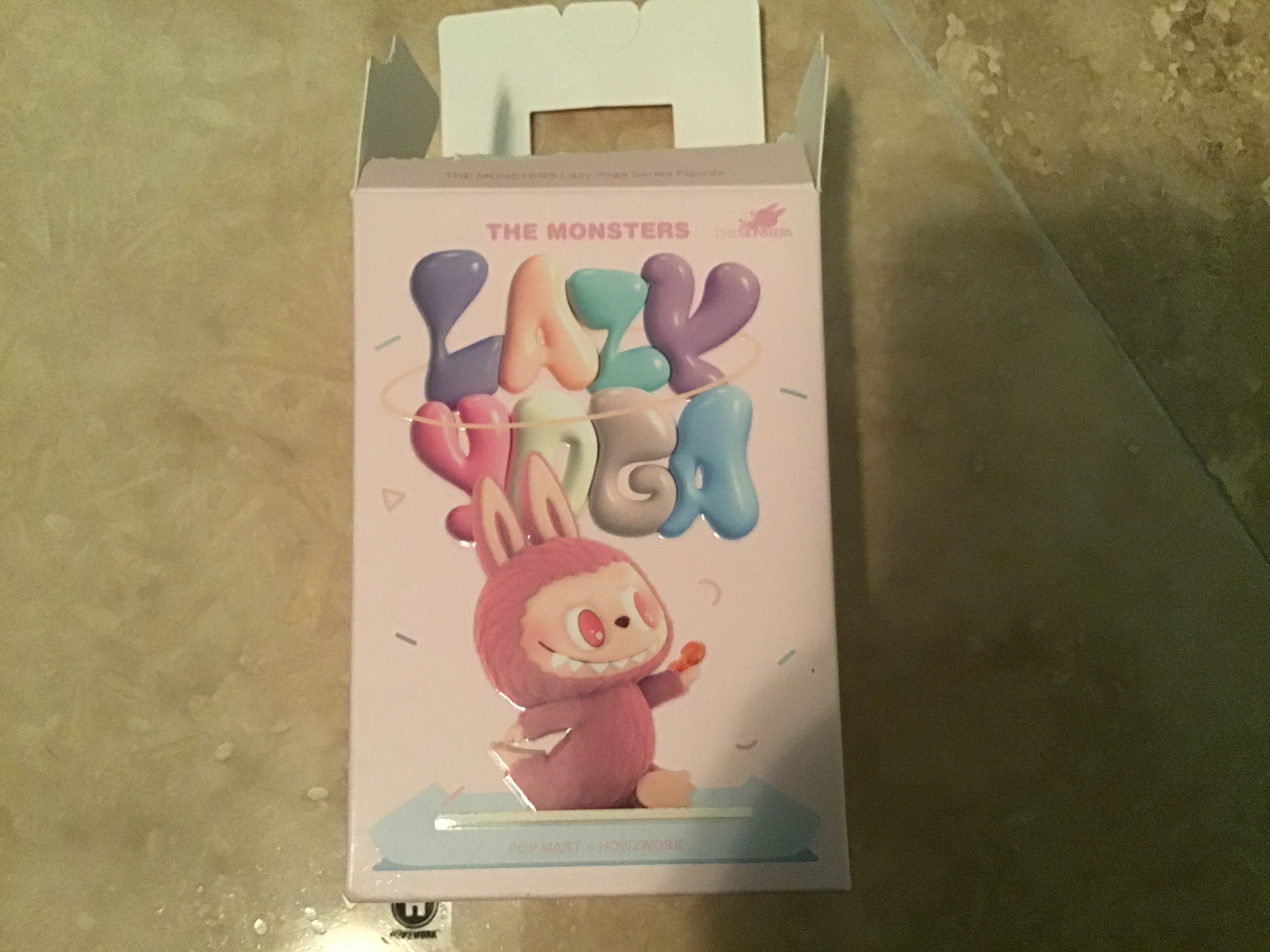
4. The Box and Inner Tray. Don't throw away your box! It's another key authentication tool. * Cardboard Quality: The real box is made of sturdy, coated cardstock with a slightly satin finish. The printing is vibrant and high-resolution. Fake boxes feel flimsy, the cardboard is thinner, and the printing looks like a low-quality scan, pixelated or with washed-out colors. * The Inner Plastic: The clear plastic tray that holds the Labubu inside the box is surprisingly telling. The authentic tray is made of a relatively thick, clear plastic that holds its shape. Fake trays are often made of super thin, flimsy plastic that feels like it would crack if you looked at it wrong.
Learning these details is your best defense. For a broader look at spotting fakes across the whole series, our Honest Labubu Macaron Buyer's Guide has even more tips that apply here.
So, You Still Want One. What Now?
Look, I get it. The heart wants what it wants. If you've decided the Chestnut Cocoa Labubu Secret is your grail and you're ready to pay the premium, my best advice is to be incredibly careful.
Buy from reputable sources. That means established sellers in collector communities with tons of positive feedback, or specialized stores that guarantee authenticity. When buying from an individual on eBay or Facebook, pay with a service like PayPal Goods & Services that offers buyer protection. Never, ever pay with Zelle, Cash App, or Friends & Family unless you know the person intimately.
Ask for detailed, well-lit photos of the tag (front and back), the face, and the box. Compare them against photos of confirmed authentic ones. If the price seems too good to be true, it is. There are no secret deals or undiscovered stashes of this coco chestnut monster.
The hunt for a rare toy is part of the fun of collecting. But getting scammed is not. The joy of finally getting your grail is amazing, but the feeling of realizing you spent $200 on a $5 fake is devastating. Do your homework, trust your gut, and be patient. Or, you know, you could always try your luck with a few blind boxes from a fresh case and see if you can beat the 1-in-144 odds yourself. You never know.
Disclosure: PopNya may earn a commission if you purchase through links on this page.


