

I need to tell you a story. A few weeks ago, a customer emailed us, heartbroken. They'd scored a "deal" on a full case of The Monsters Exciting Macaron series on a big online marketplace. The price was just low enough to be tempting, but not low enough to scream "scam." When the box arrived, everything looked... Okay. The art was right, the box was sealed. But when they opened the first blind box, the feeling was just off. The vinyl felt light. The paint was a little flat. They had bought a case of fakes.
This is the new reality of collecting. The days of spotting a labubu box fake from a mile away because of a misspelled name or comically bad printing are fading. The counterfeiters are getting better, and as sellers, we're on the front lines, seeing the evolution firsthand. So, I want to walk you through what I look for, not as a generic guide, but as someone who handles hundreds of authentic labubu boxes a month.
The First Touch: Shrink Wrap and Box Feel
Before you even see the figure, the packaging tells a story. A real labubu box has a specific feel.
First, the shrink wrap. Official Pop Mart shrink wrap is high quality. It's tight, clean, and has a very neat seam, usually a single vertical line down the back. A lot of fakes have messy, thick shrink wrap that feels almost like kitchen plastic wrap. It might have multiple seams or be loosely applied.
More importantly, look for the official Pop Mart sticker on the outside of the shrink wrap. This is a newer addition, but it's a small, rectangular sticker, often with a QR code or serial number. While fakers can replicate this, it's another layer of detail they have to get right.
Now, take the wrap off. Feel the box. This is one of the hardest things for counterfeiters to replicate perfectly. The cardboard on labubu original packaging has a premium, satin finish. It's sturdy and has a certain density. Fake boxes often feel flimsy, use cheaper, more porous cardboard, and the printing can look dull or overly saturated. Run your finger over the artwork. On many series, like the Exciting Macaron LABUBU, certain parts of the design (like LABUBU's eyes or the series logo) have a spot UV gloss finish. You can feel a slight raised texture and see it catch the light. Fakes often skip this detail or do a poor, all-over gloss that just looks cheap.
The Great QR Code Debate: A Red Herring?
"Does fake labubu have qr code?" This is one of the most common questions I get.
The short answer is: Yes, they absolutely do.
Relying solely on the presence of a QR code is a huge mistake. Early on, fakes didn't have them, so it was an easy tell. Now, almost every fake has a QR code sticker on the bottom or inside the box. The difference is in the functionality.
A real labubu blind box from a recent series uses an NFC (Near Field Communication) system integrated with the QR code. When you scan a real one with the Pop Mart global app, it should register to your account, adding "beans" or points. It's a one-time registration.
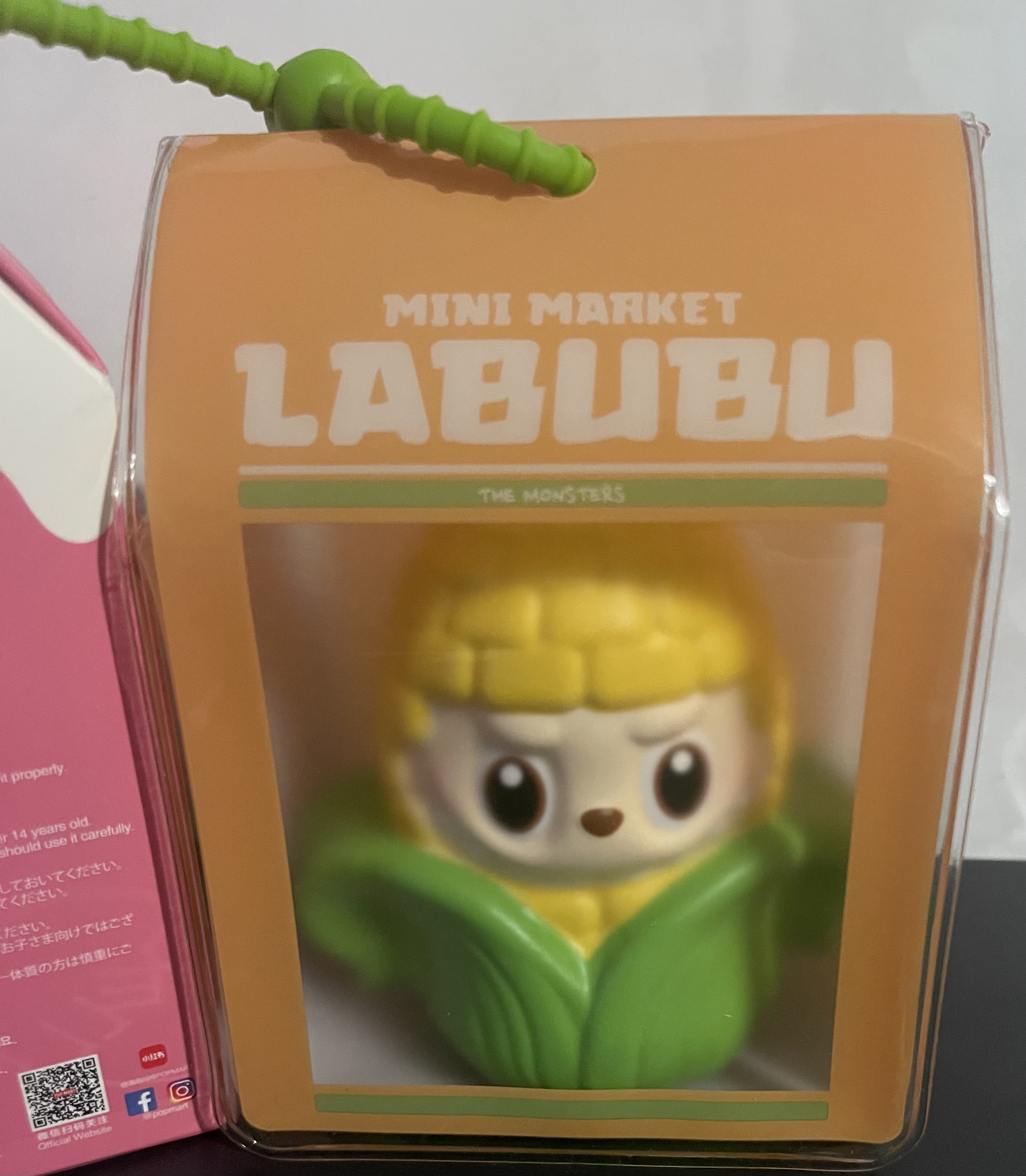
Here's what happens with fakes: 1. Dead Code: The QR code is just a printed image and doesn't scan to anywhere. 2. Fake Website: It scans to a cloned, non-official website that looks like Pop Mart's but is designed to phish for your info. 3. Used Code: In some cases, counterfeiters might even get their hands on real, used QR codes and slap them on fake boxes. When you scan it, the app will tell you it has already been registered.
The NFC chip is the real key. If you have an NFC-enabled phone, you can often just tap the top of a newer, unopened box, and it should trigger a prompt from the Pop Mart app. Fakes do not have this NFC technology. It's too expensive to replicate for a cheap counterfeit. This is a much more reliable test than just looking for a QR code.
A Deep Dive: Exciting Macaron LABUBU Real vs Fake
Let's get specific. The Macaron series is one of the most popular and, therefore, one of the most faked. I've seen some scarily accurate fakes, but the tells are there if you know what you're looking for.
The Box: The background color on a real labubu box for the Macaron series is a soft, creamy off-white. Many fakes use a stark, bright white that looks cheaper. The font for "The Monsters" is also a giveaway. On the real deal, the letters are crisp and perfectly spaced. On fakes, the font can be slightly thicker or the spacing (kerning) between letters is just a little off.
The Figure - Color & Paint: This is where the differences become more obvious. * Soy Milk LABUBU: The real one is a warm, creamy color. The fake is often a chalky, cool-toned white. * Sesame Bean LABUBU Real vs Fake: The "seeds" on the real one are painted cleanly. On the fake, they often bleed into the gray body, or the paint is lumpy. The vinyl itself on the real one has a beautiful matte finish; the fake looks plasticky and has a slight sheen. * Green Grape LABUBU Real vs Fake: The green on the authentic figure is a vibrant, almost translucent candy green. The fakes I've seen have a flat, opaque green paint job that lacks any depth. The same goes for the real green labubu in any series; authentic paint has a richness that fakes can't match. * Toffee LABUBU Real vs Fake: The gradient on the real Toffee is smooth and subtle. Fakes often have a harsh, banded transition between the colors.
The Figure - Weight & Feel: An authentic LABUBU has a satisfying heft to it. It's dense. Fakes are almost always lighter because they use cheaper, lower-quality vinyl. If you have a real LABUBU, just holding it next to a suspected fake is often the most telling test. The fake will feel hollow and cheap.
This same logic applies to other series. I've seen similar issues with the Dada Labubu real vs fake comparisons, where the intricate patterns on Dada's body are blurry or misaligned on the fakes. The same goes for the Ror Mart LABUBU real or fake debate; the tiny printed details on the accessories are a dead giveaway. Real ones are crisp, fakes are a mess. If you're trying to figure out how to tell if a boo boo is real, focus on the quality of the paint application. Pop Mart's quality control is high. Splotchy, uneven, or blurry paint is a massive red flag.
The "White Box" and The Sealed Case Fallacy
Okay, let's talk about the labubu white box. This refers to the plain white or brown cardboard shipper box that a full case of 12 blind boxes comes in. Many collectors believe that if they buy a sealed "white box," they're safe.
This is a dangerous assumption.
I've seen fakes being sold in sealed cases. The counterfeiters will create their own shipper boxes. The tells are on the factory label. A real case from Pop Mart has a very specific label with barcodes, batch numbers, the series name, and other factory information. It's printed clearly on a high-quality sticker. Fake case labels are often poorly printed, use the wrong fonts, have spelling errors, or are just a blurry photocopy of a real one.
Don't let a sealed case give you a false sense of security. If you're buying a full case from an unofficial source, you have to be just as vigilant. This is especially true for hyped series like the Wacky Mart LABUBU, where the demand creates a huge market for fakes.
Real Talk: My Seller's Verdict
Look, I could go on for another thousand words about the specific texture of the inner foil bag or the cardstock weight of the ID card. And those things matter. But here's my honest take as someone who runs a store and is deep in this world every single day.
Stop trying to be a forensic investigator and start buying smarter.
The counterfeit market thrives on people looking for a deal. The single best way to guarantee you're getting a real labubu box is to buy from an authorized source. That means Pop Mart's official stores/website or a registered, reputable retailer (like us at PopNya, shameless plug).
The problem is, the hype is real. When a series like the ZIMOMO I Found You sells out instantly, people get desperate. They turn to eBay, Facebook groups, or other marketplaces. And that's where the risk skyrockets. The sellers on these platforms know you're desperate, and some will exploit it. Even the name can be confusing for newcomers, which is why we even wrote a post about the whole 'La Boo Boo' vs 'Lou Boo Boo' thing.
If you absolutely must buy from a reseller, you need to do your homework. Check their reviews. Ask for detailed photos of the box from all angles. Ask for a picture of the bottom of the box with the UPC and any stickers. If the price seems too good to be true, especially for a sold-out or popular series, it is. Walk away. The temporary pain of missing a drop is nothing compared to the sting of a box full of fakes. The secondary market is a minefield, and you need a strategy if you're going to navigate flipping LABUBU or just buying for your own collection.
The bottom line is that your best defense is your source. Finding LABUBU in stock near you at a reputable shop is always the safest bet.
So, what do real labubu boxes look like? They look like quality. They feel like quality. They have a certain presence that the fakes, no matter how good they get, just can't fully replicate. Trust that gut feeling. When you hold a real one, you know. And that feeling is worth paying for.com/collections/labubu) to see what the real deal looks and feels like. The peace of mind is priceless.
--- Disclosure: PopNya may earn a commission if you purchase through links on this page.


