

I get an email like this about once a week. It always has a slightly blurry photo attached, and the subject line is some variation of "Is this real?" This time, it was a picture of a six-pack of what looked like LABUBU Macarons, bought from a third-party marketplace for a price that screamed "too good to be true."
The figures in the photo were, of course, not real LABUBU. They were fake Lafufu dolls, the most common and notorious of the knockoffs flooding the market.
As someone who handles hundreds of these figures for my store, PopNya, the fakes are painfully obvious to me. But for someone just getting into the hobby, maybe after seeing them all over TikTok, the confusion is real. The news is full of warnings about choking hazards and lead paint, which is terrifying for parents. But for us collectors, the issue is also about authenticity, quality, and protecting the value of our collections and the integrity of the artist's work.
So, let's do what the news reports can't. Let's put a real LABUBU and a fake Lafufu side-by-side and go through the nitty-gritty details that only a collector would notice.
The "Lafufu" Name Game
First, a quick clarification. "Lafufu" is actually a brand name for a specific line of knockoffs. They're the ones you see most often on sites like Temu and AliExpress. But there are dozens of other unbranded fakes out there. For the sake of this article, I'll use "fake Lafufu" as a catch-all term for these counterfeits, because that's what most people are searching for. But just know, the problem is bigger than one knockoff brand. We've written a broader guide on how to tell if Pop Mart Labubus are real, but today we're focusing on this specific, pervasive type of fake.
The Unboxing: Your First Clues Are on the Outside
The counterfeiters are getting better, but the packaging is still one of the easiest places to spot a fake. I recently bought a fake set "for science," and the differences were immediate.
The Box: A real Pop Mart box has a certain feel. The cardboard is thick, sturdy, with a premium matte finish and sharp, high-resolution printing. The colors are vibrant and match the promotional photos exactly. On the bottom, you'll find a crisp holographic Pop Mart sticker.
The fake Lafufu box I got was a disaster. The cardboard was flimsy, like a cheap cereal box. The printing was slightly blurry, and the colors were washed out. The iconic LABUBU logo looked like it had been screenshotted and reprinted a dozen times. It was pixelated around the edges. And of course, no holographic sticker. Sometimes fakes will try to replicate the sticker, but it will be a flat, non-holographic silver sticker instead.
The Foil Pouch: Inside a real box, the figure is sealed in a thick, opaque foil pouch. It has a satisfying tear and is designed to keep the surprise. The fake's pouch was thin, crinkly, and felt like cheap candy wrapper. I could almost see the silhouette of the figure through it. The seal was weak and looked like it could be peeled open and resealed.
The Collector's Card: This is a big one. Every authentic LABUBU comes with a sturdy, credit-card-like collector's card. It has a nice weight, perfectly rounded corners, and a sharp, glossy image of the character. The fake's card was a joke. It was printed on thin, flimsy cardstock, the corners were sloppily cut, and the image was dull and lifeless. The back of the card, which should have character details, was either blank or had nonsensical, poorly translated text.
Just from the unboxing, you should already have a very good idea if you're dealing with a fake. But the real evidence is the figure itself.
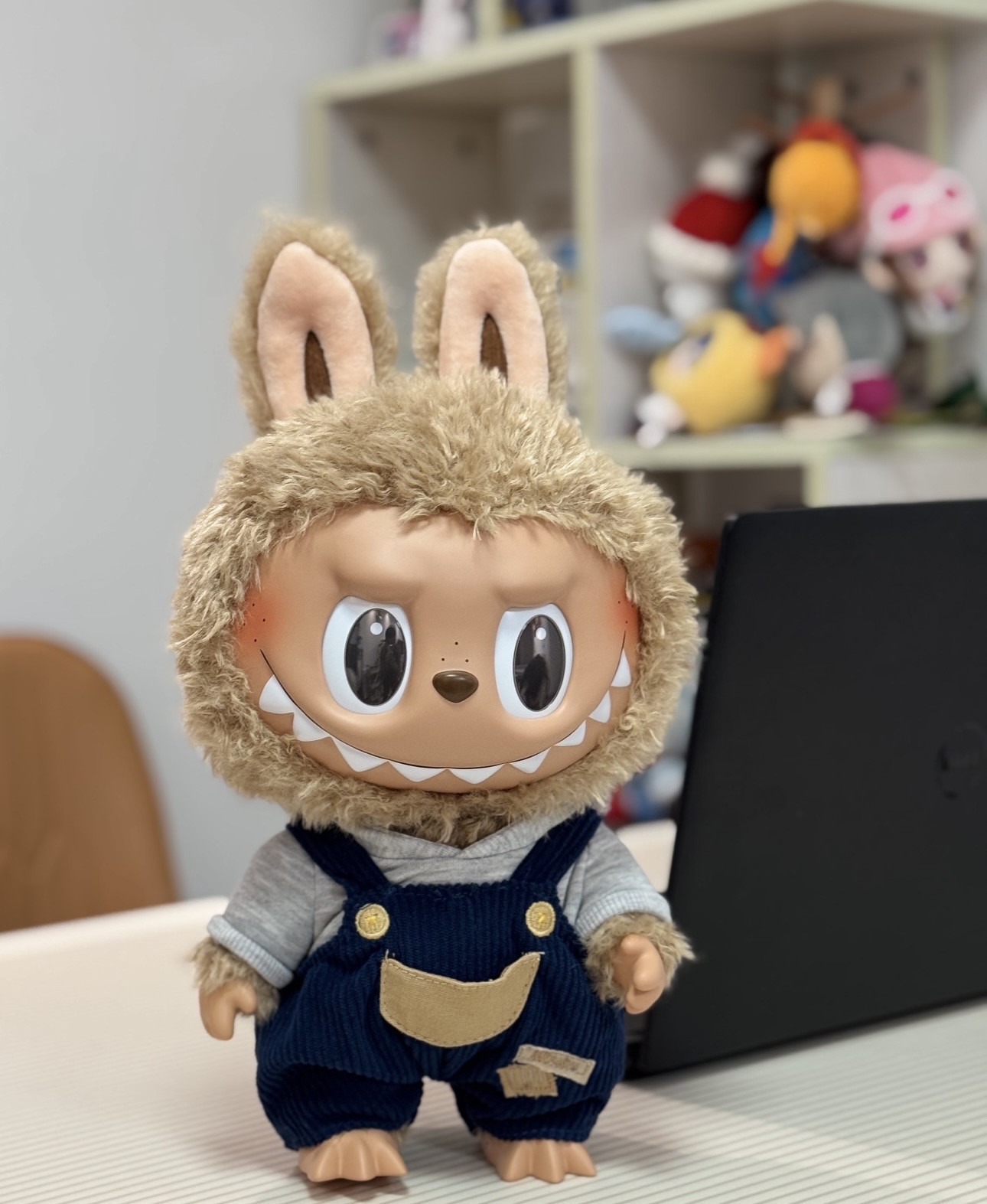
The Figure: A Collector's Five Senses Test
This is where the differences become undeniable. Forget what it looks like for a second. Use your other senses.
1. The Smell (The #1 Dead Giveaway) This is the most important tip I can give you, and something you'll never read in a generic SEO article. Smell the toy.
An authentic Pop Mart LABUBU, fresh out of the box, has a faint, neutral vinyl smell. It's barely there. A fake Lafufu REEKS. The moment I opened the fake's foil pouch, my office was filled with an overpowering, acrid chemical smell. It's the smell of cheap, unregulated plastics and toxic paint solvents. It's nauseating. This smell is not only a sign of a counterfeit, but a massive red flag for safety. If it smells that toxic, you do not want it in your home, on your shelf, or anywhere near kids or pets.
2. The Touch (The Feel Test) Pick up a real LABUBU. It has a surprising heft to it. The vinyl is dense, smooth, and has a beautiful, slightly soft matte finish. It feels premium.
Now, the fake. It feels light and hollow. The plastic is hard, brittle, and often has a greasy, oily residue right out of the bag. Instead of a matte finish, it's usually shiny and glossy in all the wrong places, a clear sign of cheap materials and paint. Run your finger over the surface. You'll often feel tiny bumps, specks of dust trapped in the paint, and sharp, unfinished edges along the mold lines.
3. The Sight (The Obvious & Not-So-Obvious) Okay, now you can look at it. The visual tells are numerous.
* Paint Job: This is where fakes fall apart completely. A real LABUBU has crisp, clean paint lines. The colors are opaque and perfectly applied. On the fake, the paint is a mess. Lines are blurry, there's overspray everywhere, and colors bleed into each other. The eyes are the worst offenders, on a fake, they're often different sizes, painted asymmetrically, or have a vacant, lifeless look. The tiny white reflection dots in the eyes are either missing or just sloppy white blobs. * The Finish: As mentioned in the "touch" section, fakes are almost always too glossy. The Macarons series, for example, has a very specific matte finish. The fake versions are shiny, which completely ruins the look. * The Sculpt: Counterfeiters use low-quality molds made from real figures. This process loses detail. On a fake, the ears might be less defined, the teeth might be mushy-looking, and the texture of the "fur" is often completely smooth when it should be sculpted. * The "Butt Stamp": Turn the figure over and look at the bottom of its feet or on its back. A real LABUBU has a crisp, clearly engraved copyright stamp: "Kasing Lung x Pop Mart" along with the year. On a fake, this stamp will be blurry, illegible, misspelled (I've seen "Pop Mapt" before), or completely absent.
4. The Sound (The Rattle Test) Gently shake a real LABUBU next to your ear. You'll hear... Nothing. It's a solid piece of vinyl. Now shake the fake. You'll often hear a faint rattling sound. This is from shoddy assembly, where glue or bits of excess plastic are left loose inside the hollow body.
5. The Taste (Okay, Don't Do This) Obviously, don't lick the toy. But the chemical smell is a good indicator that the paint and plastic are not something you want to ingest. The CPSC warnings about lead and phthalates in these counterfeit toys are very real. The fakes are made in unregulated factories with zero quality control or safety standards.
Real Talk: Why You Should Never, Ever Buy a Fake
I get the temptation. You see a set of six "Lafufu" for $25 on some sketchy website, while a single authentic blind box is $16-18. It feels like a bargain.
It's not a bargain. It's a rip-off.
You're paying for a piece of garbage that will never have any collector value. In fact, it has negative value. It brings down the aesthetic of your entire collection. It feels gross to hold, it smells toxic, and it looks cheap. There is no joy in owning it.
More importantly, buying fakes directly harms the artist. Kasing Lung is the creative genius behind the world of The Monsters. When you buy a fake, you're supporting factories that are stealing his intellectual property. You're taking money out of the pocket of the person who created the thing you love. If you're a true fan of LABUBU, you should want to support the artist who made it all possible. If you're curious about the man behind the monster, learning about who owns LABUBU and Kasing Lung's role is a great place to start.
The counterfeit world is even getting weirder, with people stealing the designs to create things like LABUBU vector files and outlines for even more knockoff products. It's a hydra-headed problem, and the only way to fight it is by refusing to participate.
Our Take
You're not "sticking it to the man" or getting a clever deal. You're buying a poorly made, potentially hazardous product that supports art theft and devalues the entire hobby. If you display a fake next to your real collection, you're only cheating yourself. The satisfaction of hunting for and finally unboxing a real, beautifully made LABUBU is a feeling a cheap knockoff can never replicate.
So, how do you avoid it? It's simple.
Buy from reputable sources.
That means official Pop Mart stores, their official online shops, and authorized, trusted retailers (like us!). If you're buying from eBay, Mercari, or Facebook Marketplace, scrutinize the seller's ratings and photos. Ask for more pictures if you're unsure. And if a price seems too good to be true, it is. Every single time.
Your collection is a reflection of your passion. Don't pollute it with junk. If you want to be 100% confident you're getting the real deal, you can always browse our shop's LABUBU collection to see what authentic figures, packaging, and prices look like.
Stay sharp, support the artists you love, and happy collecting.
*Disclosure: PopNya may earn a commission if you purchase through links on this page.


