

I remember the first time I held a Pop Mart figure. It was a LABUBU from The Monsters Camping series. I was turning the little guy over in my hands, admiring the matte finish and the tiny, perfectly painted details on his backpack. Then I saw the box. It wasn't just "Made in China" on the bottom; the entire aesthetic, the branding, the energy felt distinctly modern Chinese. And I had a thought that a lot of new collectors have: "Wait, where is Pop Mart from again?"
The quick answer is Beijing, China. Pop Mart was founded there in 2010 by Wang Ning.
But that's like saying Nike is just from Oregon. It's technically true, but it misses the entire story, the cultural impact, and most importantly for us collectors, how its origin completely shapes our hobby. Knowing Pop Mart is a Chinese Pop Mart isn't trivia; it's the key to understanding release dates, market fluctuations, and why certain figures become almost impossible to get your hands on.
The Old "Made in China" Stigma vs. The Pop Mart Reality
Let's be honest. For years, the "Made in China" label, especially in the world of toys and collectibles, came with some baggage. It often meant lower quality, mass-produced items, or even knock-offs. When I first started seeing Pop Mart figures explode online, a small, skeptical part of my brain wondered if this was just another flash in the pan.
Then I got one.
The weight of the vinyl is substantial. The paint application is almost always crisp and clean, even on microscopic details. The joints move with a satisfying firmness. I've unboxed hundreds, maybe thousands of these figures for my store, PopNya, and the consistency is genuinely impressive. Pop Mart didn't just meet the quality standard of Japanese or Western designer toys; it created its own. It single-handedly changed my perception of what a "Made in China" collectible could be.
A perfect example is the HACIPUPU The Kindergarten Day series. The flocking on those figures is delicate and perfectly applied. One bad batch, one shortcut in the manufacturing process, and it would be a disaster of patchy, shedding fluff. But they're consistently perfect. That's not an accident. That's a company that has invested an insane amount of resources into owning and perfecting its production pipeline.
How Pop Mart's Chinese Origin Directly Affects You
This is the part that other articles won't tell you. The fact that Pop Mart is a Chinese company has massive, direct consequences for every collector outside of mainland China.
1. The Agony of the Release Schedule
Mainland China is Ground Zero. They get everything first. Everything.
A new LABUBU series will drop in China, and for the next two to four weeks, our social media feeds are flooded with pictures and unboxing videos. We see the designs, we see the secret, and the hype machine goes into overdrive. Meanwhile, in the US, UK, or Australia, we're just waiting. We don't even have a release date yet.
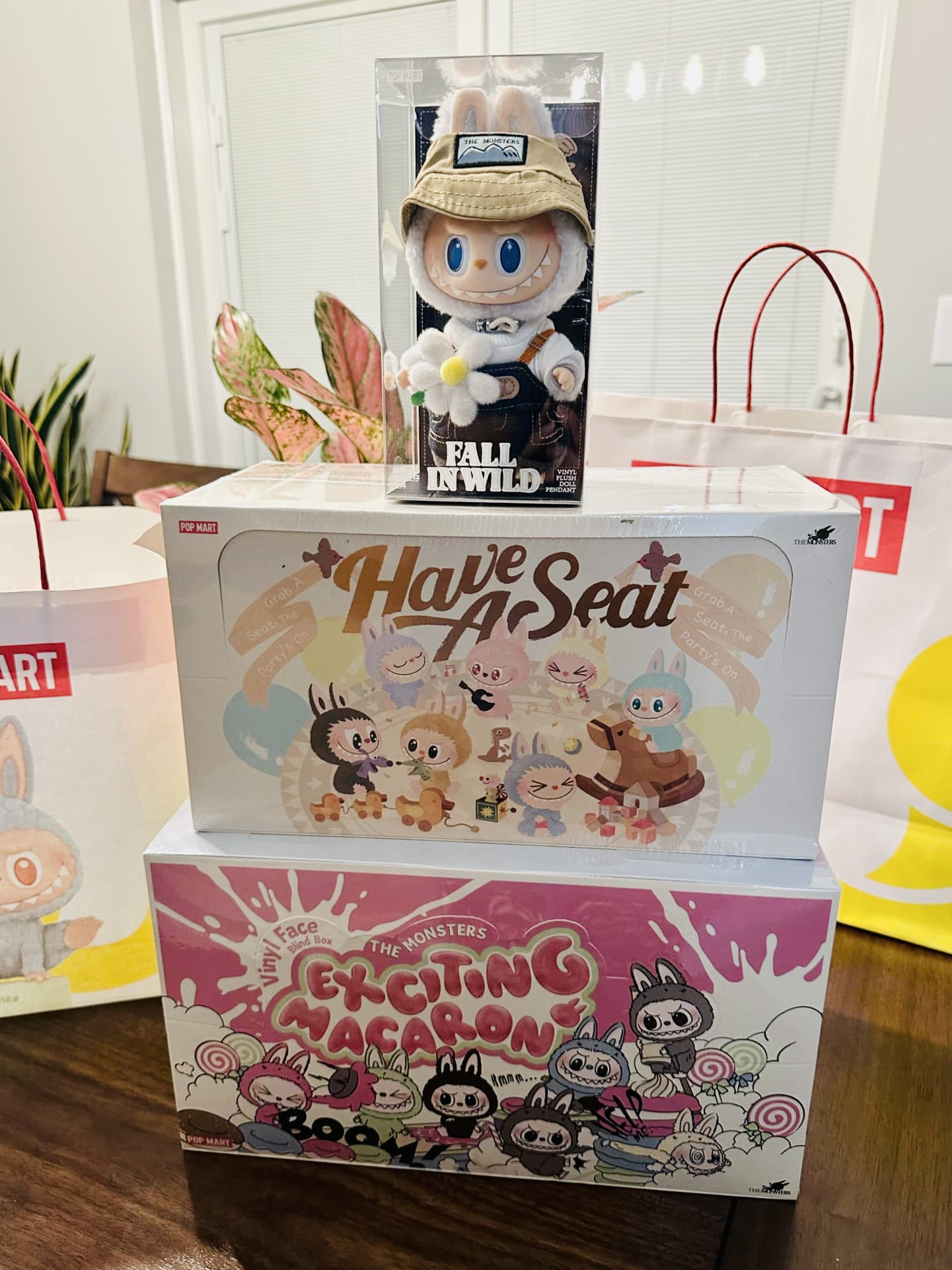
This staggered release schedule creates a huge information and availability gap. It's the primary driver of the secondary market. That LABUBU Macaron figure that retails for about $17 in the US might be selling for $50-$60 from Chinese resellers during that one-month gap, simply because they are the only people on Earth who have it. As a seller, it's a constant battle. Do you wait for the official US stock, or do you try to import a batch early and deal with the insane shipping costs and customs headaches? It's a brutal part of the business, and something I've written about before when discussing the harsh realities of LABUBU wholesale.
2. The Ecosystem We Don't Have
In China, Pop Mart isn't just a store. It's an entire culture. They have "Roboshops," which are high-tech vending machines in subways and malls that dispense blind boxes 24/7. They have a deeply integrated WeChat mini-program for pre-orders, trading, and a social community. It's a seamless, tech-forward experience that we just don't have in the West.
Our experience is more traditional: you either go to one of the few physical stores (like my recent pilgrimage to the Pop Mart in San Francisco) or you buy online. This difference in infrastructure is a direct result of the company's origins and its primary market focus.
3. The Shipping Labyrinth
If you've ever ordered directly from Pop Mart's global site, you know the feeling. You place your order, you get excited, and then... You wait. And wait. Shipping can take weeks, sometimes over a month, to get from their distribution center to your door in the US or Europe.
This is a huge pain point, and frankly, it's the main reason stores like mine exist. We take on the burden of bulk importing, dealing with customs, and warehousing the product so that when you want a figure, you can get it in a few days, not a few weeks. That delay and uncertainty is a direct consequence of a logistics chain that originates halfway across the world.
泡 泡 瑪 特 LABUBU: The Heart of the Empire
You can't talk about Pop Mart without talking about LABUBU. And if you've ever looked up the brand in its native language, you've probably seen this: 泡 泡 瑪 特 LABUBU.
"泡 泡 瑪 特" (Pào Pào Mǎ Tè) is the Chinese name for Pop Mart. It literally translates to "Bubble Mart." It's whimsical and perfectly captures the feeling of "popping" open a blind box.
The relationship between Pop Mart and LABUBU is symbiotic. Kasing Lung, the artist behind The Monsters, is from Hong Kong. He was an established artist before, but it was the partnership with the mainland Chinese powerhouse Pop Mart that turned his adorable, mischievous elves into a global phenomenon. Pop Mart provided the capital, the manufacturing muscle, and the massive retail footprint. Kasing Lung provided the soul.
This combination is electric. Within China, LABUBU isn't just a toy. It's an emotional companion. People bring them to restaurants, on vacations, and create entire photo diaries for them. It's a form of self-expression and comfort. Understanding this cultural context is key to understanding why the demand is so insatiable. It's not just about collecting; it's about belonging to a tribe. If you're just getting started, figuring out how to even get a LABUBU can feel like a quest, and this deep-seated cultural demand is the reason why.
Real Talk: My Honest Take as a Seller
So, is Pop Mart's Chinese origin a good or bad thing for collectors? Honestly, it's both.
The massive upside is that we get incredibly high-quality, artist-driven toys at a price point that is, all things considered, pretty accessible. A blind box for $15-$18 is a fraction of what a similar quality indie vinyl toy would cost. This is only possible because of Pop Mart's scale and its sophisticated production chain in China. They've democratized the designer toy world.
The downside is the feeling of constantly being behind. The release inequality is frustrating. It fuels scalpers and creates a market where FOMO (Fear Of Missing Out) is the dominant emotion. It also opens the door for fakes. I've seen countless collectors get burned by knock-offs like "ROR MART" or "Lafufu" that pop up on shady websites, preying on the desperation of fans who can't get the real thing. It's a constant battle, and learning how to spot fakes and find the real thing is a skill every collector needs to learn.
My advice? Be patient. If you can, wait for the official release in your region. Support local, trusted sellers who have already navigated the import maze for you. If a deal from an unknown international seller seems too good to be true, it almost certainly is.
A Chinese Company with a Global Soul
For all this talk of its Chinese roots, Pop Mart's vision is undeniably global. They are aggressively opening flagship stores in major cities around the world, New York, London, Paris, Tokyo, Seoul. They collaborate with artists from across the globe. They've partnered with massive Western IPs like Harry Potter and SpongeBob.
Pop Mart is a story of modern cultural export. It's a Chinese company that didn't just copy a Western or Japanese model. It built its own, perfected it at home, and is now taking it to the rest of the world. They are showing that a Chinese brand can be a leader in design, quality, and global pop culture.
So, where is Pop Mart from? It's from Beijing. But its influence is everywhere. It's in the Roboshop in a Shanghai subway station, it's on a collector's shelf in Ohio, and it's in the package you just got from our shop. Knowing its origin story doesn't just answer a question; it deepens your appreciation for the little vinyl monster in your hand. It connects you to a massive, passionate, and sometimes frustrating global community.
Next time you're thinking about adding to your shelf, take a moment to browse the LABUBU figures we have in stock. Each one has made that long journey, a tiny ambassador from the heart of a new collectibles empire.
Disclosure: PopNya may earn a commission if you purchase through links on this page.


