

The flight to Tokyo was filled with daydreams. Visions of entire walls of The Monsters, maybe a forgotten Labubu Japan exclusive sitting on a dusty shelf, just waiting for me. Japan, the mecca of all things cute and collectible, had to be a goldmine, right? I run PopNya, so this was part market research, part personal pilgrimage. I was ready to fill a suitcase.
Spoiler alert: I did not fill a suitcase.
My first stop was the obvious one: the Pop Mart in Shibuya. It's sleek, bright, and packed with people. But as I scanned the walls, my heart sank a little. Plenty of Molly, a ton of Skullpanda, Dimoo everywhere... But Labubu? Tumbleweeds. There was one lonely row of the latest series, which was already picked over. The blind boxes that were there were priced at ¥1,320 (including tax), which is roughly $8.50 USD as of writing. A totally fair price. The problem wasn't the cost; it was the scarcity.
This immediately answers a question I get all the time: are labubus sold in japan? Yes, officially. But the idea that the shelves are overflowing is a fantasy. The hype is real, and stock vanishes just as quickly in Tokyo as it does in New York or London.
So, Is Labubu Popular in Japan?
This was the next puzzle I tried to solve. Walking around Harajuku and Shibuya, you see a million different characters. You'll see girls with Kuromi bags, guys with Gundam keychains, and Studio Ghibli merch in every other window. Pop Mart characters are definitely present, but they are competing in an incredibly crowded market.
My honest take? Is Labubu popular in Japan? It's getting there, but it is not a cultural phenomenon on the level of Sanrio or Pokémon. Not even close. The people I saw buying Labubu in the official store were often tourists, just like me, speaking Mandarin, English, or Korean. The local Japanese collectors I chatted with were often more into bespoke sofubi artists or classic anime figures.
Labubu is a Hong Kong character, designed by Kasing Lung and blown into a global sensation by Pop Mart, a mainland Chinese company. While Japan is a massive market, Labubu is still an "import" in a country that has perfected its own character IP for decades. It's popular enough to sell out, but it hasn't saturated the culture yet.
The Real Hunt: Akihabara and the Resale Market
Disappointed by the official stores, I did what any desperate collector would do: I headed to the trenches. Akihabara and Nakano Broadway. These are the legendary hubs for otaku culture, filled with multi-story buildings where every floor is crammed with tiny glass-fronted shops. This is where you find the second-hand market.
And this is where I finally saw them. Labubus. Lots of them.
But they were all behind glass, individually priced. And the Labubu prices in Japan's resale market are a completely different beast. A common figure from a recent series might be ¥2,000-¥2,500 ($13-$16), essentially double the retail price. Older, more sought-after commons could be even more.
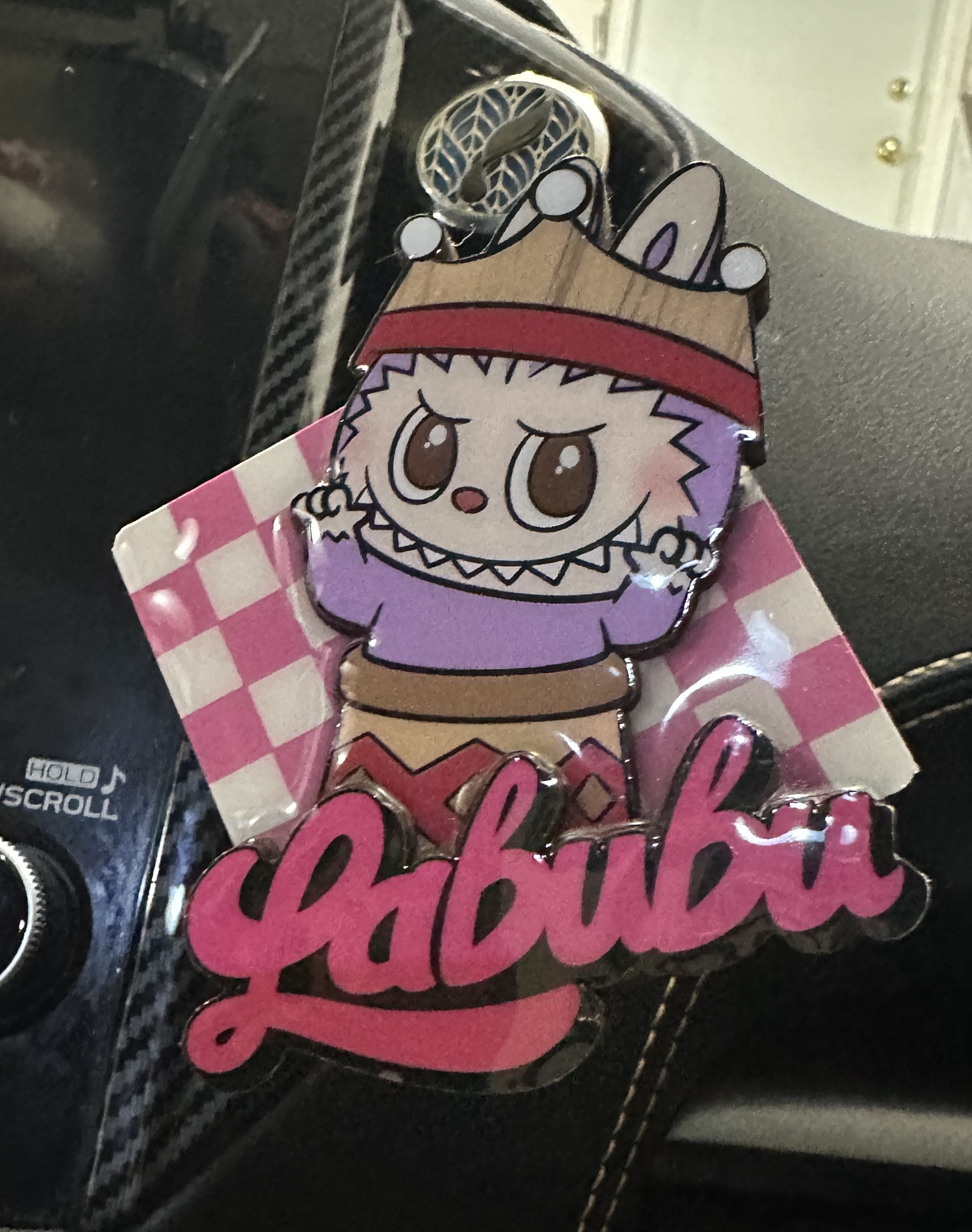
Then you get to the secrets. I saw a Labubu Macaron "secret" figure priced at ¥15,000 (nearly $100). A "Toffee" from the Monsters Sweets series was sitting there for ¥25,000 (about $160). It's a wild west of pricing, driven by individual shop owners who know exactly what they have. This is where you really need to understand what "rare Labubu" actually means to avoid getting completely fleeced. I saw some prices that made me question reality, especially when you consider why Labubus are so expensive in the first place.
This is the reality of hunting for labubus japan. You won't find them cheap. You'll find them curated, marked up, and presented as treasures. It's less of a fun shopping spree and more like a museum visit where you can buy the exhibits.
A Quick Note on "Shaking the Box"
I saw a few tourists in Pop Mart trying the old "shake the box" trick to guess the figure inside. Look, I've been in this game a while. On the newer series, it just doesn't work. Pop Mart has gotten very good at standardizing the inner packaging. You might be able to feel a major accessory difference, but you're more likely to just look silly. And in a quiet, orderly Japanese store, you will feel silly. Trust me. Don't do it. If you're thinking of buying a whole case, you're better off understanding the economics of the LABUBU box itself.
Real Talk: The "Labubu Japan Exclusive" Myth
Let's talk about the idea of a Labubu Japan exclusive. This is one of the biggest misconceptions. People imagine there are special series you can only get in Japan.
Honestly? It's mostly a myth.
Pop Mart's strategy is global. True, region-locked releases are incredibly rare. What you might find is a "store opening" exclusive, a special figure released in very limited quantities for the grand opening of a new flagship store, like the one in Harajuku. But those are gone in hours, snapped up by dedicated collectors and resellers. They don't just sit on a shelf waiting for you.
More often, what people call a "Japan exclusive" is simply a figure from a series that was released earlier in Asia and hasn't hit the US or Europe yet. So, it feels exclusive when you're there, but it's really just a matter of timing. Don't fly to Japan expecting to find a secret, Japan-only Labubu series. You will be disappointed.
The Price Breakdown: How Much is Labubu in Japan, Really?
So let's put it all together. If you're budgeting for a trip, here's the honest answer to how much are labubus in japan.
* At an Official Pop Mart Store (Retail): If you can find them, a blind box is ¥1,320 (about $8.50 USD). This is the cheapest you will ever find them. * At a Resale Shop (e.g., Mandarake, AmiAmi): * Common Figures: ¥2,000 - ¥4,000 ($13 - $26 USD), depending on the series and popularity. * Chaser/Secret Figures: ¥10,000 - ¥50,000+ ($65 - $320+ USD). The sky is the limit. I saw some mega-rare ones priced even higher. * At Gachapon Machines: You will almost never find official Labubu in gachapon capsule machines. That's a different world of toys. You might find knock-offs, so be careful.
When you factor in the flight, the hotel, and the time spent hunting, the prices in those Akihabara glass cases start to look pretty insane. It really puts into perspective the real Labubu figure price on the global market.
Our Take: The Seller's Verdict
As someone who sells these toys for a living, my trip was eye-opening. The Labubu Japan experience is a paradox. The country is a collector's dream, but it's not the Labubu paradise you might imagine. The demand, fueled by both locals and a massive influx of tourists, far outstrips the supply in official stores. This pushes everything to a hyper-inflated secondary market.
My advice? Go to Japan for the food, the temples, the fashion, the incredible culture. Visit Akihabara and Nakano Broadway because they are amazing cultural experiences. But if your main goal is to buy Labubu, you are setting yourself up for a very expensive and potentially frustrating scavenger hunt. You will likely spend more money and get less than if you stayed home.
Honestly, after a week of hunting, my personal haul was small. I grabbed two boxes from the latest series at Pop Mart (got duplicates, of course) and paid a painful markup for one older figure from a shop in Nakano Broadway that I'd been searching for. It felt more like a trophy for my efforts than a smart purchase.
The hunt was fun, in a way. But it also solidified my belief in what we do at PopNya. We handle the logistics, the sourcing, and the stress so you don't have to. We aim to provide a clear, reliable way to get the figures you want without needing a passport.
For my next Labubu fix, I won't be booking a flight. I'll be right here, unboxing cases and updating our LABUBU collection online. It's a lot less glamorous, but a whole lot more successful.
Disclosure: PopNya may earn a commission if you purchase through links on this page.


