

I swear, not a day goes by that my DMs aren't full of the same question: "Is this LABUBU Fall in Wild fake?" Someone sends me a blurry photo from a sketchy online listing, heart full of hope, wallet full of fear. And 9 times out of 10, my answer is a soul-crushing "Yes, it is."
Look, I get it. The Fall in Wild Vinyl Plush Doll series is, for my money, one of the cutest things Kasing Lung and Pop Mart have ever released. The little hooded outfits, the fluffy textures... They're irresistible. When they first dropped, they flew off our shelves at PopNya. The demand was instant and absolutely insane. A Chestnut that retailed for around $28 was suddenly hitting $150 on secondary markets. Soy Milk wasn't far behind.
And where there's hype, there are fakes.
The counterfeit market for this specific series is more aggressive and frankly, better, than for many other series. They know you're desperate. They're banking on your FOMO. But as someone who has handled hundreds of authentic LABUBUs and has dissected more than a few fakes out of sheer, morbid curiosity, I'm here to arm you with the knowledge to protect your collection. This is the labubu fall in wild real vs fake playbook you actually need.
The Price Is Your First Red Flag
Let's just get this out of the way. If a deal on a Fall in Wild plush seems too good to be true, it is. It is 100%, without a single doubt, fake.
I'm not kidding.
As of writing this, the hype has cooled slightly, but the popular characters are still commanding a premium. If you see a brand new "Lychee" or "Chestnut" plush for $30 with free shipping from a random seller, close the tab. Run. Don't walk.
The people making these fakes are not making one-to-one, high-quality replicas for the love of the art. They are mass-producing cheap garbage to cash in on a trend. Their cost of goods is maybe $3-5 per unit. They can sell it for $25 and make a huge profit. A legitimate seller who acquired the product through official channels simply cannot compete with that price. We have overhead, shipping costs, and the actual cost of the authentic product to account for.
So, your first and most powerful tool is common sense. Do a quick search on reputable collector sites or even StockX to see the current going rate for the character you want. If your listing is 70% cheaper than the market average, you've found a labubu fall in wild fake.
Dissecting the Box: More Than Just Cardboard
Okay, so you've found a listing with a "believable" price. Now we dig deeper. The box is your first physical point of contact, and it's a treasure trove of tells. Fakers have gotten better, but they're lazy and cheap.
The Cardboard Texture and Finish: Grab an authentic Pop Mart box from any series. Feel it. It has a specific matte, almost soft-touch finish. It's sturdy. Now, look at the photos of the fake. Often, the boxes on fakes are either slightly glossy or they're made of a cheaper, flimsier cardboard that looks and feels flat. The real boxes have a premium feel. The fakes feel like a cereal box.
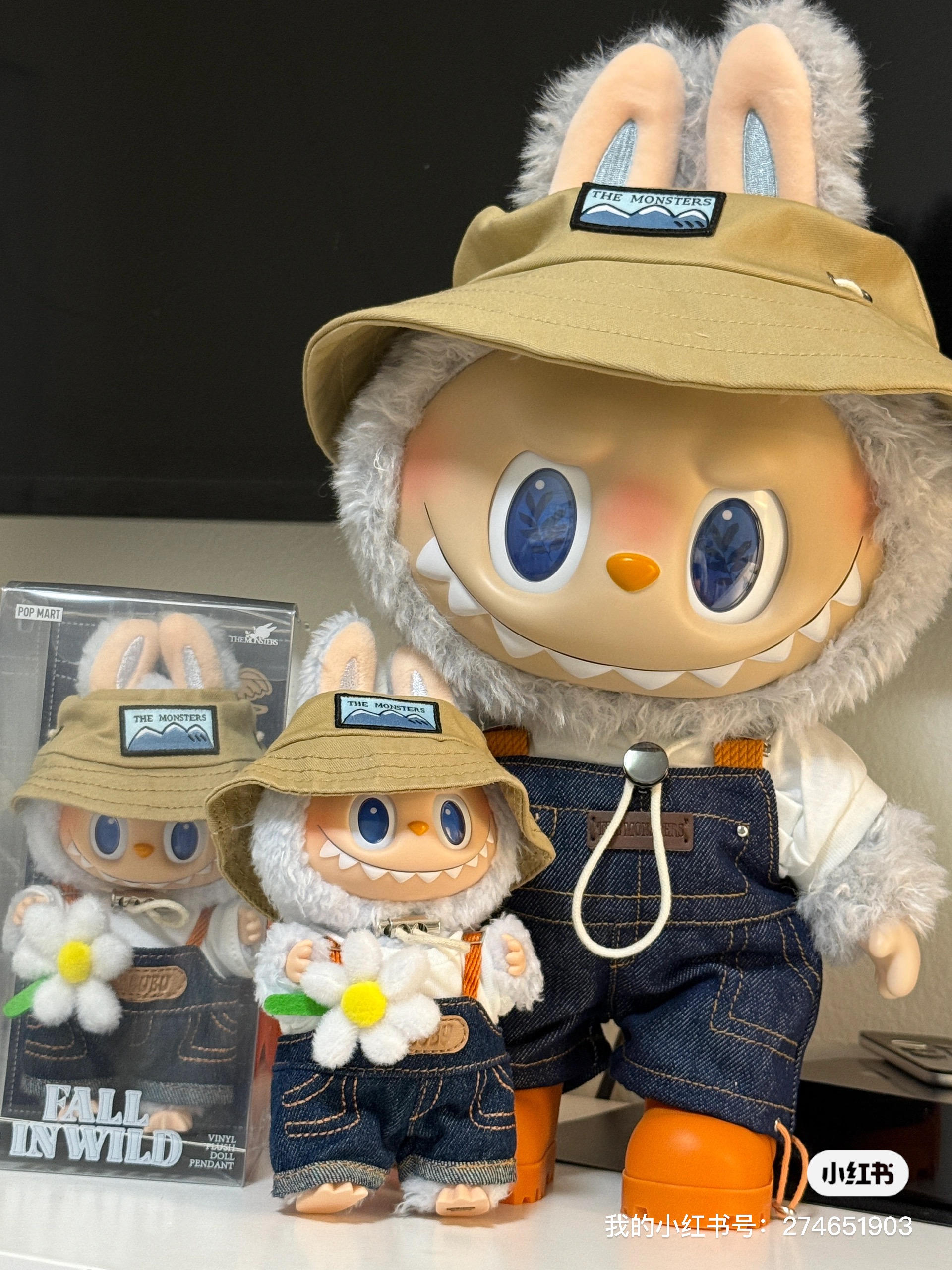
Print Quality is Everything: Pop Mart's printing is flawless. The colors are saturated and correct to the original design. The lines are razor-sharp. The text is perfectly crisp.
On fakes, I consistently see a few things: * Fuzzy Text: Look at the fine print on the back or bottom. On a fake, the tiny letters will often be blurry, as if they were scanned and reprinted from a low-resolution image. * Off-Colors: This is a big one. The beautiful earthy tones of the Fall in Wild series might look slightly too saturated, or worse, washed out. The brown on a fake Chestnut might be too reddish, or the green on Pistachio might be a sickly lime green. * Misaligned Elements: Check the placement of the logos, the character art, and the text. Fakes often have slight alignment issues that a company with Pop Mart's quality control would never let slide.
The Anti-Counterfeit Sticker: This should be a slam dunk, but fakers are getting sneakier. Every official Pop Mart product has a sticker, usually with a QR code. On older fakes, the sticker was just a flat, non-holographic image. Easy to spot.
Now, they're using holographic stickers, but the quality isn't there. A real Pop Mart holo sticker has depth and a complex, shifting pattern when you tilt it in the light. The fakes have a "flat" holographic effect. It just looks like a rainbow sticker, without the intricate layers. If you can, compare it to a sticker from any authentic Pop Mart product you own. The difference is immediate. For a more general overview of these security features, our `[Fake Labubu Guide: How to Tell if Your Monster is Real (From a Seller's Perspective)]` has some good baseline photos.
The Main Event: The Plush Itself
You've unboxed it. Your heart is pounding. Is it real? This is where the tactile experience separates the authentic from the imitation.
The Feel of the Fur: This is the number one detail fakers cannot get right because it costs money. The fur on an authentic Fall in Wild plush is incredibly soft, dense, and has a low, minky-like sheen. It's a specific material that feels luxurious. When you run your hand over it, it's smooth and comforting.
The fur on a labubu fall in wild fake is a disaster. It's usually one of two things: 1. Slick and Shiny: It's made from a cheaper polyester that has a noticeable plastic-y shine and feels slippery or greasy to the touch. 2. Coarse and Thin: The pile (the length of the fibers) is shorter, and there's less of it. You can feel the backing fabric underneath when you press down. It feels like a cheap carnival prize.
The Stuffing Situation: Squeeze the plush. An authentic one is firmly and evenly stuffed. It has a satisfying density but is still squishy and huggable. You can feel the quality of the fill.
Fakes are all over the place. I've handled some that were rock-hard, overstuffed with a lumpy, cheap fill. More commonly, they are comically under-stuffed. They feel limp and sad. The head might flop over, or you can feel large empty pockets inside the body. It's a dead giveaway.
The Face Is the Soul: The soul of LABUBU is in its face, the mischievous eyes, the toothy grin. This is art, and fakers are not artists.
* Embroidery: On a real plush, the embroidery for the eyes and mouth is tight, dense, and perfectly symmetrical. The threads are high quality. On a fake, you'll see loose threads, uneven stitch density (gaps in the black of the eyes), and wonky placement. The mouth might be crooked, or the eyes might be slightly different sizes or shapes.
Proportions: This is subtle but crucial. Kasing Lung's design has very specific proportions. Fakers often get the head-to-body ratio wrong, or the ears are too long, too short, or set at the wrong angle. They capture the general idea* of LABUBU, but they miss the character. It's the difference between a loving portrait and a police sketch. This is why getting a real one is so important; you're buying a piece of art from an artist, and the fakes completely miss the point of `[More Than a Rabbit with Teeth: My Journey with Kasing Lung, the Labubu Creator]`.Hardware and Tags: Don't forget the little things! The keychain clip on the authentic plush is made of a good quality, weighty metal with a smooth finish. The fakes use a cheap, lightweight aluminum that feels flimsy and often has a rough, unpolished look.
And the tush tag! The little fabric tag sewn into the body. On a real one, the printing is clear, the font is correct, and the material is high quality. On fakes, the tag is often a mess of blurry text, misspelled words (a classic!), and cheap, fraying fabric.
Real Talk: My Honest Verdict
Okay, let's have a chat. As a seller and a collector, the explosion of fakes for this series breaks my heart a little. It preys on new fans and creates a minefield for people who just want to share in the joy of collecting.
My honest advice is this: Be patient.
I know the feeling. You see the cute pictures, you fall in love with a character, and you need it now. That urgency is what the counterfeiters are counting on. Don't give them the satisfaction. If you can't find one from a reputable retailer right away, wait for a restock. Join collector groups. Follow trusted stores (like, ahem, PopNya) for updates. The thrill of finally getting a real one after a patient hunt is a million times better than the sinking feeling of disappointment when your cheap knockoff arrives.
The emotional cost of getting a fake is real. It's not just about the $30 you wasted. It's the feeling of being scammed. It's the disappointment of holding something that just feels wrong. It taints the joy of the hobby.
If you truly want to experience the magic of this series, you have to get the real thing. The quality, the artistry, the feel, it's all part of the package. When you're ready to add an authentic monster to your family, you can always `[browse our LABUBU collection]` to see what we have in stock, knowing every single piece is sourced directly and guaranteed authentic.
Your collection is a reflection of your passion. It deserves better than a cheap imitation. Happy hunting, and stay safe out there.
--- Disclosure: PopNya may earn a commission if you purchase through links on this page.


