

The box felt right. The weight was correct. The foil bag inside had that satisfyingly crisp, thick feel that screams "authentic POP MART." I was opening a figure from The Monsters "Fall in Wild" series, one I'd been hunting for weeks. I made the final tear in the foil, and there it was: the elusive Chestnut CoCo, with its adorable little acorn hat.
And then my stomach dropped.
I picked it up to admire the paint job, and the head... Moved. I don't mean it turned a little, like a normal articulated figure. It spun. Freely. A full 360-degree rotation with almost zero resistance. It was loose. Wobbly, even.
My first thought? I got a fake. A really, really good one, but a fake nonetheless.
Every new collector hears the same "wisdom" passed down in Facebook groups and on Reddit threads: real LABUBU heads are stiff. Fake ones are loose and spin all the way around. It's one of the first "tells" you learn. So, holding this wobbly-headed CoCo, I felt that sinking feeling of being scammed. I started mentally drafting the angry email to the seller.
But something stopped me. The rest of it was just too perfect. The paint lines were clean. The tiny blush on its cheeks was perfectly applied. The matte finish on the vinyl felt exactly like the dozens of other LABUBUs in my personal collection. The collector card was on thick, quality stock with sharp printing. It just didn't add up.
So I did what any panicked collector would do. I dove headfirst into a Google rabbit hole, typing frantic questions like "do real labubu head spin" and scrolling through endless TikToks and forum posts. What I found was a chaotic mess of conflicting information. One video would show a person angrily demonstrating a spinning head on a confirmed fake. The next would be a popular influencer unboxing a case directly from POP MART, and their LABUBU's head would be spinning just as freely as mine.
This is the moment every LABUBU collector eventually faces. It's a rite of passage. The moment you realize that one of the most commonly-cited rules for spotting fakes is, well, wrong.
The story of the fake head turns out to be real is a perfect example of how community knowledge can become outdated. And as a seller at PopNya, I get emails about this all the time. So let's set the record straight, from someone who handles these little monsters every single day.
The Truth About LABUBU Necks: A Tale of Two Joints
The simple answer is: Yes, the heads on many authentic LABUBU figures can and do spin 360 degrees.
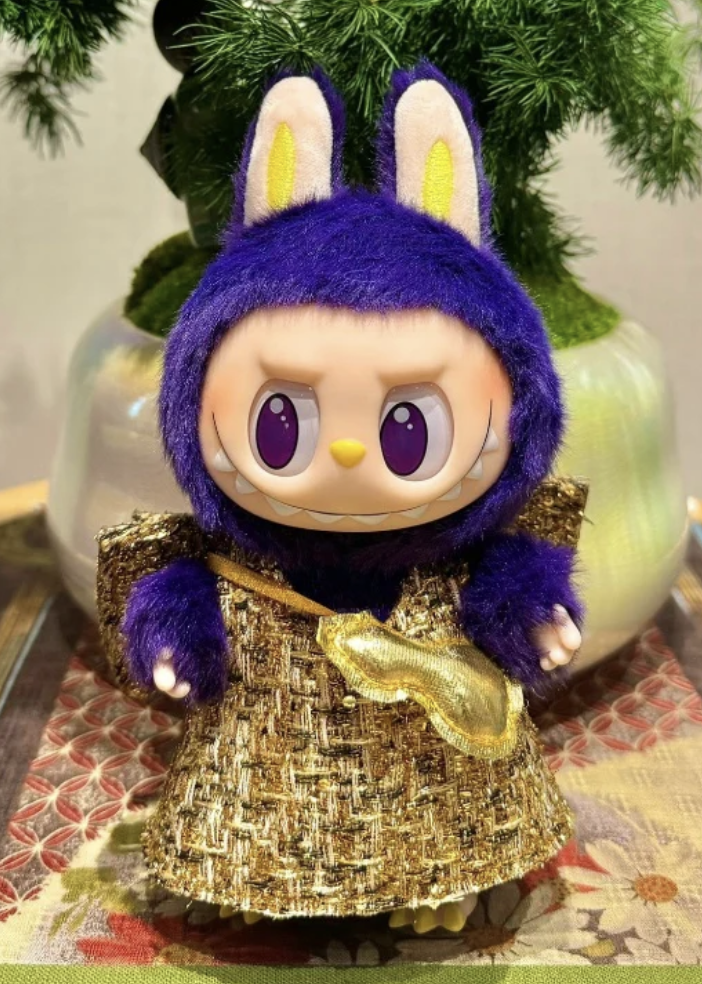
The confusion exists because POP MART's manufacturing has evolved over the years. They don't use the same molds, materials, or even neck joint designs for every series. Thinking all LABUBUs should have the same head stiffness is like thinking all cars should have the same turning radius. It just doesn't work that way.
Let's break it down by era, because that's the only way this makes sense.
The "Stiff Neck" Era (Older Series) If you have a LABUBU from one of the very early series, like The Monsters Toys or The Monsters Camping, you'll probably find its head is quite stiff. You can turn it, but it takes a bit of force. It might "click" into place. These older designs often used a shorter, thicker neck peg that created more friction inside the head. This is where the "real heads are stiff" rule came from. Back then, it was mostly true. Early counterfeits were cheaply made, and they couldn't replicate this stiff, secure joint, so they'd just have a loose head on a simple peg.
The "Transitional" Era (Mid-Series) Then you have series from the middle period, like Let's Christmas or the first Macaron series. Here's where things get muddy. I've handled figures from the same series where one has a relatively tight head and another is noticeably looser. This is likely due to slight variations in manufacturing batches. Maybe they tweaked the mold halfway through the production run, or one factory's process was slightly different from another's. This inconsistency is what started fueling the confusion.
The "Free Spin" Era (Newer Series) Now, let's talk about the modern series. Think Fall in Wild, Exciting Macaron (the V2 macarons), and the Zimomo series. On these figures, a freely spinning head is not a bug; it's a feature.
POP MART has clearly shifted their design philosophy. They've moved to a longer, ball-style neck joint that allows for much greater articulation. This lets you pose your LABUBU with more expression, a cute head tilt, looking all the way up, or, yes, spinning a full 360 degrees. My Chestnut CoCo wasn't a fake; it was just a newer, more posable design.
The feel is the key. On an authentic new LABUBU, the spinning motion is smooth. The joint is well-engineered. It feels intentional. On a fake, a spinning head often feels gritty or scrapes against the inside of the vinyl. It might be wobbly not just rotationally, but on the Z-axis too, like a bobblehead that lost its spring. That's a detail you only notice after handling hundreds of them.
Real Talk: This is a POP MART Problem
Honestly, the entire "is my spinning head LABUBU fake?" panic is a self-inflicted wound by POP MART. Their quality control, while generally good on paint, varies wildly on joint tolerance from series to series and even batch to batch. They could eliminate 90% of this collector anxiety by putting a tiny "Head is fully articulated" icon on the box or a small note on the collector card for the newer series.
But they don't.
So this myth persists, perpetuated by well-meaning but misinformed collectors. I saw this happen in real-time with the Macaron series. When it first dropped, I saw posts in collector groups from people who were furious they received a "fake" Soy or Sesame Bean because the head was loose. For about 48 hours, you could see panicked sellers listing these figures on secondary markets for under retail price. Then, as more people opened their cases, the community realized they were all like that. The price for Soy shot right back up to its typical $40-$50 secondary market price. People who knew the truth snagged a bargain from those who were stuck on the old "stiff head" rule.
*So, How Do You Actually* Spot a Fake LABUBU?If you can't trust the head-spin test anymore, what should you look for? The tells have gotten more subtle as counterfeiters have improved, but they are definitely still there. Forget the neck joint and focus on these four things instead.
1. The Paint and Finish:** This is still the biggest giveaway. Look closely at the fine details. Are the edges of the eyes sharp? Is the tiny glint of light in the pupil a clean dot, or a blurry splotch? On my authentic Chestnut CoCo, the gradient on the acorn hat is smooth and flawless. On fakes, you'll often see banding, overspray, or colors that are just slightly off. Most importantly, check the texture. Real LABUBUs have a beautiful, high-quality matte finish. It's not shiny. Fakes are often made from cheaper PVC that has a noticeable sheen or even feels slightly sticky to the touch.
2. The Weight and Feel: This is a tough one to describe, but it's undeniable when you experience it. Pick up a confirmed real LABUBU. Feel its density. It has a satisfying, solid heft. Fakes are almost always lighter. They feel hollow and cheap because they are. The vinyl itself might feel thinner and more pliable. If you're new to collecting, this is a great reason to try and buy your first figure in person or from a trusted source, just so you can calibrate your hands to what an authentic one feels like.
3. The Collector Card: The counterfeiters are getting lazy here. An authentic collector card is printed on thick, sturdy cardstock, almost like a high-quality business card. The printing is razor-sharp, and the colors are vibrant and match the figure perfectly. Fake cards are a dead giveaway. They're often on flimsy, thin paper. The image might be blurry, pixelated, or the colors will be washed out. Check the font and the POP MART logo on the back. Fakes often get the typography slightly wrong.
4. The Smell: This is my secret weapon, the one tip you won't see in most guides. Open the foil bag and take a sniff. A brand new, authentic POP MART figure has a very distinct, almost pleasant "new vinyl" smell. It's clean. Fakes, on the other hand, reek of harsh chemicals. It's a pungent, industrial odor that comes from the cheap plastics and paints they use. If your new LABUBU gives you a headache when you smell it, that's a massive red flag.
So, back to my Chestnut CoCo. After my initial panic subsided, I went through this exact checklist. The paint was perfect. The weight was right. The card was flawless. And the smell was that familiar, clean vinyl scent. My "fake" was 100% real. The spinning head wasn't a flaw; it was just the new standard.
The world of designer toys is full of these little quirks and evolving truths. Don't let outdated forum posts from 2021 scare you. The best thing you can do is handle as many authentic figures as possible to train your senses. The more you collect, the more you'll develop an instinct for what's real and what's not.
And the next time you unbox a LABUBU and its head does a full exorcist-style spin, take a deep breath. Don't panic. It's probably a good sign you've got a newer, more expressive figure on your hands. If you want to be absolutely sure you're getting the real deal, the easiest way is to buy from reputable sellers.Exploring the different series is the best way to learn, so why not check out the latest LABUBU figures and see the quality for yourself?
Disclosure: PopNya may earn a commission if you purchase through links on this page.


