

It's funny. The first time I saw a LABUBU, I didn't get it.
This little monster with rabbit ears, two pointy teeth, and a mischievous grin. It was from the first Macaron series, I think. I was running PopNya, already deep in the designer toy world, but this one felt… different. It wasn't just cute. It had a little bit of chaos in its eyes. A friend asked me, "Who made Labubus anyway?" and I honestly didn't have a deep answer. I just knew the name: Kasing Lung.
That simple question sent me down a rabbit hole that fundamentally changed how I see designer toys. Because to understand LABUBU, you have to understand that Kasing Lung isn't just a toy designer. He's a world-builder. And that world existed long before Pop Mart put a LABUBU in every mall on the planet.
The "Before Times": Kasing Lung's World Before the Hype
Before the global craze, there was Kasing Lung The Monsters. This was his universe, born from his background as a children's book illustrator in Belgium. You can feel the influence of European folklore and fairy tales in his early work. It's whimsical, but there's always a hint of darkness, a touch of the untamed forest. His characters weren't just designs; they were beings from a story.
His first major collaboration in the toy space was with the Hong Kong-based company How2work. And let me tell you, these early figures are a different breed entirely. We're talking sofubi (soft vinyl) and resin pieces. When you hold an original How2work Zimomo, one of Labubu's monster friends, you feel it. It has a weight, a presence. The paint is often hand-applied, with subtle gradients and textures that you just don't get in mass production. They feel like small sculptures. This is the labubu original art that hardcore collectors whisper about.
I remember getting my first one. It came in a simple box with beautiful, moody art on it. No blind box mystery, no chase variant ratios. You bought the character you wanted. The figure itself had a slightly matte, almost chalky texture. It felt… personal.
The prices reflected that. Back then, a standard How2work figure might run you $80-$120. A lot for a small toy, but it felt justified. It was art. Of course, the market for that early kasing lung artwork has since exploded. A Zimomo I hesitated to buy for $100 in 2018 can easily fetch $800-$1,000+ now, depending on the colorway. The demand for the work of the original labubu artist has gone through the roof.
The Pop Mart Tidal Wave
Then came Pop Mart.
When the first Kasing Lung Labubu blind box series, "The Monsters Exciting Macaron," dropped in 2019, it was like a dam breaking. Suddenly, Kasing's world wasn't just for dedicated sofubi collectors anymore. It was for everyone. For around $15, anyone could get a piece of it.
As a seller, it was wild to witness. We couldn't keep them in stock. The question "who created labubus?" was on everyone's lips, and suddenly everyone knew the name Kasing Lung. The accessibility was a game-changer. It brought millions of new fans into his universe. The characters, Labubu, Zimomo, Tycoco, Pato, Spooky, became household names in the collector community.
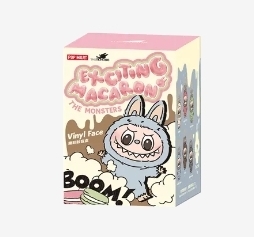
But it also changed the nature of the product. The figures were now made of PVC, a harder, shinier plastic. They were smaller. The intricate paint jobs were simplified for mass production. This isn't a knock on the quality, Pop Mart's quality control is generally excellent, but it's a different feel. It's the difference between a hand-thrown ceramic mug and a perfectly manufactured one from a factory. Both hold coffee, but the experience is not the same.
The market dynamics shifted overnight. The secondary market for Pop Mart Labubu went insane. I saw people buying a case of 12, pulling the secret "chase" figure, and selling it for enough to cover the cost of the entire case and then some. This hype also created a dark side: fakes. The popularity became so immense that counterfeiters flooded sites like AliExpress and eBay. It got so bad that we put together a guide on how to spot a fake Labubu, because we were seeing so many heartbroken new collectors get duped.
Is It Still "Kasing Lung Art"?
This is the big debate among old-school collectors. Did the Pop Mart collaboration dilute the kasing lung art?
My take? Yes and no.
On one hand, the sheer volume of releases can feel overwhelming. A new series seems to drop every other month. The designs, while always creative, are sometimes constrained by the blind box format. You lose some of the subtle storytelling that you'd find in Kasing's original illustrations or his larger, standalone figures.
On the other hand, it's undeniable that Pop Mart gave Kasing Lung a platform he never would have had otherwise. His genius is now shared with a global audience. And honestly, he's still deeply involved. You can see it in the labubu concept art he shares on his Instagram. The core of his vision is still there. He's still the labubu creator, and his signature style shines through even in a 3-inch PVC figure.
The collaboration has also allowed him to experiment with new forms. The massive MEGA Space Molly-style figures, like the Jumbo and Mega Labubu, are incredible display pieces that bridge the gap between mass-market toy and art object. They bring back that feeling of a substantial, sculptural piece, but with the crisp production quality of Pop Mart.
The Story Behind the Smile (It's Not Demonic, I Promise)
With the massive popularity came some… weird interpretations. I've had customers ask me if Labubu is a demon. It's a question that pops up so often, we actually wrote a whole post exploring the real meaning behind Labubu.
The short answer is no. The kasing lung labubu story is rooted in fairy tales. Labubu is a mischievous but kind-hearted monster who lives in a magical kingdom. She's curious, a bit of a troublemaker, but never malicious. The teeth and pointy ears are classic monster tropes, reinterpreted through Kasing's whimsical lens. He's the labubu doll creator, and his intent was to create a character that was endearing because of its imperfections, not in spite of them.
This endearing quality is a huge part of why the character went viral. People don't just collect Labubu; they connect with her. It's why you see so many people drawing Labubu in their own style, putting her in different scenarios and outfits. She's a canvas for people's own creativity, a testament to the power of Kasing's original design.
Real Talk: My Verdict on Collecting Kasing Lung Today
So, as someone who has bought, sold, and personally collected hundreds of these figures, what's my honest take? Is it a good time to get into collecting the work of the labubu designer?
Absolutely. But you need to know what you're getting into.
If you're new, start with the Pop Mart blind boxes. They're affordable, they're fun to open, and they are a fantastic introduction to the world. You can get a feel for the characters and decide which ones you love most. Pick a series that speaks to you, whether it's The Monsters Fruits, the Sweet Bean collaboration, or the latest Macaron V2. You can easily find a great LABUBU collection on our site to get started.
But here's my honest warning: Don't get swept up in the hype of the newest, hottest series. The designer toy market is fickle. I've seen a series be impossible to find one month, and then sit on shelves the next. Collect what you genuinely love the look of, not what you think will be valuable. The joy is in the art, not the resale value.
If you find yourself falling deep in love with the world, that's when you can start exploring the "grails." Look into the older How2work pieces. Go on a hunt for a specific Zimomo colorway. This is a much more expensive and patient part of the hobby. You'll be dealing with collector groups and auction sites. It's a treasure hunt, and it's incredibly rewarding when you finally find that piece of kasing labubu art you've been searching for.
One thing I've noticed that most people don't talk about is the quality variation even within Pop Mart series. The first batch of a new series is sometimes slightly different from later restocks. I've seen minor paint application differences or even slight changes in the PVC's finish. It's not a defect, just a natural part of mass manufacturing. For 99% of people, it doesn't matter. But for the hardcore labubu original artist fans, these little variations are part of the collecting journey.
Ultimately, the journey of Kasing Lung from a niche illustrator to a global art phenomenon is what makes collecting his work so compelling. You can literally hold the evolution of his career in your hands, from a weighty, hand-painted resin piece to a perfect, pocket-sized PVC figure. Both tell a part of the story of the labubu inventor.
He's now exhibiting in prestigious galleries like Takashi Murakami's Kaikai Kiki Gallery and collaborating with luxury fashion brands like Moynat. This isn't just a toy maker; this is a serious artist whose medium happens to be vinyl and PVC. And Labubu, that little monster with the toothy grin, is his ambassador. She was the entry point for me, and for millions of others, into the wonderfully weird and beautiful world that Kasing Lung built. And I, for one, can't wait to see where he takes us next.
Disclosure: PopNya may earn a commission if you purchase through links on this page.


