

The message popped up in our store chat. "Is this real?" Attached was a screenshot of a Labubu Macaron, the coveted "Soymilk" chase figure, listed for $20 on a site I'd never heard of.
My heart sank a little.
I get this question almost daily. As the person behind PopNya, I've handled thousands of Labubus. I've opened cases, weighed boxes, and helped fellow collectors complete their sets. And I've seen the dark side of the hype: the explosion of fakes flooding the market.
So let's talk about it. How do you, a fan who just wants to add an adorable monster to your shelf, make sure you're getting la bubus originales? It's not just about a checklist. It's a feeling, a sixth sense you develop. But there are absolutely physical tells you can learn. This is my playbook.
Forget the Price for a Second, Start with the Box
Before you even see the figure, the packaging tells you 90% of the story. Pop Mart invests heavily in their presentation. Fakers don't.
The Holographic Sticker: This is your first checkpoint. On almost every authentic, recent Pop Mart product, you'll find a small, holographic sticker. It usually has the Pop Mart logo and other security features that shift in the light. Fakes might try to replicate this, but their version is often a flat, dull silver sticker that doesn't have the same depth or color-shifting properties. Tilt it in the light. Does it come alive with a rainbow sheen? Or does it just look like a piece of glittery tape? The real ones have a complex, multi-layered look.
Cardboard Quality & Print: Pick up a real Labubu box. Feel the weight. It's made of thick, sturdy cardstock with a satin or matte finish. The printing is flawless. The colors are vibrant and perfectly aligned. Now, think about the fakes I've seen. The cardboard is flimsy, almost like a cereal box. The printing is often slightly blurry, the colors are a bit off (a common one is the pink on the Macaron boxes looking more like a faded salmon), and you might even see pixelation if you look closely.
A dead giveaway I saw on a fake "The Monsters Animals" series box was the text. The font was almost right, but the kerning (the space between letters) was all wrong. It looked crowded and cheap. These are the details counterfeiters mess up because they're working from scanned images, not original design files.
The Unboxing Experience: Your Senses Are Your Best Tools
Okay, you've opened the box. The figure is in its little foil bag. The real test begins.
The Foil Bag: An authentic bag is crisp. It has a clean tear-off notch. The printing on the bag itself is sharp. Fake bags often feel thin and crinkly, and I've seen some where the tear-off strip just shreds the bag instead of opening it cleanly. A small detail, but it matters.
The "Sniff Test" is Real: This is my number one, can't-fake-it test. Open the foil bag of a genuine Labubu. What does it smell like? Nothing. Maybe a very faint, neutral scent of new vinyl, like a new doll. Now, open a fake. You will be hit with a wave of sharp, chemical plastic smell. It's pungent and unpleasant. That's the smell of cheap, unregulated plastics and paints. If it smells like a chemical factory, it's not a real Labubu.
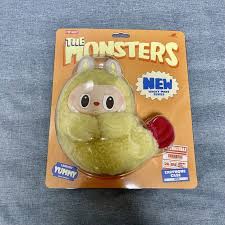
The Weight and Feel: This is where experience comes in. An original Labubu has a satisfying density. It's solid. The vinyl is smooth, sometimes with a slightly soft-touch finish depending on the series. A fake is noticeably lighter. It feels hollow and brittle. The plastic is often hard, shiny, and cheap. It's the difference between holding a well-made small sculpture and a toy from a 25-cent vending machine.
I remember getting a fake "Have a Seat" Labubu in a trade once (the other person didn't know). The moment I picked it up, I knew. The real ones have a heft to them; this one felt like air. The chair it came with was made of a plastic so brittle I was afraid it would snap. If you're new to collecting, I recommend going to an official store if you can and just holding a real one. That tactile memory is your best weapon.
Let's Talk Plush: The "Animales de Peluche Labubu Original" Confusion
The keyword `animales de peluche labubu original` (original Labubu stuffed animals) pops up a lot, and it causes confusion. Let's clear it up.
Most Labubus are vinyl figures, not plush toys. However, some series, like the hugely popular "Fall in Wild," have a "flocked" texture. This is a fuzzy, velvety coating applied over the vinyl, which can give it a soft, plush-like feel. This is probably what many people mean when they search for a "plush" Labubu.
When comparing a real flocked Labubu to a fake, the difference is night and day. * Real Flocking: The flocking on an original is dense, even, and soft. It's applied precisely and doesn't easily rub off. It feels like high-quality velvet. * Fake Flocking: The flocking on fakes is patchy. You can often see the shiny plastic underneath. It feels rough and cheap, and it sheds like crazy. If you run your finger over it and get a little cloud of fuzz, that's a massive red flag.
Then there are the actual animales de peluche Labubu original, the official plush dolls. These are larger, stuffed versions. The same rules apply. An original Labubu plush will have high-quality fabric, perfect, tight stitching, and professional embroidery for the face. A fake will use cheap, thin fabric, have wonky and loose stitching, and the facial features might be crooked or poorly printed on.
A Closer Look: The Devil is in the Details
Get your phone's camera and zoom in. This is how you can really start to see the difference when looking at fotos de labubus originales online versus fakes.
The Paint Job: Kasing Lung's designs are beautiful, and Pop Mart's production (usually) honors that. On an original, the paint lines are crisp and clean. The eyes are a great place to look. The little white highlight dots are perfectly round and placed. The color gradients, like on the Exciting Macaron Labubu series, are smooth and seamless.
On a fake, the paint is a disaster. Lines bleed into each other. The paint can be splotchy or have a weird, overly glossy finish. I've seen fakes where the white dots in the eyes are misshapen ovals, or one is higher than the other. The gradients are non-existent; they're just hard lines of color. If the paint job looks like it was done in a hurry by someone with a shaky hand, it's a fake.
The Joints: On figures with articulation (like the head or arms), the joints on an original are smooth and hold their position. On a fake, they are either terrifyingly stiff or ridiculously loose. You shouldn't feel like you're about to break the toy just by turning its head.
Real Talk: Why You Should ALWAYS Buy Originals
Look, I get it. You see a Labubu you love, but the aftermarket price is insane. Then you see a cheap version online and you're tempted. My honest advice as a seller and a collector? Don't do it.
Buying fakes hurts everyone. It hurts Kasing Lung, the artist who poured his heart into creating these characters. It hurts the community by devaluing the hobby. And honestly, it hurts you.
There is zero joy in a fake. It feels cheap, it smells bad, and it looks wrong on the shelf next to your real ones. You miss out on the thrill of the hunt, the excitement of the unboxing, the satisfaction of adding a genuine piece of art to your collection. That feeling of finally getting a real chase figure after weeks of searching is something a $5 knock-off can never replicate. You're not collecting art; you're just buying plastic junk that will likely break. Fakes have no resale value and, frankly, no soul.
Your collection is a reflection of you. Fill it with things that bring you genuine joy, not cheap imitations. If a certain series is too expensive right now, wait. The market fluctuates. Or, explore a different series that's more accessible. You can browse our entire LABUBU collection to see what's currently available at retail prices.
The Final Checklist: Your Anti-Fake Shield
So, you're on the hunt. Keep this mental checklist with you:
1. The Seller: Are they an official Pop Mart store, a reputable retailer (like us!), or a random account on a marketplace with blurry photos and a name like "ToyFunHappyStore88"? Trust your gut. 2. The Price: A single blind box retails for around $15-$18 USD. A full case of 12 is around $180-$200. If you see a brand new, sealed case for $50, run. It's fake. As I explain in my ultimate guide to Labubu dolls, prices that are too good to be true always are. 3. The Box: Look for that holographic sticker. Check for crisp printing and thick, quality cardboard. 4. The Senses: When you open it, does it smell like chemicals? Does it feel light and brittle? Red flags. 5. The Details: Zoom in on the paint. Are the lines clean? Are the eyes perfect?
The Labubu craze is real, and unfortunately, that means the fakes aren't going away. But by arming yourself with knowledge, you can protect your wallet and the integrity of your collection. The joy of this hobby comes from the art, the community, and the thrill of finding that one special monster. And that's something no fake can ever deliver.
--- Disclosure: PopNya may earn a commission if you purchase through links on this page.


