

A customer walked into my orbit last month, absolutely beaming. She'd scored an incredible deal on a full case of the LABUBU Macaron series online. Twelve little monsters for a price that was, frankly, impossible. She wanted me to help her find the secret "Chestnut Cocoa" she was missing.
I took one look at the box in her hands and my heart sank.
The font was a little too thin. The shrink-wrap felt brittle, not soft. The colors were just a hair too saturated. She hadn't scored a deal. She'd been scammed. Explaining that to her was one of the worst parts of my job.
So when people search "is Pop Mart LABUBU real," I know they're asking one of two things. First: Is this a legitimate product line? And second, the much more painful question: Is the one I just bought real?
Let's get the easy one out of the way. Yes, LABUBU is a very real, very wonderful creation by Hong Kong-based artist Kasing Lung. Pop Mart licenses his "The Monsters" characters (which include LABUBU, Zimomo, Tycoco, and others) and turns them into the blind box figures we all obsess over. They are 100% legitimate art toys.
Now for the hard part. The massive popularity, especially with series like the Exciting Macaron Labubu, has created a tidal wave of fakes. They're all over AliExpress, Temu, and shady eBay listings. And they're getting dangerously good.
As someone who packs and ships these figures every single day from my store, PopNya, I've learned to spot the fakes by feel, by smell, and by a dozen other little tells that most guides won't mention. So, let's go through it. This is my gauntlet for telling a real LABUBU from a cheap imitation.
The First Checkpoint: The Box
Before you even get to the figure, the box tells a story. Counterfeiters focus on the toy, not the packaging nuances. That's their mistake, and our advantage.
The Shrink-Wrap: This is my first test. Real Pop Mart shrink-wrap is soft, pliable, and applied tightly. It has a premium feel. Fakes often use a cheaper, more brittle plastic that crinkles loudly and feels stiff. Sometimes it's loose or has messy seams. If the wrap feels like the cheap cellophane on a pack of discount batteries, that's a red flag.
The Cardboard & Print: Pick up a real LABUBU box. The cardboard is sturdy with a slight satin finish. Now, look at the printing. Pop Mart uses high-quality offset printing. The lines are crisp, the colors are perfectly registered, and the text is razor-sharp.
Fakes are a different story. The cardboard often feels flimsy or has a weird glossy finish. The biggest giveaway is the print quality. Look closely at the text. On fakes, you can often see pixelation, fuzzy edges, or what looks like it came from a standard inkjet printer. The colors can be washed out or, like in the case of my customer, way too bright and saturated. The LABUBU looks like the real thing from a distance, but up close, the forgery falls apart.
The Holy Grail (or Hologram): Most newer Pop Mart boxes have a holographic security sticker. This is a good sign, but be warned: counterfeiters are faking these now, too. A real Pop Mart hologram is complex. It has depth and multiple layers of images as you tilt it. A fake hologram often looks flat, like a simple rainbow sticker. It might not have the Pop Mart logo embedded correctly or might just look... Cheap. Don't just see the sticker and assume you're safe. Really look at it.
The Unboxing Ritual: Foil and Card
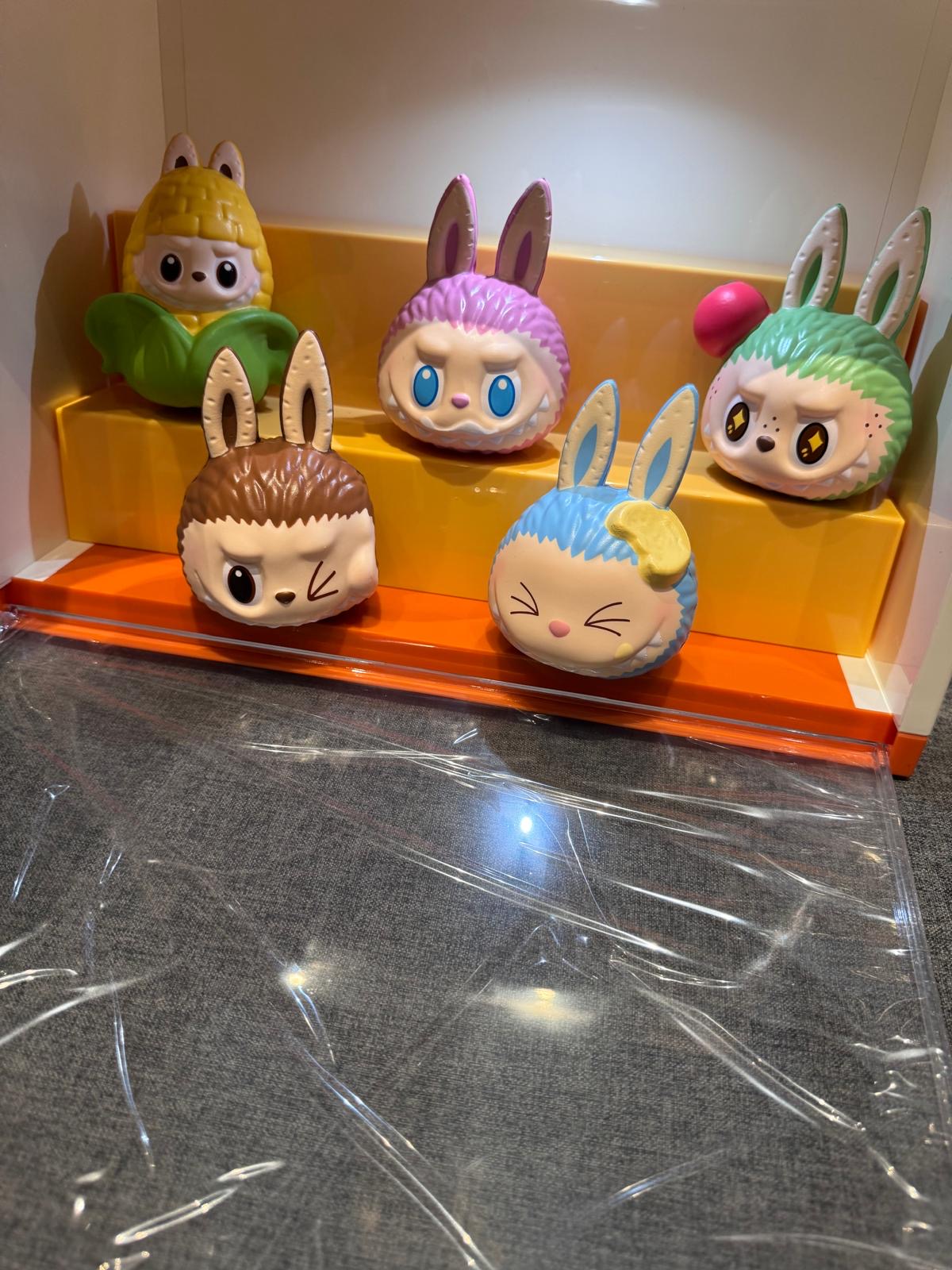
You've opened the box. The next layer of authenticity is the foil bag and the collector card.
The Foil Bag: A real LABUBU comes in a thick, matte-finish foil bag. It opens with a satisfying tear along the designated notch. Fake bags are often made of a thinner, crinkly, and overly shiny material. They can feel cheap and flimsy, and sometimes the printing on the bag itself is blurry or misaligned.
The Collector's Card: This is a huge one. Every real LABUBU comes with a matching collector's card. The cardstock should be thick and have a quality feel. The image of the figure should be crisp and color-correct.
Many official cards have a very specific matte or sometimes slightly textured finish. Fakes are almost always printed on basic, flimsy, glossy cardstock. The corners might be poorly cut. If the card feels like a cheap business card, your suspicion should be on high alert. Compare the colors on the card to the figure itself. On fakes, they often don't match perfectly.
The Figure in Your Hand: The Final Verdict
This is the moment of truth. You have the figure out. Does it pass the test?
The Weight and Balance Test: This is something you can only learn from experience, but it's critical. Real LABUBU figures have a specific density and weight. They're made from high-quality PVC/vinyl that gives them a satisfying heft. They feel solid. Fakes are often made from cheaper, lighter plastic. If you hold a real one in one hand and a fake in the other, the difference is immediate. The fake feels hollow and cheap. It might also be poorly balanced and unable to stand up straight easily.
The Smell Test: I'm dead serious about this. Smell the figure. A brand new, authentic Pop Mart figure has a very faint, almost neutral vinyl smell. It's not unpleasant. Fakes, on the other hand, often reek of harsh chemicals. It's a strong, pungent, plasticky odor that screams "cheap manufacturing." This is because they use lower-grade plastics and paints that haven't been properly cured or tested for safety. If your LABUBU gives you a headache from the smell, it's almost certainly a fake.
Paint, Finish, and The Tiniest Details: Everyone says "look for sloppy paint," but that's too simple. Pop Mart's QC can vary, and even real figures can have tiny flaws. The real difference is in the type of paint and finish.
Take the Macaron series. The real figures have a beautiful, soft-touch, almost velvety matte finish. It's a joy to hold. The fakes are just molded in shiny, hard plastic. They completely miss the signature texture. This applies to many series. Is the figure supposed to be glossy? Flocked? Translucent? Fakes rarely get these special finishes right. They cut corners. For example, some of the most sought-after are the various pink LABUBU figures, and fakes can never replicate the exact shade and finish Pop Mart uses.
Look at the seams. On a real LABUBU, the seams where the parts are joined (like the ears to the head) are clean and tight. Fakes often have visible gaps, glue residue, or rough, unfinished seam lines.
The Joints: Turn the head. Move the arms. An authentic LABUBU has smooth, firm joints. They hold their position. On a fake, the head might be extremely loose and wobbly, or so tight it feels like it's going to break. The movement is never quite right.
The Price Is a Dead Giveaway
I need to be blunt here. If you see a "rare" LABUBU secret figure that sells for $150+ on the secondary market listed for $30, it is fake. Full stop. There are no secret warehouses with cheap, authentic LABUBUs. It's not a thing.
The counterfeit market preys on the excitement and desperation of new collectors who want to get into the hobby without understanding the real market values. A full case of 12 for half the retail price? Fake. A "buy 2 get 1 free" deal on the latest, sold-out series from a random website? Fake. The economics just don't work. As I explain in my ultimate guide to LABUBU dolls, the price is often the first and most obvious red flag.
**Real Talk
So, does it really matter? I get this sometimes. "It looks the same, who cares?" I care. And you should too.
First, you're not supporting the artist. Kasing Lung is a brilliant creator who poured his heart into these designs. Buying fakes means your money goes to a factory that stole his intellectual property, not to the person who actually created the magic.
Second, there's the community and the joy of the hunt. The thrill of trading with a friend, of finally pulling a chase you've been looking for, of displaying a collection you've carefully curated... That's the real hobby. A fake figure on your shelf is a constant reminder of a shortcut. It doesn't have a story, except the story of how you got duped.
And honestly, there are safety concerns. We have no idea what materials are in these fakes. The strong chemical smell is a sign that they're not using body-safe plastics or paints. Do you really want that sitting on your desk, or worse, in a home with kids or pets?
A fake LABUBU isn't a LABUBU. It's a hollow echo. A piece of plastic that labubu looks like** on the surface, but it's missing the soul. The weight, the feel, the story, the artist's intent, that's what makes it real.
The absolute best way to ensure you're getting the real deal is to buy from authorized retailers and trusted sellers. It removes all the guesswork and anxiety. If you're just starting out and want to be 100% sure you're getting an authentic little monster, you can always browse the LABUBU figures we carry at PopNya. We guarantee every single one is authentic, sourced directly from the official channels.
Don't let the fear of fakes scare you away from the hobby. Just be a smart, informed collector. Check the box, trust your senses, and if a deal seems too good to be true, it always is.
Disclosure: PopNya may earn a commission if you purchase through links on this page.


