

I'll never forget the first time I held a fake LABUBU. A customer, bless their heart, brought it into the shop, beaming with pride. They'd scored a "full set" of the Macaron series online for an unbelievably low price. But the moment they handed it to me, my heart sank. It felt… wrong. Too light. The plastic had a weird, greasy sheen. And the smell, a sharp, chemical odor that instantly tells you this isn't the high-quality vinyl Pop Mart uses.
So, to answer the question everyone is asking: are Pop Mart Labubus real? Absolutely. They are legitimate works of art designed by the brilliant Kasing Lung and produced by Pop Mart. But their explosion in popularity, fueled by celebrities and viral TikToks, has created a massive, murky market for counterfeits.
And these aren't just bad fakes anymore. They're getting scarily good. They even have their own nickname: "Lafufu." The confusion between Lafufus and Labubus is real, and it's tripping up new and even some seasoned collectors.
As someone who stocks, sells, and personally collects these figures, I've spent way too much time examining both. The big news sites can give you the basics. I'm here to give you the details that only come from holding hundreds of these things in your hands.
The Side-by-Side Takedown: Real LABUBU vs. Fake "Lafufu"
I bought a "Lafufu" from a sketchy online marketplace specifically for this. Let's put it head-to-head with an authentic LABUBU Macaron figure from our shop's inventory.
The Box: Your First Clue
The counterfeiters are getting better at mimicking the box art, but they always cut corners. * Cardboard Quality: A real Pop Mart box has a satisfying thickness and a smooth, premium matte finish. The fake's box feels flimsy, like a cereal box, and the finish is often overly glossy or has a weird texture. * Printing: Look at the fine print and logos. On the authentic box, the text is razor-sharp. On the fake, it's slightly blurry, as if it was scanned and reprinted. The colors on the fake are also often over-saturated or have a slight color cast, my fake's box has a yellowish tint compared to the clean white of the real one. * The QR Code: Every official Pop Mart product has a scannable QR code for authenticity. On many fakes, this code is either missing, doesn't scan, or leads to a dead or generic website. Don't trust the box if the code is fishy.
The Unboxing Ritual: Foil Bags and That Smell
This is where the difference becomes undeniable. * The Foil Bag: A real LABUBU comes in a thick, soft-touch foil bag with a clean, straight factory seal. It feels substantial. The fake labubu doll lafufu comes in a thin, crinkly bag that feels cheap. The seal on my fake is jagged and messy, clearly done with a low-quality heat sealer. * The Smell: I'm not kidding, this is a huge tell. Open a real Pop Mart blind box, and you get a faint, almost neutral smell of new vinyl. It's not unpleasant. When I opened the fake, I was hit with a wave of pungent, chemical plastic smell. It's the smell of cheap, unregulated plastics and paints. If it stinks, send it back.
The Collector Card: A Blurry Mess
Every real LABUBU comes with a high-quality, credit-card-like collector's card featuring a beautiful render of the character. * Cardstock & Finish: The real card is thick, has a satin finish, and feels durable. The fake card is thin, glossy, and feels like it would bend or crease easily. * Print Quality: Put them side-by-side, and it's night and day. The art on the authentic card is crisp and vibrant. The fake's art is a blurry, pixelated mess. The colors are off, and it lacks all the fine details. It's an immediate giveaway.
The Figure Itself: A Study in Cutting Corners
Okay, the main event. Here's how to spot a fake figure, even a "good" one.
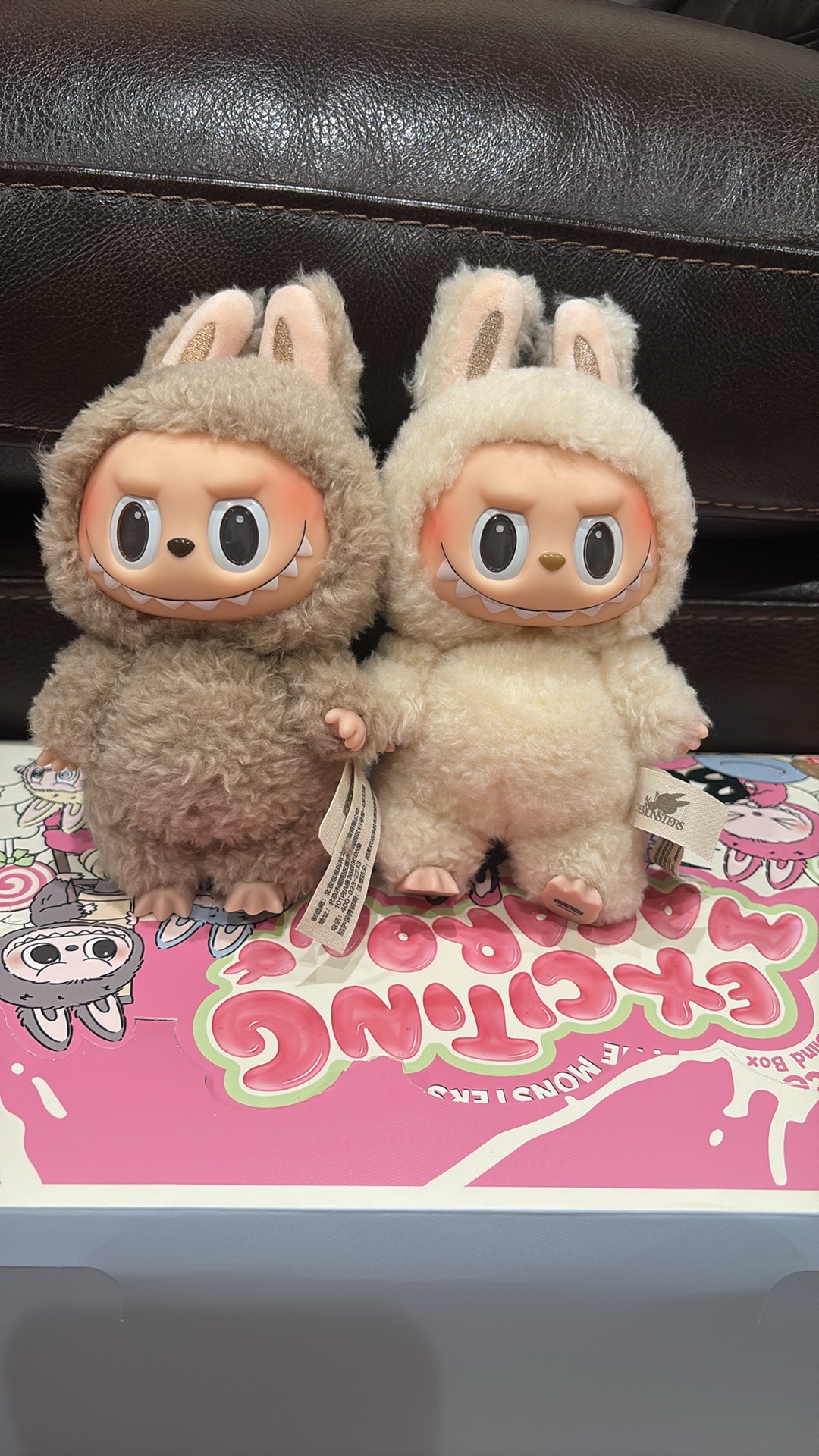
* Weight: This is the first thing I noticed. The real LABUBU has a pleasant heft. It feels solid. The fake is noticeably lighter, feeling hollow and cheap. It's probably made with less material to save money.
Material & Finish: Authentic LABUBUs are made from a high-quality PVC vinyl that has a beautiful matte or satin finish. It's smooth to the touch. My fake is made of a harder, shinier plastic that has a slightly greasy residue on it. It just feels* wrong.* The Paint Job: This is where fakes fall apart under scrutiny. Pop Mart's quality control is excellent. The paint lines on a real LABUBU are clean and precise. On the fake, you'll see: * Overspray: Color bleeding from one area to another (e.g., the ear color bleeding onto the face). * Mismatched Colors: The shade of pink on my fake Macaron's ears is a completely different, cheaper-looking hue than the official one. * Lack of Detail: The delicate gradient on a real Macaron LABUBU's ears is smooth. On the fake, it's a clumsy, splotchy transition. The tiny painted details in the eyes are often missing or sloppily applied. * The "Tush Tag": Flip the figure over and look at the copyright info on the bottom of the feet. On a real LABUBU, you'll see "© Kasing Lung," "POP MART," and the year, all in a clean, sharp font. On the fake, the text is often thick, blurry, or uses a slightly different font. Sometimes it's missing entirely. * Joints: The head and arms of a real LABUBU turn with a smooth, satisfying resistance. They hold their pose. The joints on the fake are either incredibly stiff and creaky or so loose they flop around.
Real Talk: This Isn't Just About Snobbery
Okay, so you might be thinking, "Who cares if it's a fake? It looks close enough, and it's cheaper." As a seller and a fan, I need to be blunt: it matters. A lot.
First, it's a safety issue. Those news reports you've seen about counterfeit toys are not exaggerating. That chemical smell I mentioned? It's a sign of unregulated plastics and paints that could contain harmful substances like lead or phthalates. These toys have not undergone any safety testing. Especially if these are for or around children, the risk is very real. The thought of a child putting a toxic, poorly made fake in their mouth is terrifying, and it's why the conversation around things like those viral LABUBU costumes for kids is so important.
Second, it hurts the artist and the community. Every time someone buys a fake, that money goes to a counterfeiter, not to Kasing Lung, the artist who poured his heart into creating this whimsical world. If you want to know more about the man behind the monster, understanding who owns LABUBU and the partnership with Pop Mart is a good place to start. Supporting the official release ensures that artists like him can continue to create.
Finally, you're cheating yourself out of the real experience. The joy of collecting isn't just about owning the object. It's the thrill of the hunt, the excitement of opening a blind box, the satisfaction of displaying a genuine piece of art, and the connection to a community. A fake has no soul. It has zero secondary market value, a real chase figure can be worth hundreds, while a fake is worthless. Trying to pass off a fake of a highly sought-after figure, like the rare LABUBU with red eyes, completely misses the point of what makes it special in the first place: its rarity and authenticity.
How to Guarantee You're Buying Real LABUBU
So, how do you navigate this minefield? It's actually pretty simple if you stick to the right channels.
1. Buy From Official Sources: The safest bet is always a physical Pop Mart store, the official Pop Mart global website, or their app. You are 100% guaranteed to get an authentic product. 2. Use Authorized Retailers: Pop Mart partners with select retailers who are authorized to sell their products. (Ahem, that's us!) Here at PopNya, we get our stock directly from the official distributors. When you browse our LABUBU collection, you can shop with confidence, knowing every single item is authentic. 3. Be Wary of Third-Party Marketplaces: This is where it gets dangerous. Sites like AliExpress, Temu, and sometimes even eBay and Amazon are flooded with fakes. Scrutinize every listing. Look for these red flags: * Price is Too Good to Be True: A full set of 12 for $50? It's fake. A single Macaron for $5? Fake. The retail price for a single blind box in the US is around $16-$17. Anything drastically lower is a massive red flag. * Stock Photos: If the seller is using blurry, generic stock photos instead of pictures of the actual product, run. * "Lafufu" in the Title: They're literally telling you it's a fake. * Shipping Origin & Time: If it's shipping from a random factory in China and the estimated delivery is 4-6 weeks, the odds of it being a fake are extremely high.
The world of lafufus and labubus can feel a little overwhelming at first, but once you've held a real one, you'll never be fooled again. The quality, the artistry, and the sheer charm of an authentic Kasing Lung creation are unmistakable.
Collecting should be about joy, not about worrying if you've been scammed. Do your homework, buy from trusted sources, and you'll be able to grow your monster family with confidence. Happy hunting!
--- Disclosure: PopNya may earn a commission if you purchase through links on this page.


