

I get this email at least once a week. It usually starts with, "Hi, I bought this LABUBU on [insert random marketplace here] and I'm not sure if it's real. Can you help?" My heart sinks a little every time. Because nine times out of ten, it's a fake. The explosive popularity of Kasing Lung's little monster has created a minefield for new collectors.
So, let's talk about it. For real. This isn't going to be another generic article telling you to "check the QR code." As someone who runs PopNya and handles these figures every single day, I can tell you that the QR code is just the beginning of the story. The counterfeiters are getting smarter. You have to get smarter, too. This is my personal playbook for `labubu verification`, built from opening hundreds of boxes and, unfortunately, seeing dozens of fakes.
The QR Code: Your First Check, Not Your Last Word
Okay, let's get the obvious out of the way. Yes, every authentic LABUBU blind box comes with a small, rectangular card. This card has a scratch-off panel hiding a QR code. You scratch it, scan it with your phone, and it should take you to the official `pop mart verification website`.
But here's the thing the fakers are counting on you not knowing: this system is not foolproof.
I've seen fakes with QR codes that do a few different, sneaky things: 1. They lead to a clone website. It might look like the POP MART site, but check the URL. It might be something weird like "popmart-verify.net" or the infamous `labubu boxes com` that people sometimes search for. The official verification page URL is `m-gss.popmart.com`. Anything else is a massive red flag. 2. They use a copied QR code. Counterfeiters will take a QR code from one real box and print it on a thousand fake cards. When you scan it, it might even go to the real POP MART site, but it will likely tell you the code has already been scanned multiple times. If you're the first person to open that box and it says it's been scanned 50 times? You have a problem.
A real collector's tip? Pay attention to the scratch-off material itself. On a genuine card, the silver stuff scratches off like a lottery ticket, a fine, dusty powder. I've handled fakes where the material was more like a cheap sticker, peeling off in one gummy piece. That's an immediate tell before you even pull your phone out.
So, use the QR code as a preliminary check. If it fails, you 100% have a fake. But if it passes, your `labubu popmart authenticity check` isn't over. It's just beginning.
How to Tell if a LABUBU is Real: The Physical Exam
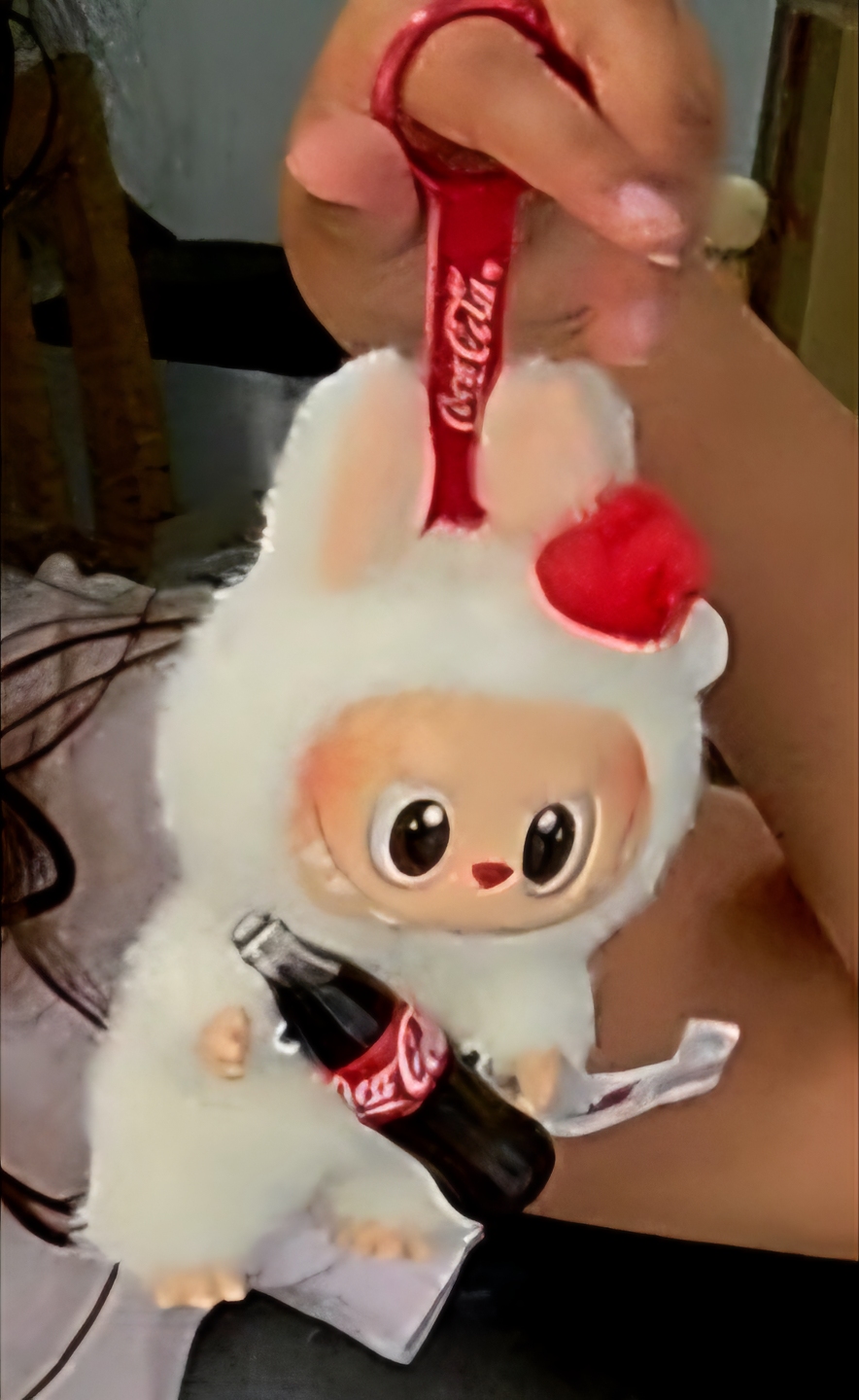
This is where experience comes in, but I'm going to try and bottle some of that for you. Once you've held a real LABUBU, you develop a sixth sense for fakes. They just feel wrong. Here's what I look for when a new shipment arrives at the shop.
The Box Isn't Just a Box Before you even get to the foil bag, the box itself can tell you a lot. * Print Quality: Real LABUBU boxes have incredibly sharp, vibrant printing. The colors are saturated and the lines are crisp. Hold it up to your face. On a fake, you'll often see slight blurring, pixelation, or colors that are just a little... Off. The purple on a Macaron box might be too dark, or the pinks might look washed out. * Cardboard Feel: Authentic boxes use a specific weight of cardstock with a smooth, slightly matte finish. It feels sturdy. Fakes often use thinner, flimsier cardboard that creases too easily or has a cheap, glossy sheen. * The Tiny Details: This is my favorite part. Flip the box over and look at the fine print. On a real box, the text is perfectly kerned (spaced). On fakes, the letters are often squished together or have awkward gaps. Another pro tip: look for the recycling logos and other symbols. They are often blurry, misshapen, or the wrong size on a counterfeit box. The counterfeiters are lazy about the boring stuff.
The Figure's Feel, Smell, and Sound This is the most critical part of `how to verify if labubu is real`. * The Smell Test: I'm dead serious. Open the foil bag and take a sniff. A genuine POP MART figure has a distinct, non-offensive vinyl smell. It's hard to describe, but it's almost slightly sweet. A fake will often reek of harsh, industrial chemicals. It's a pungent, cheap plastic smell that screams "counterfeit." If it gives you a headache, it's probably a fake. * Weight and Material: Pick it up. A real LABUBU has a satisfying density. It's not a paperweight, but it feels solid. Fakes are often noticeably lighter, feeling hollow and cheap. The vinyl itself is different, too. Real LABUBU vinyl has a certain softness and a matte or satin finish (depending on the series). Fakes are often made from a harder, shinier plastic that feels brittle. The finish on the Exciting Macaron Labubu series, for example, is a beautiful soft matte that fakes just can't replicate; they always come out too glossy. * The Paint Job: A real LABUBU is painted with care. The lines are clean, especially around the eyes and on the teeth. Now, they are not always 100% perfect, tiny specks of dust or minuscule paint variations can happen in mass production. But a fake will have sloppy, systemic errors: fuzzy edges, paint bleeding from one area to another, and completely wrong color matching. Look at the blush on the cheeks. On a real one, it's a soft, airbrushed gradient. On a fake, it often looks like a hard, pink circle stamped on.
Articulation (The Joint Test): People always ask, `do labubu feet rotate`? Yes, on most standard LABUBU figures, the head, arms, and feet all rotate. But the quality* of that rotation is the key. On an authentic figure, the joints are snug. They turn with a smooth, firm resistance. You can pose it and it will hold. On a fake, the joints are a disaster. They're either so stiff you feel like you're going to break the limb off, or they're incredibly loose and floppy, swinging around with no resistance. This is one of the easiest physical tells.The Stamp of Authenticity Finally, look at the bottom of the figure's foot. There should be a stamp with "POP MART," "Kasing Lung," and other copyright information. On a real figure, this stamp is deeply and clearly embossed into the vinyl. On a fake, it's often shallow, blurry, illegible, or uses the wrong font entirely. It looks like a cheap imitation because it is.
The Market Test: If It Seems Too Good to Be True...
You've done the physical checks, but `how to see if labubu is authentic` also involves thinking like an economist. The LABUBU market is on fire, and prices reflect that.
Let's use a real-world example. The LABUBU Macaron series is one of the most popular and heavily faked sets. A single blind box retails for about $13. A full case of 12 is about $156. The chase figure, Chestnut, regularly sells for over $100 on its own. Soymilk, another popular one, can fetch $40-$50.
If you see someone on eBay or Facebook Marketplace selling a "Full Set of 12 Macaron LABUBU" for $75, it's fake. It's not a good deal; it's a scam. No one is selling the full set for less than half of its retail cost, especially when individual figures are worth so much. The math just doesn't work.
The same goes for individual figures. See a listing for the ultra-rare Grape from The Monsters Camping series for $20? Impossible. That figure can command hundreds.
Your best defense is to buy from a reputable source. That means the official POP MART store, a trusted local toy shop, or a dedicated online retailer that specializes in designer toys. That's a huge part of why I started PopNya, to create a safe space where collectors know they're getting the real deal. When you browse our LABUBU collection, you're not just buying a toy; you're buying peace of mind. We source directly from official distributors, so there's zero chance of getting a counterfeit.
Real Talk: My Honest Take on LABUBU Verification
Look, I'm going to be blunt. The community's obsession with the `pop mart labubu verification` QR code is a little misguided. It's a starting point, but it's not the ultimate answer. The best tool you have in the fight against fakes isn't your phone's camera, it's your own senses.
Counterfeiters can copy a QR code. They can build a fake website. But they can't perfectly replicate the specific density of the vinyl, the exact Pantone color of the paint, the smooth tension of the joints, or that unique "new LABUBU" smell. Those are the things they cut corners on to make a profit.
My advice? If you're new to collecting, buy your very first LABUBU from an undeniably `authentic labubu website` like POP MART's official store or a specialty shop like ours. Get that first one in your hands. Feel it, smell it, pose it. That is your baseline. That is your control subject. Once you know what a real one feels like, you'll be able to spot a fake from a mile away. The fakes are getting better, but they're not perfect. Not even close.
Collecting these little monsters should be about the joy of the hunt and the thrill of the unboxing, not the stress of wondering if you've been ripped off. Learn the tells, trust your gut, and buy from sources you trust. The rest is just noise. And if you ever want to skip the guesswork, you know where to find us.Disclosure: PopNya may earn a commission if you purchase through links on this page.


