

I remember the exact moment I got fed up with my shelves.
My MOLLY collection was growing. Fast. I had figures spilling onto my desk, hiding behind books, gathering dust in corners. The IKEA Detolf was full. It felt less like a curated collection and more like a vinyl hoard. I wanted something better. Something modular, something I could change up easily, something that looked… cool.
My journey into the world of designer toys started with MOLLY, but my obsession with displaying them properly led me to a very unexpected place: the world of tactical gear. Specifically, the MOLLE system. If you're not familiar, MOLLE (Modular Lightweight Load-carrying Equipment) is that grid of nylon webbing you see on military-style backpacks and vests.
And the key to unlocking its magic? Molle straps.
But here's the thing no one tells you when you start Googling: 99% of the information out there is for attaching a first-aid kit to a plate carrier, not for lovingly securing a $150 limited edition Skullpanda. The stakes are different. The materials are different. And the straps you need are definitely different.
My First, Almost Disastrous, Attempt
So, picture this. I get my first molle panel mounted on the wall. It looks awesome. Clean, industrial, full of potential. I hop on Amazon and order the first "molle attachment straps" I see. They were cheap, had thousands of reviews, and featured heavy-duty metal snaps. "Perfect," I thought. "Strong and secure."
Wrong. So, so wrong.
I spent an afternoon meticulously weaving these straps onto the panel and attaching some of my more common figures. A few hours later, I heard it. A soft thump-thump-clatter. One of the metal snaps had come undone. A poor, unsuspecting Labubu had taken a 4-foot tumble onto the hardwood floor.
Thankfully, the damage was minimal, but I learned a critical lesson. Those heavy-duty snaps are designed for thick, canvas-like pouches. They're stiff. They put a ton of pressure on a small point. And when you're trying to secure the curved, smooth, vinyl foot of a designer toy, they just don't have enough surface area to grip properly. The tension can pop them open.
Even worse, I noticed the metal snap base was leaving a faint, circular indentation on the vinyl. On a matte figure, it might even cause a shiny spot. On a glossy one? A scratch waiting to happen. I immediately took everything down. My dream display was turning into a nightmare.
That's when I realized I had to stop thinking like a soldier and start thinking like a collector.
The Collector's Playbook for Molle Straps
After a lot of trial, error, and a bit too much money spent on straps that now live in a "box of shame," I've figured out what actually works. If you're thinking about creating a molle display for your figures, this is my playbook.
The Problem with Standard Molle Straps
The most common type you'll find are molle webbing straps with a snap closure. They're usually made of stiff, 1000D Cordura nylon. This material is great for durability, but it's also abrasive. Over time, that rough texture can absolutely cause micro-scratches or wear down the paint on your figures, especially at points of contact.
I tested this. I took a common Pop Mart figure I had a duplicate of and rubbed a standard strap against its arm for a minute. The result? A visible dulling of the finish. Not a huge deal on a common, but imagine that on your prized Mega Space MOLLY. No thank you.
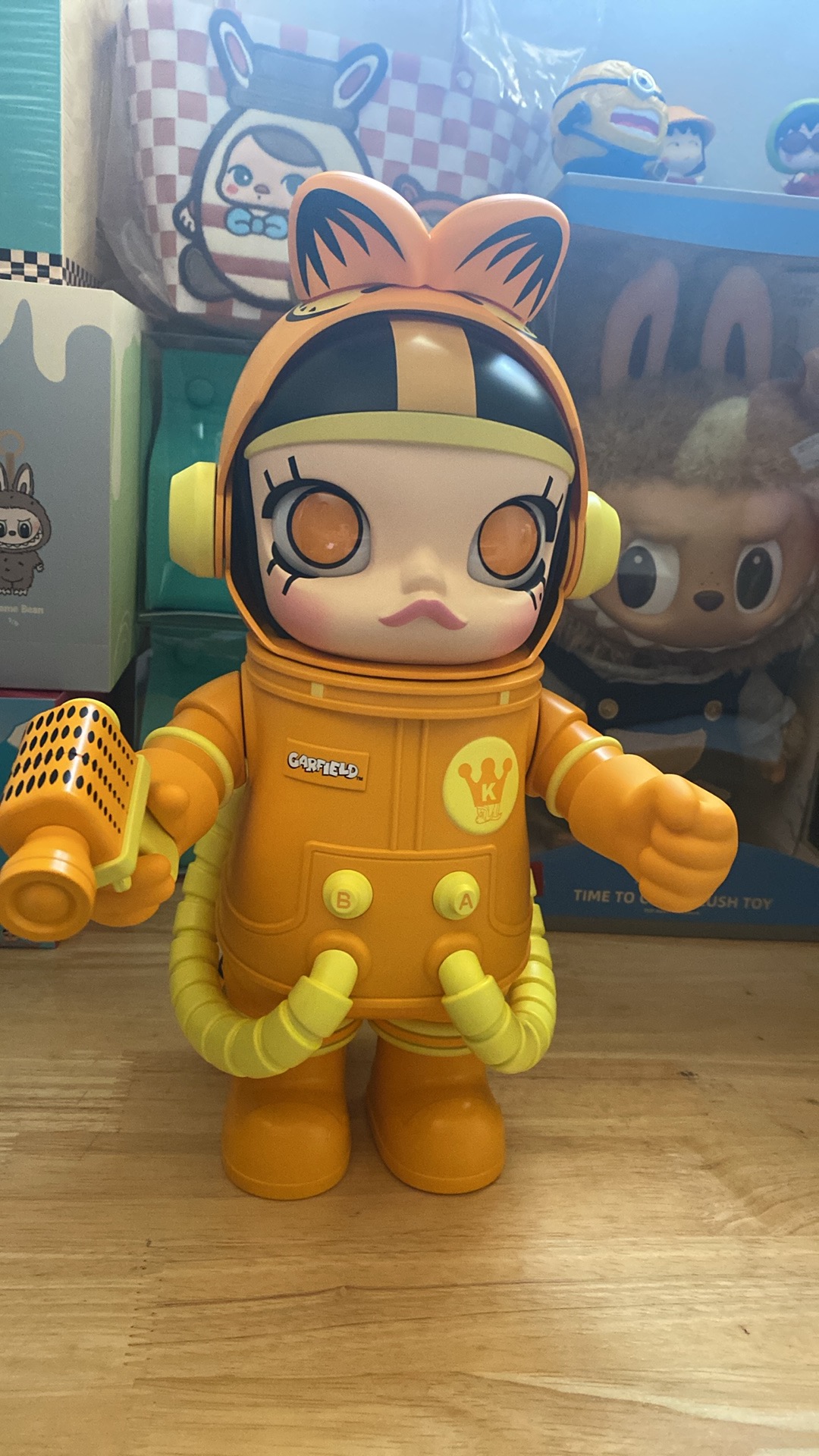
So, rule number one: Avoid stiff, abrasive nylon and metal snaps whenever possible. They are not your friends.
Adjustable Molle Straps: A Step in the Right Direction
Okay, so what's better? You might see adjustable molle straps. These often use a plastic buckle instead of a snap, which is a huge improvement. No more sharp metal edges near your precious vinyl.
The adjustability is the real win here. You can create a loop that perfectly fits around a figure's waist, leg, or accessory. This is fantastic for figures with unusual shapes or sizes. You're not stuck with the fixed length of a standard strap.
But the material still matters. Many of these are still made from that same coarse nylon. They're better, but not perfect. I use them for securing larger, heavier pieces where I need the strength of the buckle, but I'll often add a small piece of soft microfiber cloth as a buffer between the strap and the figure. It's a bit of a hack, but it works.
The "Molly Strap" Coincidence
Quick aside, because this still makes me laugh. When I was deep in my research phase, I was constantly searching for things like "best molle straps," "soft molle straps," and, thanks to my phone's autocorrect and my general MOLLY-obsession, "molly strap."
The search results for "molly strap" are a hilarious mix of tactical gear and, well, other things. But it became a running joke for me. I wasn't just looking for a molle strap; I was looking for the perfect MOLLY strap, a strap worthy of securing Kenny Wong's finest creations. It's a dumb pun, but it helped frame the entire problem in my head. What does a MOLLY need? It needs something gentle, secure, and stylish.
Real Talk: The Holy Grail for Toy Collectors
After all my searching, I found it. The absolute best solution for securing designer toys to a molle panel.
It's not one single thing, but a combination. The answer is elastic straps for a molle panel.
Forget the rigid, woven straps. Think of high-quality, thick elastic loops. The kind you might find organizing cables or tools. Some companies make them specifically for molle panels, often for holding things like magazines or tourniquets. But for us? They're perfect for cradling a figure.
Here's why they are superior in every way for our hobby:
1. Gentle Pressure: The elastic holds the figure with consistent, distributed pressure. It's a hug, not a chokehold. It conforms to the shape of the figure without creating a single high-pressure point like a snap does. 2. Soft Material: The elastic is almost always covered in a softer, less abrasive material than tactical nylon. It's much kinder to delicate paint jobs and glossy finishes. 3. Incredible Versatility: You can loop them around a figure's torso, cross them in an 'X' over the chest, or use two to secure the feet. Because they stretch, a single strap can accommodate a huge range of figure sizes, from a tiny Pucky to a mid-sized Dimoo. 4. Security: This was the surprising part. I thought elastic would be less secure. I was wrong. A properly tensioned elastic loop holds a figure more securely than a rigid strap because it has no "slack" to work with. The figure can't wiggle its way loose.
I've had my main display wall set up with elastic straps for over a year now. It holds over 50 figures. I've had zero falls. Zero.
Where do you find these?
This is the tricky part. You can't just walk into a tactical store and find the right ones. You have to hunt. I've found some good options marketed as "elastic loop organizers" or "molle elastic retainers." We even got so frustrated with the lack of good options that we started sourcing our own for the PopNya shop, ones that we personally tested and approved for use with our own collections. We made sure the elastic was strong but the covering was soft.
Putting It All Together: The Weave is Everything
Having the right molle attachment straps is only half the battle. You have to attach them correctly. If you just loop the strap through one row of webbing, you're asking for trouble.
The proper way is to weave.
Imagine you have the strap and the panel's webbing. You go: * Under the first loop on the panel. * Then through the first loop on the strap's backing.
Then under the second* loop on the panel. Then through the second* loop on the strap's backing.You alternate, weaving the strap through both the panel and itself. This creates friction and locks the strap into place. It should be tight and have zero play when you're done. A properly woven strap is incredibly strong. An improperly attached one is just a glorified piece of string waiting to fail.
This weaving technique is a core part of what makes the whole system so brilliant and is a topic I've covered before in my collector's guide to MOLLE webbing. It's the difference between a professional-looking display and a disaster waiting to happen.
My Final Setup and Why It Works
Today, my wall is a testament to this system. I use a large, rigid polymer molle panel as the base. For 90% of my figures, I use the soft elastic loop straps. I have them in a few different sizes to accommodate different figures.
For my heavier pieces, like the Mega SKULLPANDA, I do use a pair of high-quality adjustable molle straps with plastic buckles, but I weave them through the back of the figure's stand, not touching the figure itself. The stand takes the pressure, the figure stays pristine.
I've also expanded beyond just straps. The beauty of the molle system is its modularity. I now use small molle pouches to hold accessories, blind box cards, and even spare parts. It's a whole ecosystem. As I've written about before, your designer toys deserve better than just a shelf, and this system lets you get creative.
Building a display like this is a journey. It takes more effort than just buying another bookshelf. But the result is a dynamic, personal, and incredibly secure way to showcase the art you love. You can rearrange it in minutes. You can color-code sections. You can create little scenes.
And you can sleep soundly, knowing your limited edition figures aren't going to take a nosedive in the middle of the night because of a cheap metal snap. Your collection is an investment of time, passion, and money. Protect it. And for my money, the right set of straps is the best insurance you can buy.
If you're starting to build out your own wall and want to see some of the pieces that might look great on it, you can always browse our MOLLY collection for inspiration. Happy collecting, and happy displaying!
--- Disclosure: PopNya may earn a commission if you purchase through links on this page.


