

I remember the first time I saw a LABUBU listing on StockX. It was late 2023, right when The Monsters Exciting Macaron series was hitting peak insanity. My sneakerhead friend, who lives and breathes StockX for his Jordans, sent me a screenshot. "Since when do they sell these little monster things?" he asked. It felt… weird. Like seeing your favorite underground indie band suddenly headlining a stadium tour.
My world of designer toys, a world of passionate communities, trading groups, and the thrill of the blind box, was colliding with the cold, transactional world of stock market-style bidding. And ever since, my inbox has been flooded with variations of the same question: is StockX LABUBU legit?
People are worried. They see a platform known for billion-dollar sneaker sales now listing our beloved vinyl monsters, and the immediate fear is fakes. So, let's get right to it.
The Big Question: Does StockX Sell Fake LABUBU?
The short, simple answer is no, not intentionally. StockX's entire business model is built on their authentication guarantee. They receive the item from the seller, their team "authenticates" it, and then they ship it to the buyer. If they knowingly started passing fakes, their reputation would crumble overnight. So, when you ask, "are StockX LABUBUs real?", the answer is almost certainly yes. You are highly unlikely to receive a complete, counterfeit knock-off.
But that's where the simple answer ends and the complicated reality for a toy collector begins.
The real question isn't "does StockX sell real LABUBU?". The real question is, "What is their definition of a real, acceptable LABUBU, and does it match a collector's standards?"
Because that's where things get messy. An authenticator trained to spot fake stitching on a Nike Dunk might not have the same eye as someone who has opened hundreds of POP MART boxes. They're looking for authenticity, not perfection. And in the world of designer toys, the details are everything.
The "Real" Problem Isn't Fakes, It's Everything Else
I've bought and sold hundreds of LABUBU figures. I've seen them fresh from the case, traded them in collector groups, and yes, I've even monitored their wild price swings on platforms like StockX. The risk of buying LABUBU on StockX isn't getting a cheap plastic fake from a back alley. The risks are far more subtle, and frankly, more frustrating.
The "Authentic but Flawed" Figure
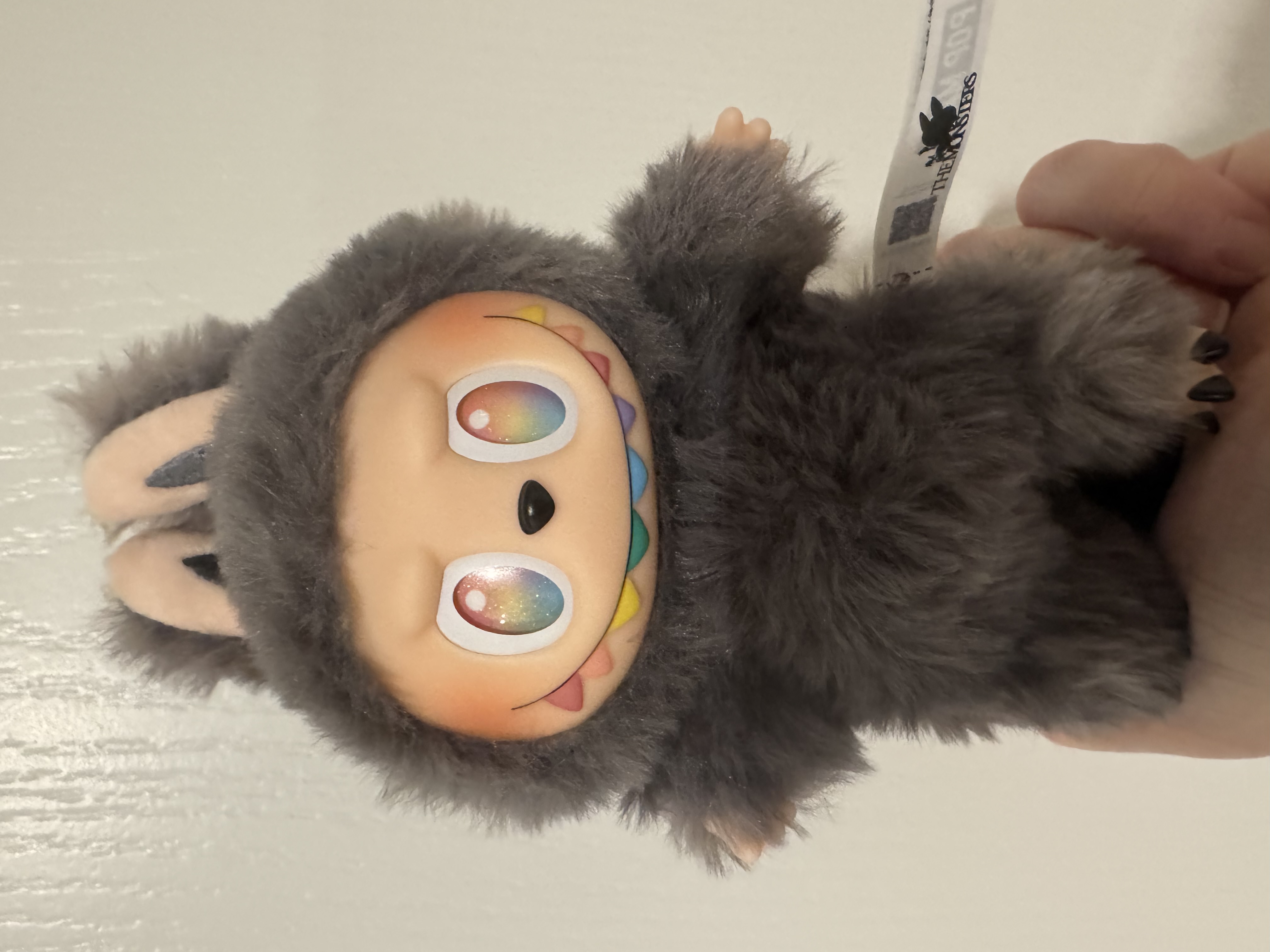
This is the biggest issue that nobody talks about. POP MART's quality control is pretty good, but it's not perfect. Out of a case of 12, it's common to find one or two figures with minor factory defects. A tiny paint smudge on the ear, a faint scuff mark from where it rubbed against the plastic tray, a slightly loose arm.
To a StockX authenticator, is the figure real? Yes. It's a genuine StockX LABUBU authentic product. They'll check it off, slap their green tag on it, and send it on its way.
But to a collector? That's a B-grade figure. It's the one you trade away or sell at a discount. I once saw a friend get a Soymilk LABUBU from a third-party platform where the white paint on the chest had a visible gray smear. It was 100% authentic, but it was flawed. For the premium price he paid, it was a huge disappointment. You have no recourse in this situation because the item passed authentication. It's real, just… not great.
When you buy from a dedicated seller or a community member, you can ask for detailed photos. You can say, "Can I see the back of the head?" or "Any paint flaws?" With StockX, you're buying blind. You're trusting an authenticator who likely doesn't share your collector's eye for detail.
The Casino-Style Pricing and Killer Fees
The second major issue is the price. StockX operates like a stock market, which means prices are driven by pure hype and speculation. This leads to absurd volatility.
Let's take The Monsters Exciting Macaron series as a case study. The retail price for a blind box is around $15-$17. The chase figure, Chestnut Cocoa, became an instant hit. Within the first week of its US release, I saw "Ask" prices on StockX jump to $150. Bids were hovering around $110.
But here's the kicker: that's not the price you pay. StockX adds a processing fee (let's say $5) and shipping (another $15). So that $110 bid suddenly becomes a $130 purchase. Meanwhile, in collector Facebook groups, the same figure was trading for a more stable $80-$90. You could get it faster, with more payment protection (using PayPal G&S), and without the insane platform fees. The pricing on these platforms is a huge part of why LABUBUs are so expensive in the secondary market.
You're paying a massive "convenience" tax for an anonymous, often slower, transaction. And you're competing with flippers who are trying to manipulate the market, not collectors who just love the toy. It turns a fun hobby into a stressful day-trading session.
The Packaging Gamble: A Collector's Nightmare
As a seller, I am meticulous about packaging. The box and the collector card are part of the art. A dented corner or a creased box can significantly lower a figure's value and is a major bummer for in-box collectors.
What is StockX's standard for packaging? "Brand new." What does that mean? It means the box isn't torn in half. A crushed corner? A dent from shipping? A crease along the top flap? From what I've seen and heard from others, that often passes their inspection. They are authenticating the figure inside, not the collector-grade condition of its packaging.
You could win a bid for a "brand new" Zimomo and receive it in a box that looks like it was used as a football. It's technically new and the figure is authentic, but the collecting experience is ruined. This is a critical detail, and understanding the real deal on the LABUBU box is key for any serious collector. You're rolling the dice every single time.
Real Talk: My Honest Verdict on Buying LABUBU on StockX
So, after all that, here's my honest take as someone who runs a store and lives in this world every day.
Is StockX LABUBU legit? Yes, the figures are almost certainly real. Does StockX sell fake LABUBU? Intentionally? No. Could a hyper-realistic fake slip through? It's possible, but unlikely. Should you buy your LABUBU there? For 95% of collectors, my answer is a firm no.
StockX is a platform built for commodities, items where one is exactly like the next. A size 9 Jordan 1 is a size 9 Jordan 1. But a Sea Salt Coconut LABUBU isn't just a Sea Salt Coconut LABUBU. Is the paint crisp? Is the box mint? Are the joints tight? These are questions StockX's model isn't designed to answer.
Who StockX is good for:
The Impatient Hypebeast: You have more money than time, you just saw a LABUBU on TikTok, and you want that exact one now*, no matter the cost. You don't care about box condition or minor flaws.* The Gifter: You're buying a gift for someone and have no idea where else to look. You're willing to overpay for the perception of a "guaranteed authentic" transaction from a big-name site.
Who StockX is bad for: * The Discerning Collector: You care about paint quality, box condition, and getting a "good" version of the figure. * The Budget-Conscious Fan: You want the best price and don't want to pay exorbitant fees. * The Community Member: You enjoy the thrill of the hunt, trading with others, and being part of the hobby's culture.
You're paying a premium for an inferior, impersonal experience. There are so many better ways to build your collection.
The Collector's Playbook: Smarter & Safer Ways to Buy
If you're looking for a specific figure or just want to dive into the world of LABUBU, forget the StockX bidding wars. Here's your playbook.
1. Authorized Retailers & Specialty Stores: This is your safest and best bet. Stores like ours (PopNya!) get our products directly from the official distributors. This means you have a 100% guarantee of authenticity. More importantly, we are collectors ourselves. We inspect our inventory. We ship in sturdy boxes because we know how much box condition matters. You're not just buying a product; you're buying from someone who shares your passion. It's a great way to browse LABUBU figures with confidence.
2. Vetted Collector Communities: Facebook Groups and Discord servers are the heart and soul of the hobby. Find the big, well-moderated groups. The members are passionate, and there are systems in place to ensure safe transactions. * Always use PayPal Goods & Services (G&S). Never, ever use Friends & Family. G&S provides buyer protection. If the item doesn't arrive or isn't as described, you can file a claim. * Ask for "vouches." In these groups, members leave feedback for others. A seller with a long list of positive vouches is generally trustworthy. * Request detailed photos and videos. Don't be shy! Ask to see the figure from all angles, out of the box, in good lighting. A good seller will be happy to oblige.
3. The Thrill of the Hunt: Don't underestimate the joy of walking into a physical store and buying a blind box. The weight, the shake, the suspense of tearing open that foil… it's a core part of the experience that you completely miss with platforms like StockX. You might not get the exact one you want, but you might pull something even better. And the duplicates? That's your ticket into the trading community.
How to Spot a Fake LABUBU (Just in Case)
Even though the risk on a platform like StockX is low, fakes do exist, especially on open marketplaces like AliExpress or eBay. If you're ever in doubt, here are some tells that only a seasoned collector would notice.
* The Vinyl Feel & Weight: This is the hardest for fakers to replicate. An authentic LABUBU has a pleasant density and a smooth, almost soft-touch matte finish. It doesn't feel like cheap, hard plastic. Fakes often feel lightweight, brittle, and have a greasy or overly shiny texture. * The Smell: Open the box. A real LABUBU has a faint, distinct "new vinyl" smell. It's not unpleasant. Fakes often reek of harsh industrial chemicals, a smell that screams "cheap paint." * The "Butt Stamp": Check the copyright information, usually on the bottom of the feet or the lower back. On a real figure, the text ("Kasing Lung," "POP MART," etc.) is incredibly crisp and clean, even when tiny. On fakes, this text is often blurry, thick, or has an incorrect font. * The Collector Card: The card should be made of thick, quality cardstock with sharp printing. Fakes often use flimsy paper, and the colors can be slightly off or washed out. The foil bag the figure comes in is also a tell; authentic ones have a specific thickness and crinkle, while fakes use thin, cheap-feeling foil.
Ultimately, the question of "does StockX have real LABUBU?" is a bit of a red herring. Yes, they do. But the platform's model strips away all the nuance, community, and joy that makes collecting designer toys so rewarding. You're treating a piece of art like a pork belly future.
Don't let the sterile, high-pressure environment of a stock market dictate your hobby. The world of LABUBU is vibrant, friendly, and full of people who are just as excited about these little monsters as you are. Find them, join them, and build your collection in a way that feels fun, not like a financial gamble. And if you're ever looking for a place to start, you can always check out the LABUBU we have in our shop.
--- Disclosure: PopNya may earn a commission if you purchase through links on this page.


