

I remember the first time I saw a Hirono figure. It wasn't in a flashy unboxing video or a hyped-up ad. It was a photo of "Being" from The Other One series, the little guy with a cloth bag over his head, holding a single flower. It stopped me in my tracks. It wasn't just cute. It wasn't edgy. It was… quiet. Melancholy. It felt like a piece of art, and I knew I had to have it.
That's the thing about the world of Hirono figures. It pulls you in differently than other designer toys. As someone who runs PopNya and has handled hundreds of these little guys, I can tell you they're more than just collectibles. They are conversations starters, tiny emotional anchors created by the artist Lang. And if you're just getting into them, the sheer number of Hirono series can be overwhelming.
So, let's break it down from a collector's perspective. Forget the generic guides. Let's compare two of the most defining blind box series: the raw, foundational The Other One and the narratively complex Hirono Shelter series. This is the best way to understand the evolution and the soul of Hirono.
The Raw Emotion: Hirono The Other One Series
This was the series that, for many of us, started it all. If you want to understand the DNA of Hirono, you start with The Other One. When I first got a case of these in the shop, I was struck by how theatrical they felt. Each of the Hirono characters in this set isn't just a design; it's a feeling, frozen in vinyl.
You have "Amnesia," with his head literally cracked open, or "The Crows," perpetually followed by his dark companions. These aren't just accessories; they're metaphors. The designs are relatively simple compared to later series, but their power is in their directness. Lang wasn't trying to build a complex world here; he was trying to capture a single, potent emotion in each figure.
From a seller and collector standpoint, the quality of this first major pop mart hirono blind box series was pretty solid, but with some early-run quirks. I've noticed that the paint on the very first batch of "Being" has a slightly more matte finish than the restocks that came months later. It's a tiny detail, something you'd only spot if you've handled dozens of them, but it's part of the history. The connection points, like where a figure attaches to its base, can also be a little less snug than in newer sets. It's not a flaw, really, but a sign of a series finding its footing.
The hirono blind box experience for The Other One is pure, classic thrill. The secret figure, "The Ghost," is iconic. It's a simple, haunting design that perfectly encapsulates the series' theme. Its aftermarket price shot up fast and has remained stubbornly high. I saw one sell for close to $150 just last month, years after its release. It's a testament to the power of that initial artistic statement.
The Narrative Evolution: Hirono Shelter Series
A few series later, we got the Hirono Shelter series. And when I opened that first case, the evolution was immediately obvious. If The Other One was about capturing an internal feeling, Shelter was about Hirono's interaction with the world around him as he searches for safety and comfort.
The complexity skyrocketed.
Suddenly, the Hirono dolls weren't just standing there emoting. They were doing things. The "Drifting" figure is in a tiny boat, holding a bottle. "The Fox" has Hirono nestled inside a big, protective animal companion. The "Birdhouse" figure is one of my absolute favorites, a tiny, self-contained diorama. The level of detail and the number of separate, tiny parts increased dramatically.
This also marked a noticeable jump in production quality. The paint jobs are crisper, the mold lines are cleaner, and the engineering is more ambitious. Pop Mart clearly saw they had something special with Hirono and invested more in the production. The materials feel a bit more premium, and the figures have a satisfying weight to them.
The storytelling here is much more explicit. You can look at the entire hirono set and piece together a narrative of searching, finding temporary refuge, and the vulnerability that comes with it. It's less of a gut punch and more of a quiet, unfolding story. For collectors, this meant the appreciation was different. People weren't just connecting with one figure's emotion; they were falling in love with the tiny world Lang had built.
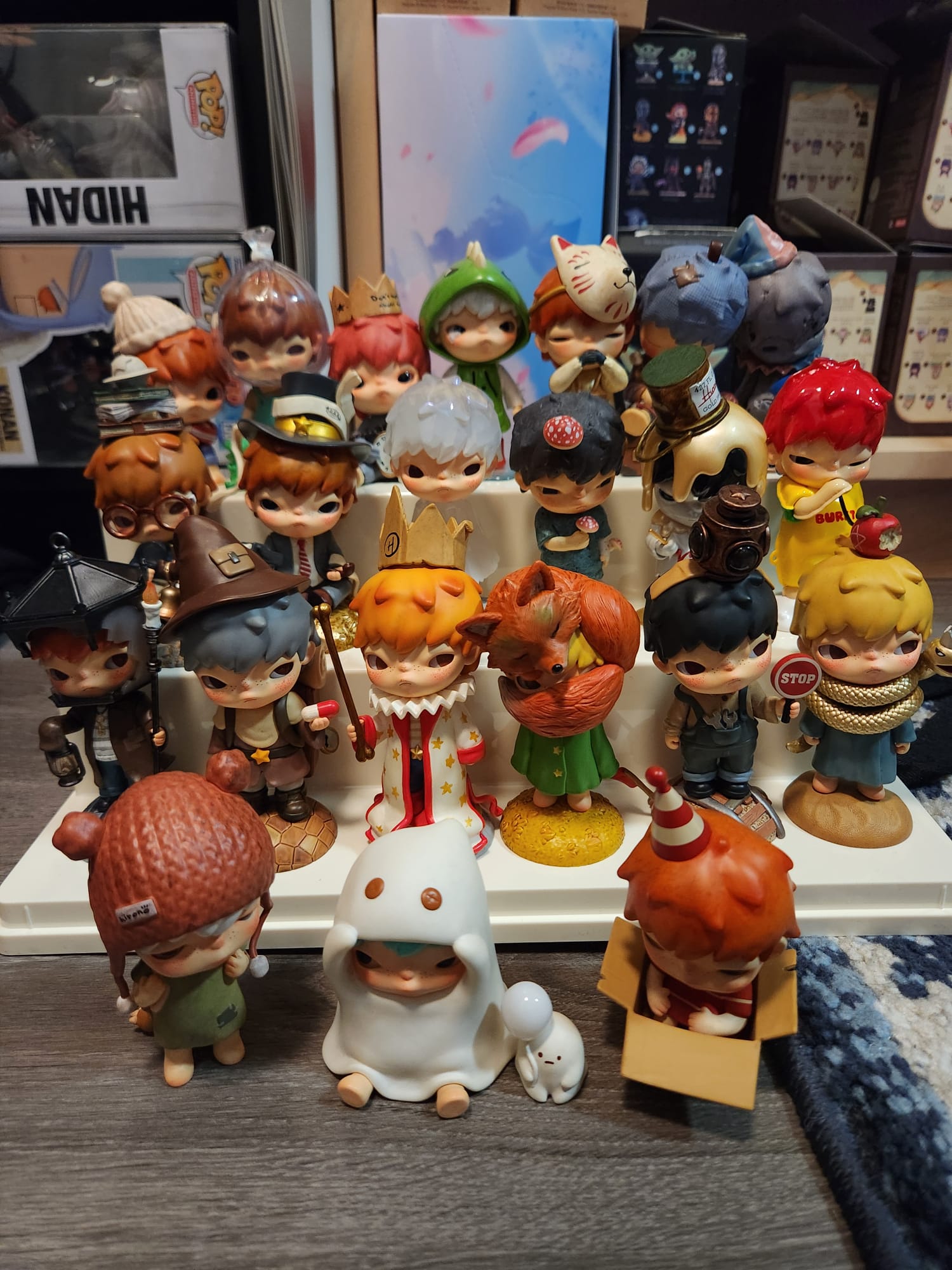
Real Talk: The Other One vs. Shelter
So, which one is "better"? That's the wrong question. They serve completely different purposes for a collector.
Artistically: The Other One is raw, punk rock poetry. Each figure is a statement. Shelter is a beautifully illustrated short story, with each figure acting as a page. I personally lean towards the raw emotion of the earlier work, but I admire the ambition of the later series.
Quality & Design: Shelter wins on a technical level. The paint, sculpt, and complexity are just a step above. The accessories are more intricate, and the overall finish is more "premium." But some collectors I've talked to miss the minimalist power of the first Hirono series.
The "Chase" Factor: The secret from The Other One ("The Ghost") is arguably more iconic and holds a more legendary status in the community. The secret from Shelter ("Nowhere to Hide") is technically more complex, featuring a Hirono inside a translucent fish, but it doesn't quite have the same mythos. The chase for the original feels more significant.
For New Collectors: If you want to understand Hirono's soul, start with The Other One. If you want a beautifully crafted, narrative-driven set that looks incredible on a shelf, Shelter might be a better entry point. Of course, the best way is to just pick the one that speaks to you. You can browse our Hirono collection and see which designs catch your eye.
A Quick Tour of Other Hirono Collections
Of course, it doesn't stop there. If you're looking for a hirono series list, it's constantly growing. Lang and Pop Mart are always exploring new ideas.
City of Mercy: These are not hirono boxes in the traditional sense. They are large-format, open-box figures. Think of them as centerpiece art statues. They are stunning, massive, and carry a much higher price tag (often $100+). They're for the dedicated collector who wants a major statement piece.
Reshaping Series: Okay, hot take time. I honestly think the Reshaping series is Lang's quiet masterpiece so far. It's conceptually brilliant, with Hirono interacting with art supplies, a pencil, a clay sculpture, a painting. It's a meta-commentary on the creative process itself. It didn't get the same mainstream hype as some others, but for those who appreciate the artistry, it's a must-have.
Little Mischief Series: This one was a bit of a departure. The mood is lighter, more playful. It shows the versatility of the character, but for me, it doesn't hit the same emotional core as the more melancholic series. It's a fun collection, but it feels less… essential.
Journey to the West: This is a perfect example of a hirono new series that blends a classic story with the character's unique identity. Seeing Hirono as Sun Wukong or Tripitaka is a fascinating fusion of culture and art. It shows that the character can be a vessel for any story, not just his own. Whenever a new hirono set like this is announced, the community buzz is incredible.
This variety answers the common question, "how many hirono series are there?" The answer is: a lot, and more are always on the way. The hirono collections are an ever-expanding universe.
The Collector's Playbook: Stuff You Actually Need to Know
As a seller, I get asked the same questions over and over. Here are some real, no-nonsense answers.
1. The Box Weight Myth is Dead. Can you weigh the hirono blind boxes to find the secret? No. Flat out, no. Maybe in the very early days of blind boxes you could, but now? Forget it. Pop Mart uses standardized weights, adds counterweight pellets, or makes the common figures just as heavy as the secret. I've seen people bring tiny digital scales into stores. It's a waste of time. The only guaranteed way to get a specific figure is to buy an opened box or trade for it. The only way to get a whole hirono set (including the chance at the secret) is to buy a sealed case of 12.
2. How to Spot a Fake Hirono Toy. Fakes are getting better, but they're still out there, especially on platforms like AliExpress or sketchy eBay listings. The number one giveaway is the box. A real Pop Mart box has a crisp, slightly glossy finish. The fonts are sharp. There should be a holographic Pop Mart sticker on it. On the fake hirono dolls, the colors are often slightly off, the vinyl feels cheaper and lighter, and the paint lines are sloppy. If a price seems too good to be true for a rare figure, it is.
3. Full Case vs. Single Boxes: The Eternal Debate. If you're a completionist, buying a sealed case is the most cost-effective way to get all 12 regular designs. You're guaranteed no duplicates and you get the shot at the secret. But it's a big investment upfront. Buying single hirono blind box units is all about the thrill of the gamble. It's fun! You might get lucky and pull a secret on your first try. You might also end up with three of the same figure. There's no right answer, it just depends on your budget and your personality.
Our Take: Why Hirono Isn't Just Another Fad
I've seen designer toy trends come and go. Hype cycles burn bright and then fade. But Hirono feels different. It has staying power.
Why? Because it's not built on hype; it's built on emotion. I get more emails and messages from customers about Hirono than any other line we carry at PopNya. People don't just say, "I got the one I wanted!" They say, "This 'Lost' figure from the Shelter series really speaks to where I am in my life right now." People are forming genuine emotional connections with these little vinyl figures.
That connection is the artist's intent. Lang's work has always been about exploring vulnerability, loneliness, and hope. He's not just designing a cute character; he's creating a vessel for feelings that are often hard to put into words.
We're not just excited for a new product to consume; we're excited to see the next chapter in this quiet, emotional story. It's why we're always so eager to check out HIRONO releases and get them for the store.
Collecting hirono figures is a bit like curating a gallery of feelings. Some days you connect with the defiance of "The Crows," other days with the quiet hope of "The Seeker." They're more than just toys on a shelf. They're little companions for life's complicated journey. And that's something truly special.
--- Disclosure: PopNya may earn a commission if you purchase through links on this page.


